


.png)














.jpg)




















.jpg)





%20(1).jpg)





.png)
















How ServiceNow Rebuilt Its Partner GTM with Ecosystem Intelligence — and Cut Through the Noise


ServiceNow used Crossbeam and ecosystem intelligence to overhaul its partner GTM, replacing fragmented portals with a unified, AI-driven ecosystem motion. Here's what they built.

How ServiceNow Rebuilt Its Partner GTM with Ecosystem Intelligence — and Cut Through the Noise
For ServiceNow — one of enterprise software’s most expansive partner ecosystems — scale had become a liability. With more than 2,700 global partners navigating a patchwork of portals, email chains, and disconnected processes, the company’s partner marketing team found itself drowning in operational complexity rather than driving partner-led growth.
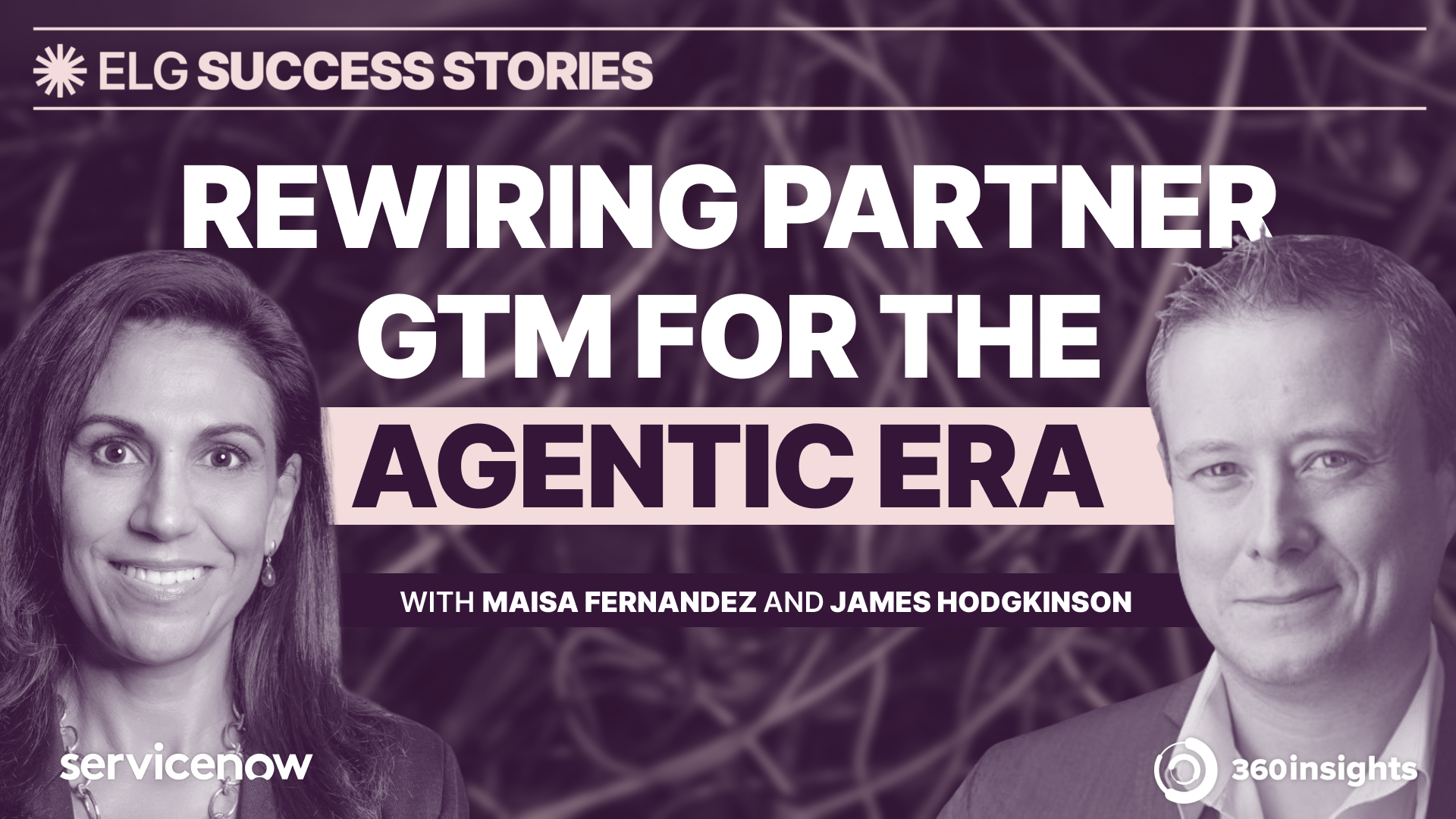
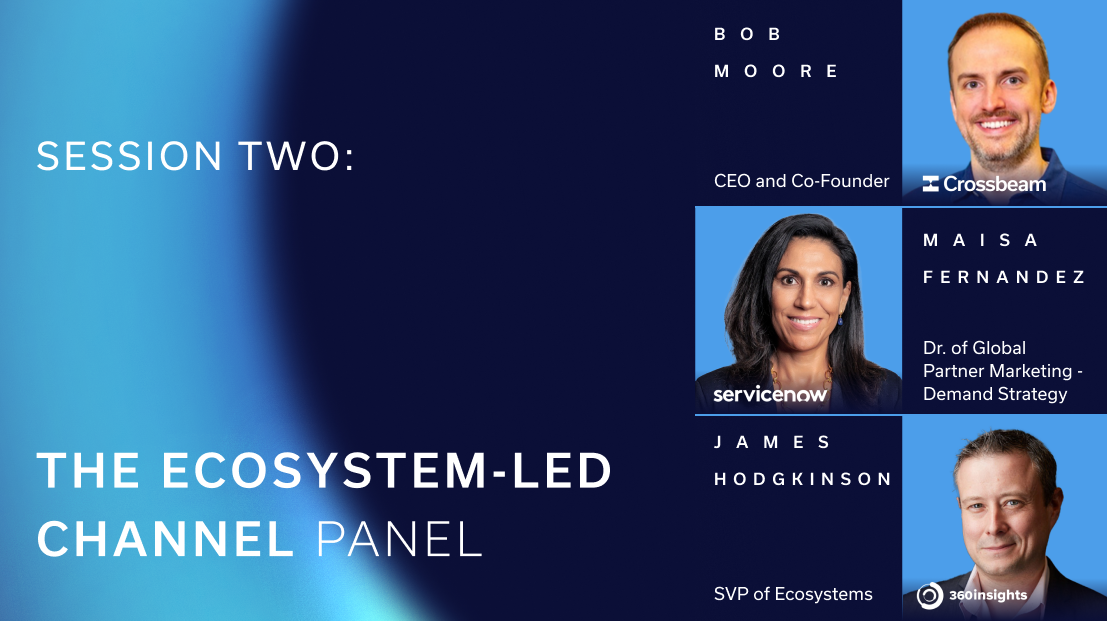
Maisa Fernandez, ServiceNow’s Director of Global Partner Marketing – Demand Strategy, put it bluntly when speaking at the ELG Summit 2025. Her team was suffering from “death by a thousand emails.” Partners weren’t struggling because they lacked intent — they were struggling because the infrastructure meant to support them had become a maze rather than a fast path to market.
The underlying problem wasn’t unique to ServiceNow. Fast-growing partner ecosystems accumulate technical debt: new portals added to solve specific problems, siloed data that can’t talk to each other, incentive programs that are difficult to measure, and partner journeys that require too much manual coordination.
For ServiceNow’s team, the system had reached its limit.
Why Ecosystem Intelligence?
The strategic decision wasn’t just to clean up the existing system — it was to replace the underlying architecture entirely with a composable, data-driven model built for Ecosystem-Led Growth.
ServiceNow’s team recognized that the most effective partner programs don’t just manage relationships — they surface and act on ecosystem signals:
- Which partners are best positioned to win with specific accounts?
- Which partners need which resources at which stage?
- Which MDF investments are actually generating pipeline?
Answering those questions required something the legacy system couldn’t provide: unified, actionable ecosystem data. That’s what drove the decision to bring in Crossbeam as the intelligence layer of the new partner GTM architecture.
What was the solution?
The architecture ServiceNow built — in partnership with James Hodgkinson, Chief Strategy Officer at 360insights — was designed around composability: best-of-breed tools connected into a single unified experience, rather than a monolithic platform trying to do everything.
The result is a system where ecosystem insight from Crossbeam powers partner identification and signal routing, 360insights handles incentive management and MDF attribution, Structured contributes data orchestration, and ServiceNow’s own workflows tie it all together — delivering a single “front door” experience for partners regardless of where they are in the partner lifecycle.
The key shift was from broadcast to personalization. Rather than sending every partner the same communications and hoping the right message reached the right audience, the new system uses ecosystem data to route the right content, offer, and call-to-action to each partner based on their specific stage, segment, and opportunity.
As described at the ELG Summit 2025, Maisa and Jame’s teams built a model where composable architecture creates “one unified experience with infinite personalized paths” — replacing the noise of mass communication with targeted, data-driven partner engagement.
Looking forward, the architecture is designed for the agentic era: with unified data and orchestrated workflows, the system can unlock AI-generated campaign variants, automated playbooks, MDF ROI insights, and even AI-orchestrated partner motions — all at scale.
The Results
The full metrics from ServiceNow’s GTM transformation aren’t yet publicly reported in granular form, but the structural outcomes are well-documented. ServiceNow’s partner ecosystem has scaled to 2,700+ partners globally under this architecture, and the January 2026 partner program overhaul — which features the same simplified, composable philosophy — signals the approach is being extended company-wide.
The clearest signal of results is what ServiceNow did next: it rebuilt its entire partner program around the same principles that drove the GTM architecture overhaul. The new Build Partner Program, simplified fee structure, expanded MDF with clear attribution mechanics, and dedicated AI agents Store category all reflect a program designed for measurable, outcome-oriented partner engagement.
For partner teams in the ServiceNow ecosystem, this matters practically: the company they’re partnering with has already invested in the infrastructure to track and attribute partner-driven value. MDF requests are evaluated against ROI data. Co-sell motions are measured against deal outcomes. The Ecosystem Intelligence layer that Crossbeam helps power means that partner contributions — and partner performance — are now visible in ways they weren’t before.
That changes the calculus for how technology partners should engage. Partners who show up with data — account overlap, mutual customer signals, measurable pipeline — get more attention, more funding, and more co-sell commitment than partners who show up with a logo and a handshake.
What made it work?
Lesson 1: Composability beats monolithic platforms
ServiceNow didn’t try to build one system that did everything — they connected best-of-breed tools into a unified experience. That meant choosing Crossbeam for Ecosystem Intelligence, 360insights for incentive orchestration, and their own workflows as the connective tissue. Partner teams building their own GTM infrastructure should apply the same principle: pick the best tool for each function and invest in integration, not consolidation.
Lesson 2: Data replaces noise
The shift from mass email communications to ecosystem-signal-driven personalization was the core innovation. When you know which partner is in which stage, which accounts they’re working on, and which resources they actually need, you can replace volume with relevance. The partners who responded best weren’t necessarily the largest; they were the ones the new system could engage with the most specific, actionable context.
Lesson 3: Attribution is the prerequisite for investment
ServiceNow’s expanded MDF and SIF programs were built on the attribution infrastructure that the GTM architecture created. You can’t fund what you can’t measure. Partner teams that invest in ecosystem attribution early — using tools like Crossbeam to connect partner signals to pipeline outcomes — are the ones who can make the case for incremental investment.
Ready to leverage the ServiceNow ecosystem? Sign up for Crossbeam for free to see how you can leverage Ecosystem Intelligence and accelerate your growth within the security and IT Infrastructure ecosystem.

FAQ
Q: How long did it take ServiceNow to see results from rebuilding its partner GTM?
The specifics of ServiceNow’s implementation timeline aren’t publicly disclosed, but the architecture — shared at the ELG Summit 2025 — is presented as a functioning system. The composable approach is designed for iterative deployment, meaning early integrations between ecosystem intelligence and partner communications can be activated before the full architecture is complete.
Q: What tools does ServiceNow use for its partner GTM?
ServiceNow’s partner GTM architecture is built on a composable stack that includes Crossbeam for ecosystem intelligence, 360insights for incentive management and MDF attribution, Structured for data orchestration, and ServiceNow’s own platform workflows for experience delivery.
Q: How do I measure ROI from my partnership with ServiceNow?
The most reliable approach is to build attribution at the opportunity level in your CRM — tagging deals as partner-sourced or partner-influenced based on specific ServiceNow co-sell activity or Store leads. Use Crossbeam to connect your account overlap data to those opportunity records, so you have a clear data trail from shared account to closed deal.


