

.png)















.jpg)






















.jpg)






%20(1).jpg)



.png)





















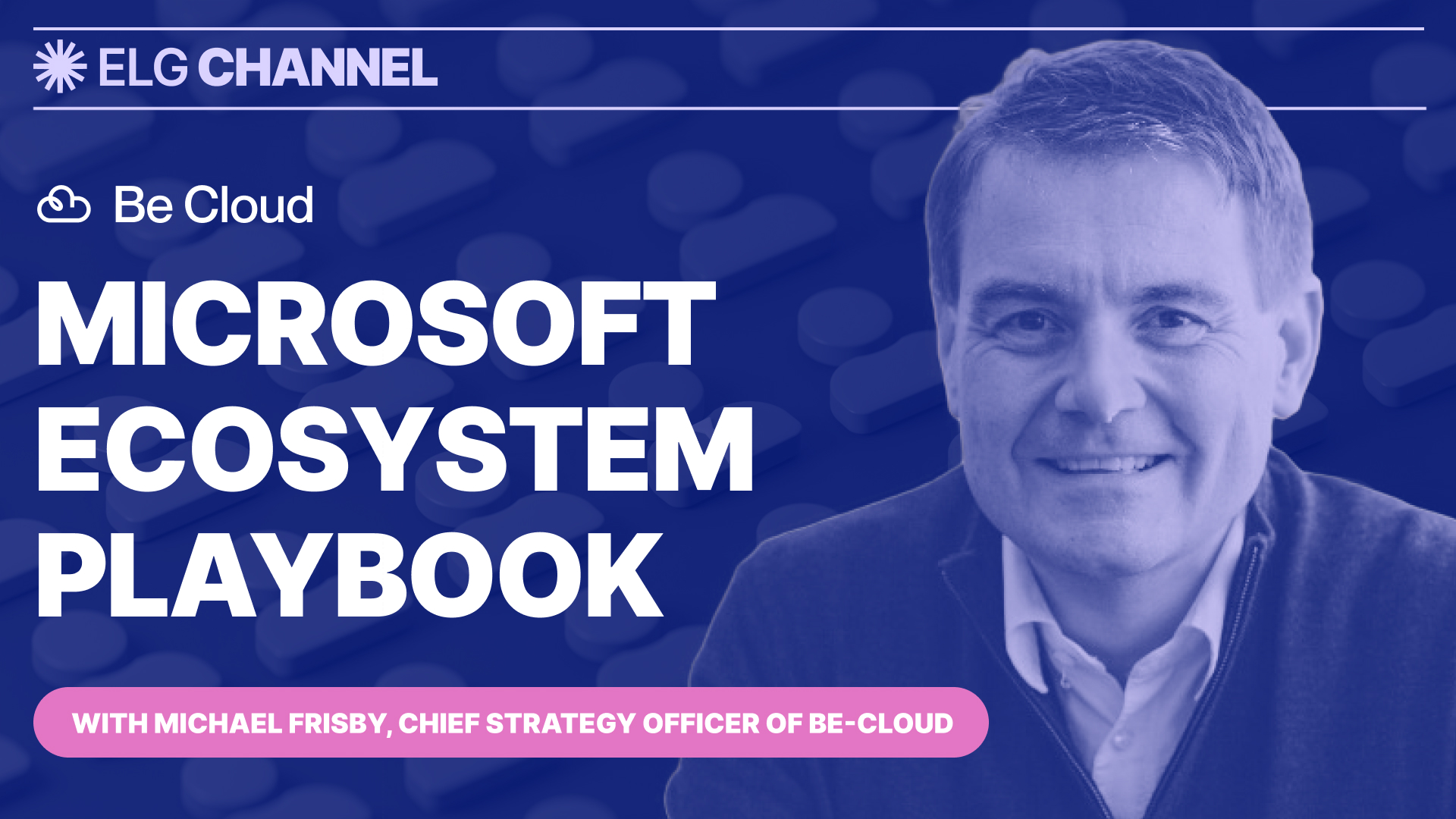
A deep dive into Be-Cloud’s Microsoft ecosystem strategy — covering ISV vetting, co-selling, and how system design drives scalable growth.
Most growth stories in the channel stop at the headline.
This one doesn’t.
In a recent Hot Seat session, Be-Cloud pulled back the curtain on how it scaled to more than €60M in annual recurring revenue, why it’s on track for €90M, and what it’s doing differently inside the Microsoft ecosystem to sustain that growth.
At the center of the discussion was Michael Frisby, Chief Strategy Officer at Be-Cloud — a channel leader with nearly three decades in Microsoft and cloud services.
His message was clear: ecosystem growth isn’t about more partners, more tools, or more noise. It’s about designing a repeatable system that works for SMBs, resellers, ISVs, and vendors at scale.
From MSP to distribution engine
Be-Cloud’s story begins in 2012 as a classic Microsoft-focused MSP.
Founded by entrepreneur Lenny Vercruysse, the company initially built standardized managed services around what was then Office 365 Business Premium. That early focus on productization and repeatability laid the foundation for everything that followed.
The inflection point came in 2019.
“When we moved into distribution, the ambition wasn’t just to sell more licenses,” said Michael. “It was to take a model we had proven ourselves — how to build, price, sell, and support a Microsoft MSP — and make that model accessible to other entrepreneurs. Distribution, for us, is about enabling businesses, not just moving volume.”
After growing the MSP business to roughly €7M, Be-Cloud secured Microsoft CSP distribution status, not just to sell licenses, but to replicate its operating model for other entrepreneurs.
Today:
- 75% of Be-Cloud’s revenue flows through distribution
- 1,500+ resellers operate across six European countries
- The ecosystem serves approximately 35,000 SMB end customers
- The company employs around 140 people and targets €300M by 2030
This growth wasn’t accidental. It was designed.
“People often focus on the revenue number — €60M, €90M, whatever the headline is — but that’s the outcome, not the cause,” said Michael. “What actually drives growth is having a system that works repeatedly for different partners, different customers, and different stages of maturity. Once you get that right, revenue becomes a byproduct rather than the objective.”
Microsoft is the “socket,” not the product
One of Be-Cloud’s defining strategic channel choices is how it positions Microsoft.
Rather than treating Microsoft as just another vendor, Michael describes it as the “socket” — the platform into which everything else plugs.
“We’ve always treated Microsoft as the foundation of our ecosystem, the socket everything else plugs into,” he said. “Our job isn’t to replace Microsoft or work around it, but to make it more valuable for SMBs by layering services and solutions on top. If a product doesn’t strengthen the Microsoft story, it usually creates friction rather than growth.”
Microsoft365, Azure, and Dynamics form the foundation. Every additional solution must:
- Complement Microsoft (never compete with it)
- Strengthen the MSP subscription model
- Be easy for SMB-focused partners to sell and support
This philosophy explains Be-Cloud’s selective ISV strategy and its high Business Premium SKU mix in France.
The five criteria Be-Cloud uses to vet ISV partners
As the ecosystem scaled, one lesson became clear: every new ISV addes complexity.
“We’re very selective about the ISVs we bring into the ecosystem because every new solution adds complexity for our resellers,” said Michael. “If the success criteria aren’t aligned from the start — if the ISV, the distributor, and the reseller don’t all win in the same way — the partnership usually breaks down later, no matter how good the product is.”
That’s why Be-Cloud applies five strict, non-negotiable criteria when evaluating an ISV.
1. SMB Fit: Designed for the reality of small businesses
Be-Cloud’s core customer base consists of SMBs with 10–50 users, occasionally extending up to a few hundred. These businesses have very real constraints: limited IT staff, tight budgets, and low tolerance for complexity.
A technically strong product isn’t enough.
If a solution assumes enterprise-level buying processes, long deployment cycles, or heavy customization, it simply won’t scale through SMB-focused MSPs. As Michael explains, “Be-Cloud won’t add a solution like SAP to the portfolio — not because it lacks value, but because it doesn’t align with how SMBs buy, deploy, or consume technology”.
The test is simple:Does this solution help SMBs run their business better — improve productivity, reduce cost, or win more customers — without adding operational friction? If the answer isn’t a clear yes, it’s not a fit.
2. Microsoft alignment: Complement, don’t compete
Be-Cloud is unapologetically Microsoft-first.
Microsoft 365, Azure, and Dynamics form the foundation of its ecosystem, and every ISV must strengthen that story, not undermine it. Michael described Microsoft as “the socket into which everything else plugs.”
This means ISVs must position their solutions as:
- Enhancements to Microsoft capabilities
- Extensions that add depth, security, or specialization
- Clear “better together” stories for resellers to tell customers
ISVs that try to sell against Microsoft — especially by criticizing core Microsoft capabilities — create immediate tension. Resellers don’t want to tell customers that what they sold yesterday is suddenly inadequate.
Be-Cloud looks for vendors that understand this dynamic and design their messaging, positioning, and value proposition accordingly.
“One of the biggest mistakes I see, especially in security, is vendors positioning themselves as an alternative to Microsoft rather than a complement,” said Michael. “Resellers don’t want to undermine the story they’ve just sold to the customer. The partnerships that work are the ones that clearly build on Microsoft’s strengths instead of fighting against them.”
3. Distribution-ready GTM: Built for the MSP business model
Many ISVs still operate with a legacy license-resale mindset: annual contracts, upfront billing, and rigid pricing structures. That model doesn’t work in an MSP-driven ecosystem.
Be-Cloud evaluates whether an ISV’s GTM model aligns with:
- Subscription-based recurring revenue
- Monthly billing cycles
- Predictable margins for MSPs
- Cash-flow realities of resellers and distributors
Michael highlighted how misalignment creates friction fast, especially around payment terms. MSPs typically invoice customers monthly, collect cash weeks later, and only then pay distributors and vendors. ISVs that insist on short payment cycles or inflexible commercial terms unintentionally choke the channel they’re trying to scale through.
For Be-Cloud, a “distribution-ready” ISV understands that the way in which revenue flows matters just as much as how much.
4. Marketplace transactability: Remove friction at the point of sale
For Be-Cloud, the Microsoft Marketplace is where transactions happen.
ISVs must already be — or be willing to become — transactable through the Microsoft Marketplace so their solutions can flow into Be-Cloud’s marketplace.
Marketplace transactability enables:
- Unified procurement for resellers
- Simplified billing and invoicing
- Cleaner subscription management
- Faster onboarding at scale
Michael shared that this was a key factor in the Acronis partnership, where multiple parties collaborated to make marketplace transactability possible before scaling the solution across thousands of customers.
Why Acronis was a strategic bet
The first major ISV Michael brought into Be-Cloud was Acronis. Not because it was trendy, but because it fit the system.

Acronis complemented Microsoft 365 security, aligned with MSP economics, and could be embedded directly into Be-Cloud’s managed services. With support from WeTransact, Acronis became fully transactable via the Microsoft Marketplace.
The result?
- Acronis bundled into Be-Cloud’s core MSP offering
- 8,000+ customers live
- Expansion into XDR and MDR services layered on Microsoft 365
5. Enablement muscle: Willingness to invest in the channel
Finally, Be-Cloud looks closely at how prepared an ISV is to enable a channel at scale.
This includes:
- Sales training and positioning guidance
- Technical documentation and deployment support
- Clear partner programs and incentives
- Resources that help both Be-Cloud and its resellers succeed
Michael emphasized that “while the long-term goal is reseller independence, getting there requires heavy upfront investment. ISVs must be prepared to co-sell early, support enablement, and help build confidence in the channel before expecting scale”.
ISVs that view enablement as optional — or assume distributors will “figure it out” — rarely see sustained success.
From Excel chaos to Ecosystem Intelligence
Before modern ecosystem tools, partner matching relied on spreadsheets, guesswork, one-to-one conversations, and tribal knowledge.
“Before we had proper Ecosystem Intelligence, partner matching was largely based on intuition and spreadsheets. You’d sit with customer lists side by side and make educated guesses about where opportunities might exist,” said Michael. “Today, with the right platforms, like Crossbeam, you can see real signal: who sells what, to whom, and where collaboration is most likely to succeed.”
Be-Cloud now uses platforms like Crossbeam to:
- Identify high-propensity partner and customer overlaps
- Share data securely
- Prioritize co-selling where it matters
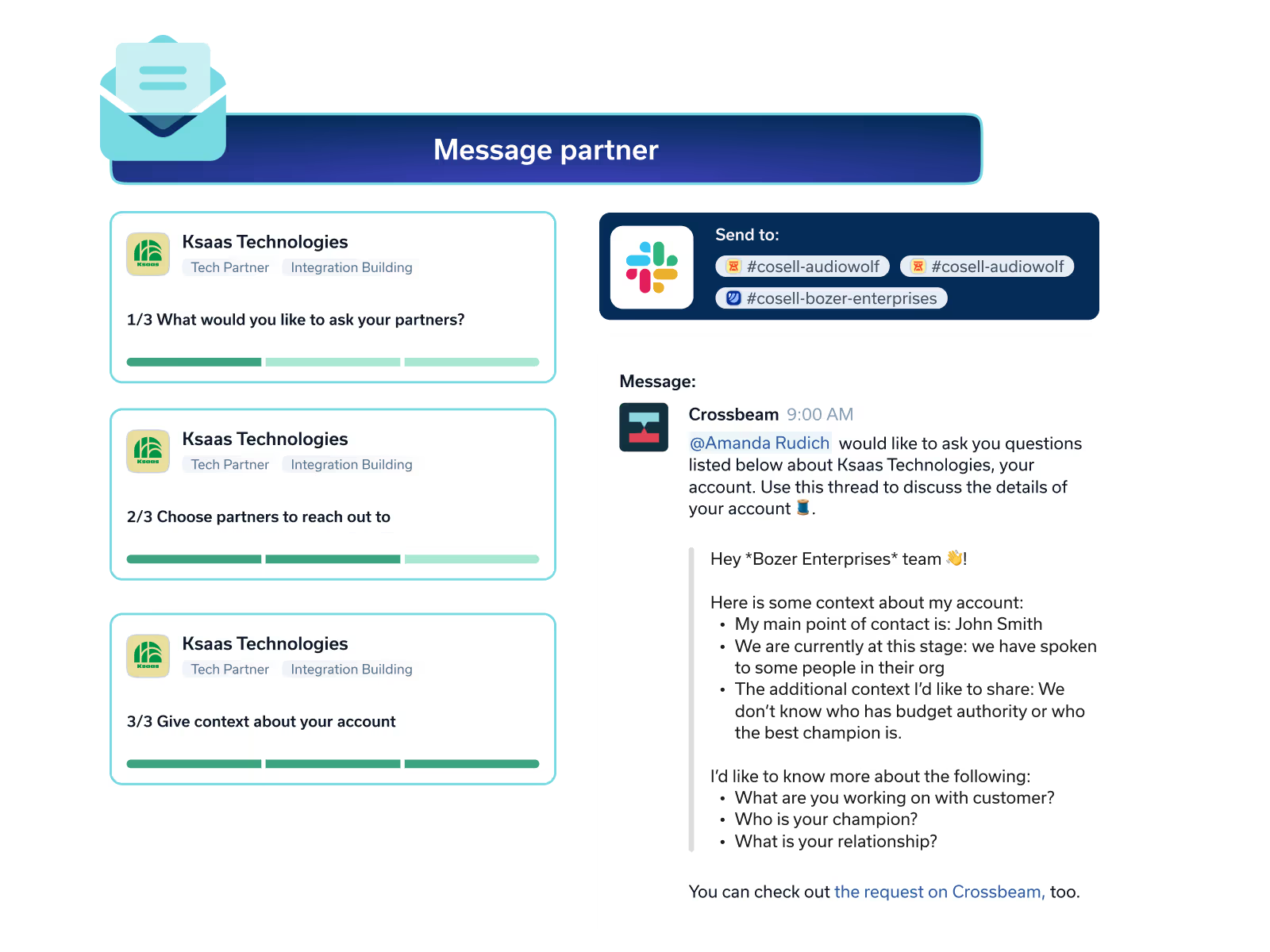
The difference isn’t just efficiency, it’s confidence. Partners know why they’re being asked to engage, not just that they should.
The ideal resale motion
In Be-Cloud’s world, success means reseller independence.
The end-state looks like this:
- High-propensity opportunities identified centrally
- Routed through Be-Cloud’s shared CRM
- Resellers fully enabled to sell, deploy, and support
- Minimal hand-holding required over time
But Michael is candid: getting there requires heavy upfront investment.
“The partners who scale fastest are the ones who are very clear about who their ideal customer is and what problem they solve,” said Michael. “They don’t try to be everything to everyone. That focus creates repeatability, stronger margins, and much better returns on sales and marketing effort.”
Distributors and ISVs must co-sell early, train relentlessly, and help partners build confidence before expecting scale. Only then does the model compound.
The bigger lesson
As Be-Cloud’s experience shows, sustainable growth in the SMB channel doesn’t come from trying to serve everyone or chasing every opportunity. The partners that scale are the ones with clarity.
Clarity about who they serve, which problems they solve, and which motions they repeat relentlessly.
They choose a clear ideal customer profile.
They focus on specific use cases or verticals.
They build offers that can be sold, delivered, and supported again and again.
Just as importantly, they don’t wait for growth to be handed to them.
As Michael cautions, “Don’t build your business waiting for Microsoft leads.” The partners that win are those that build their own demand engines, using Microsoft as an accelerator.
Be-Cloud didn’t reach €60M+ ARR by adding more partners or more products. It scaled by designing for scale from day one, treating trust as core infrastructure, making Microsoft the foundation rather than the competition, and turning ecosystem complexity into a system that works predictably.
For anyone serious about scaling inside the Microsoft ecosystem, the takeaway is clear:
Growth isn’t unlocked by ambition alone. It’s engineered.
Curious how top channel teams operationalize Ecosystem-Led Growth? Schedule an ELG Strategy Call to learn how Ecosystem Intelligence enables smarter partner selection, cleaner co-selling, and measurable revenue impact across the channel industry.