How Gong and NewEdge Turned Partnerships into Real Deals



Learn how Gong and NewEdge Growth used Ecosystem Intelligence to map shared accounts, accelerate deals, and drive real revenue, and how your sales team can apply the same ELG playbook.
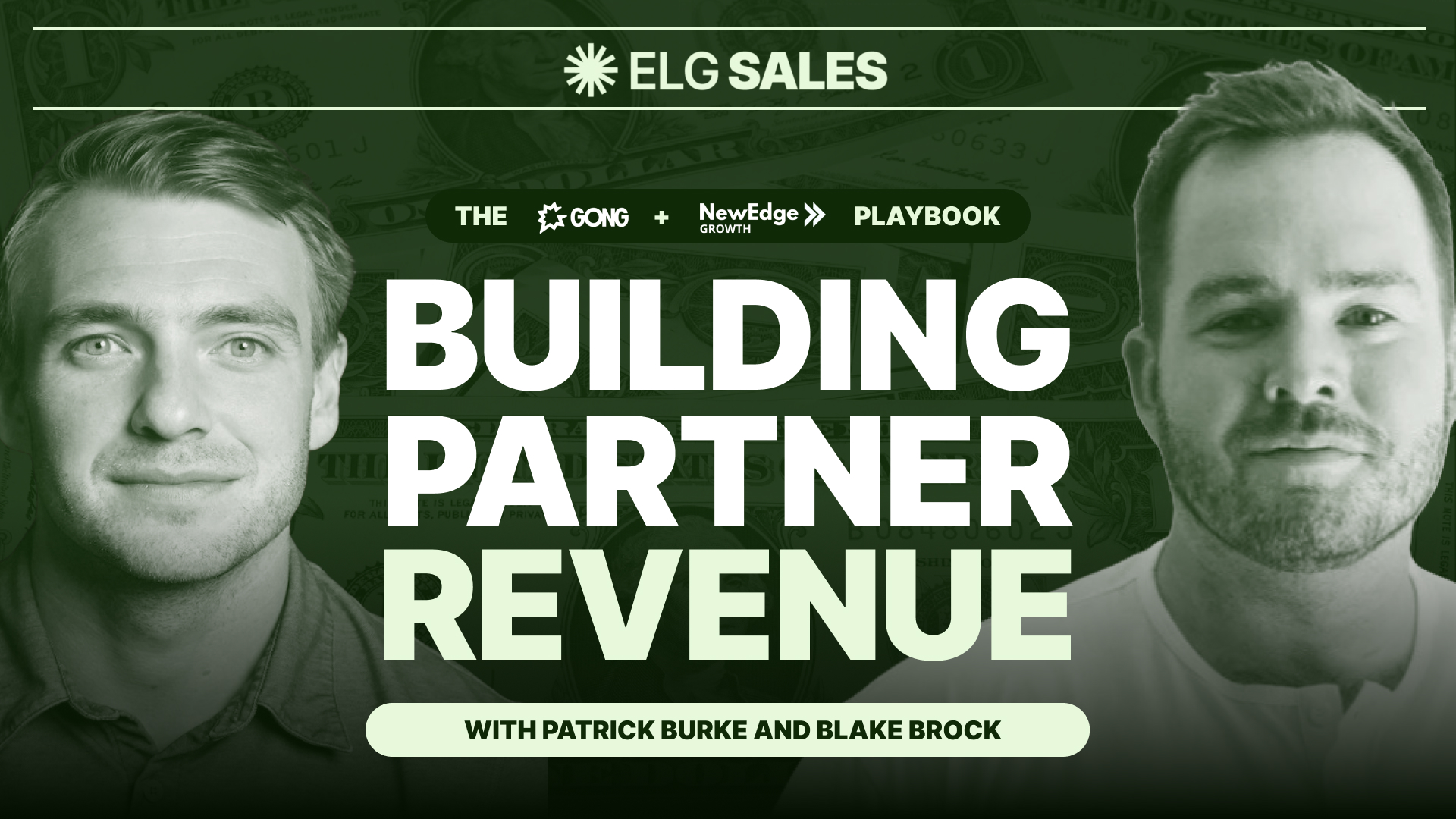
At the ELG Summit, Patrick Burke, Senior Manager and GTM Partnerships at Gong, and Blake Brock, Founder and COO at NewEdge Growth, pulled back the curtain on what modern ecosystem selling actually looks like in practice.
In their session with Crossbeam’s Chief Revenue Officer, Erin Bates, they walked through how a tightly aligned tech-and-services partnership drove new pipeline, accelerated stalled deals, and even saved churn risks — by operationalizing Ecosystem Intelligence instead of just talking about it.
And the biggest lesson? Partnerships only drive revenue when they’re built into the day-to-day sales motion.
The partnership that started with retention and scaled to growth
Gong and NewEdge Growth didn’t start their relationship with a splashy launch or joint press release. They started in the trenches.
NewEdge was known for preventing churn and fixing struggling RevOps environments. Gong was expanding its implementation partner ecosystem. Their early collaboration focused on saving at-risk accounts and driving adoption, not just sourcing new deals.
That foundation mattered.
As Blake explained, “When we look at our ICP, we understand that there are very specific needs across that tech stack that support a go-to-market strategy and proper process. And that tech stack has to include Gong for today's buyer in that ICP. There are a lot of great tools that we offer to our customers, but Gong really became the core for that AI-powered revenue operating system.”
Patrick added, “And from the Gong side, when we were first introduced to the NewEdge Growth team, one thing immediately stood out: they were one of HubSpot’s top retention partners — if not the top.
We wanted to understand the ‘magic sauce’ behind that success and see what we could learn from their HubSpot practice and apply to Gong. Over the last year and a half to two years, we’ve built something truly special together.”
Over time, that evolved into a full go-to-market partnership with measurable outcomes. At one point, the NewEdge Growth team cited 174% growth tied to their joint efforts.
Stopping churn with ecosystem visibility
With Gong and NewEdge Growth, saving churn and reviving lost opportunities didn’t start with net-new pipeline; it started with reputation and alignment.
As Patrick explains, “In the early days, we built a reputation as fixers — especially when it came to churn prevention. When we first partnered with NewEdge Growth, we weren’t just bringing in new business. We were also getting alerted when shared customers were at risk of churning, so we could step in quickly and help stabilize those accounts.”
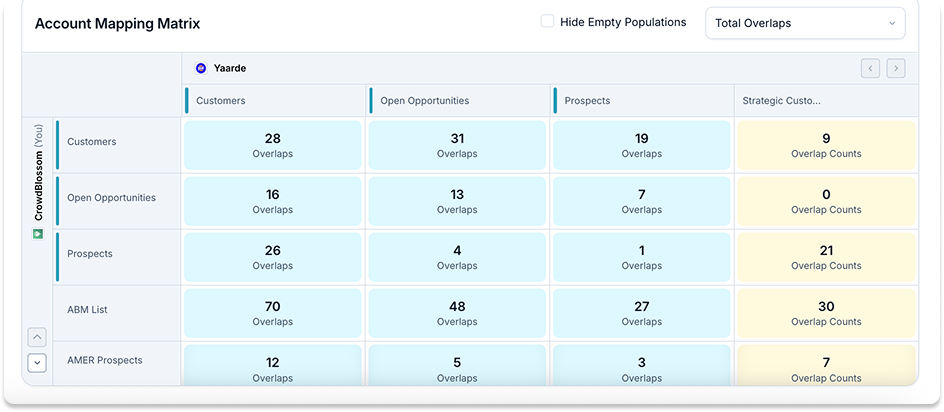
That visibility came from leveraging Crossbeam to understand where they had true overlap and where they had blind spots, giving both teams a clearer picture of their combined total addressable market (TAM) and where to act fast.
With complementary strengths — from change management to RevOps-as-a-service — the partnership wasn’t just about sourcing deals. It was about protecting revenue, reviving stalled opportunities, and building a growth engine grounded in shared customers and shared outcomes.
Here’s how to replicate their success:
- Turn your partner overlap into churn prevention plays: Don’t limit ecosystem collaboration to new pipeline. Use shared customer overlap to proactively identify at-risk accounts and coordinate intervention before churn happens.
- Use overlap data to eliminate blind spots: Map your shared customers and prospects to uncover gaps in visibility. Ask: Where are we flying blind? Which accounts need joint engagement?
- Align on combined TAM early: Instead of treating your partner’s market separately, use Ecosystem Intelligence to understand your true combined TAM and prioritize accounts based on shared opportunity.
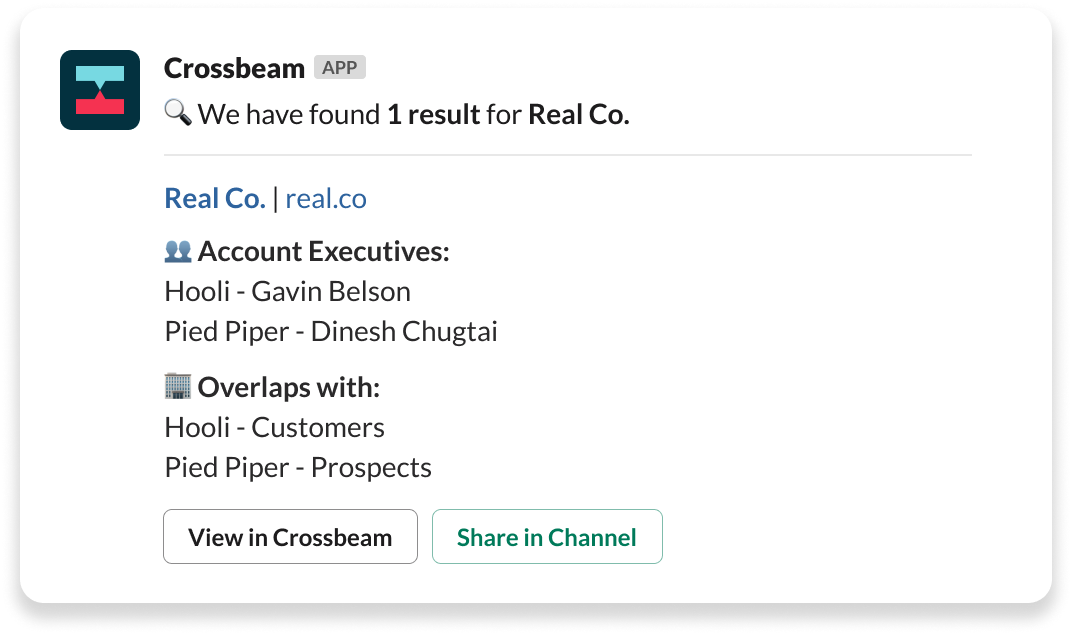
- Respond to churn signals in real time: Set up email or Slack alerts and/or build workflows so that when a shared customer shows churn risk or engagement shifts, your customer success team can act immediately.
Building a winning ELG motion
For Gong and NewEdge Growth, the playbook starts with a simple principle: do what’s right for the customer and build an integrated tech stack that makes that possible.
By combining Crossbeam’s Ecosystem Intelligence, Gong’s conversational intelligence, Clay’s enrichment and signal automation, and HubSpot’s CRM foundation, they’ve built a revenue engine (an in-person event) that protects revenue, revives stalled deals, and drives expansion.
As Patrick explained, “I’m a big Crossbeam user, I use it every day. We started by analyzing overlap… and whoever owned the strongest relationship owned the outreach.”
Blake reinforced the approach, “A good way to describe it is intelligent account mapping. We aligned ownership, geography, and messaging before a single invite was sent.”
Here’s exactly how they executed it.
Step one: Map real overlap across the ecosystem
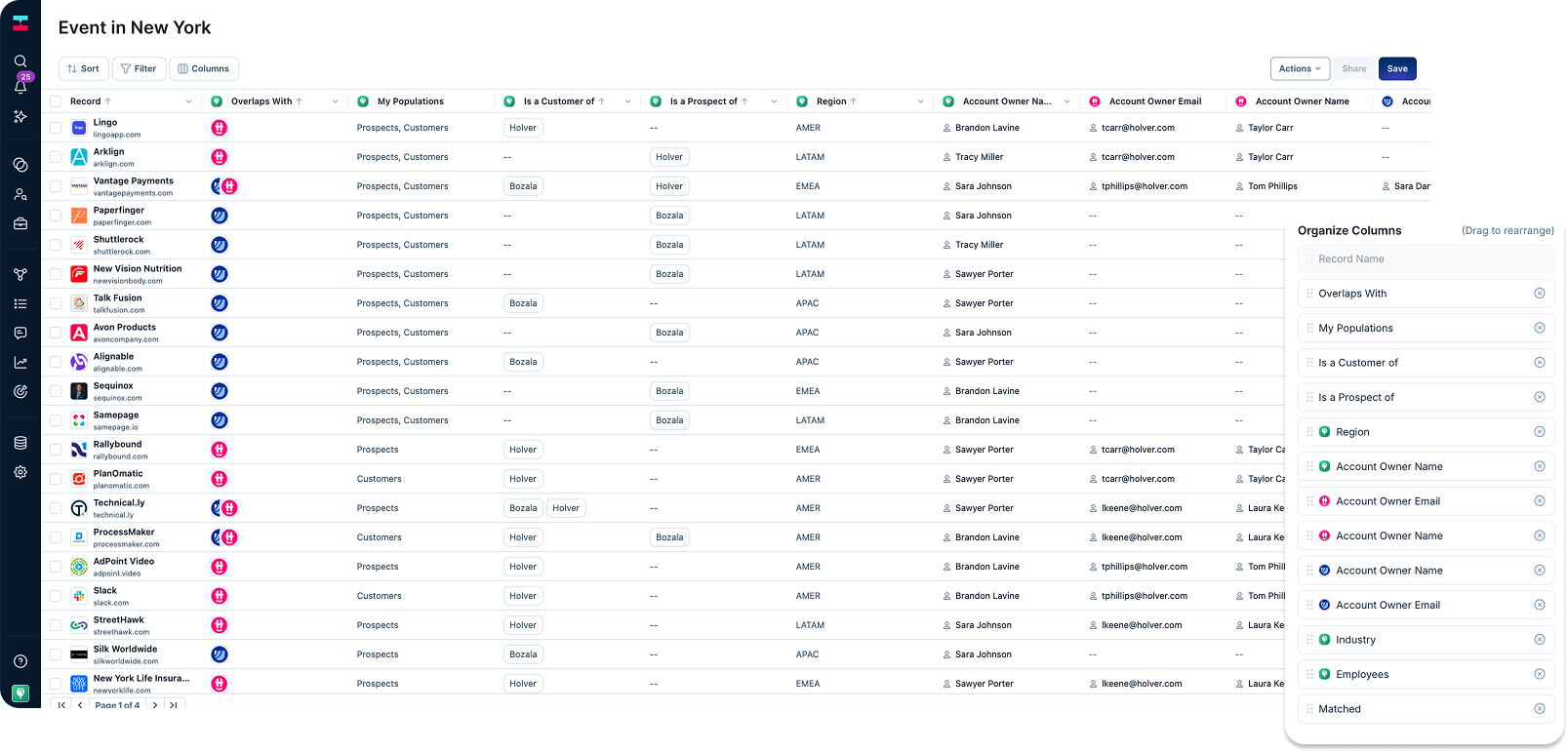
They began by analyzing customer and prospect overlap across Gong, NewEdge Growth, and HubSpot using Crossbeam.
They identified:
- Shared customers
- Shared prospects
- Relationship ownership
- Geographic concentration
This created a data-backed target list that they used as an invite list.
Action:
- Use Crossbeam to create a shared account map across all relevant partners.
- Filter by customer-customer overlap and customer-prospect overlap.
- Export or create a targeted List segmented by region, vertical, or ICP.
- Audit CRM data for completeness and ICP alignment.
- Enrich accounts using Clay or similar tools to add firmographics and buying signals.
Step two: Assign outreach based on relationship strength
Instead of defaulting to org. structure, they assigned outreach based on who had the warmest relationship with the prospect and customer. For example:
- If NewEdge Growth owned the trust, NewEdge Growth reached out.
- If Gong’s PE team had the relationship, they owned it.
- If a direct salesperson had stronger access, they would lead the conversation.
This helped them eliminate duplicate outreach and protected partner trust.
Step three: Segment by geography and portfolio density
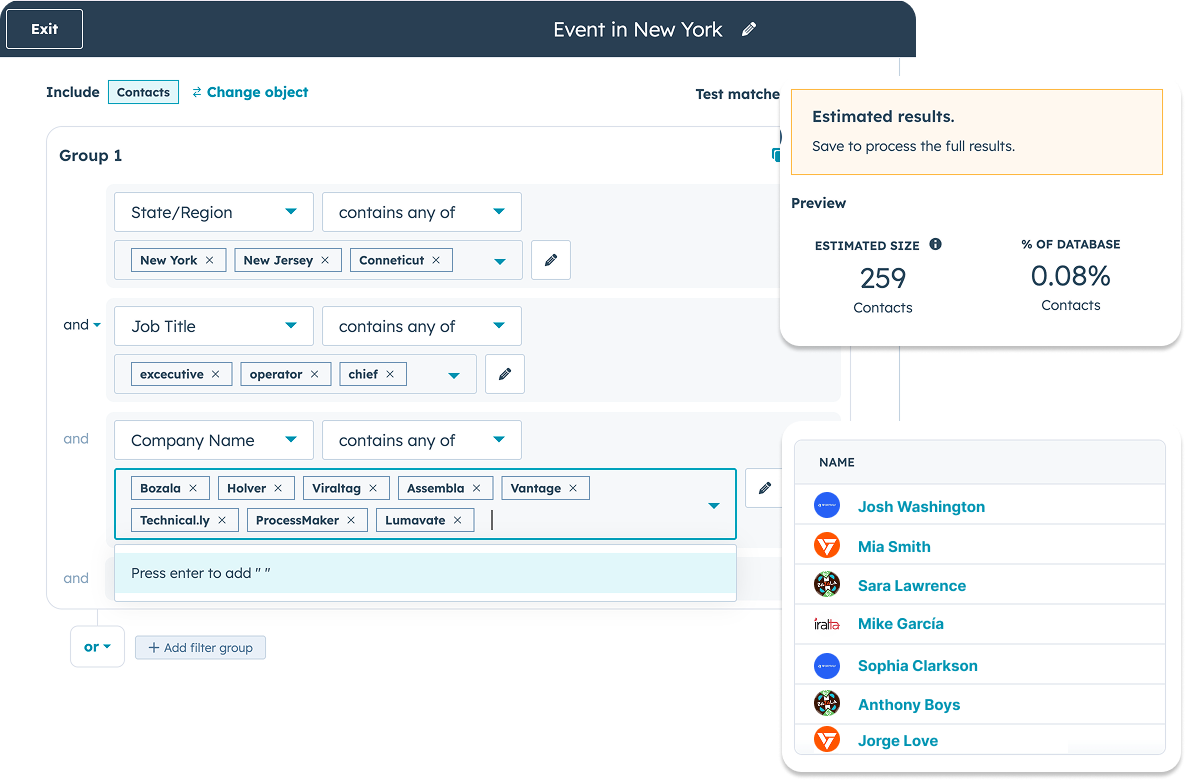
Once they selected the companies they would invite, they narrowed their focus to people:
- Located in NYC and the tri-state area
- Who is an operators and/or executives likely to attend
- Accounts clustered geographically
This increased relevance and reduced friction.
You can identify your invite list by creating a segment or a report in HubSpot or a report in Salesforce.
Step four: Tailor messaging by persona
Their invites were adapted based on:
- Operating partners (portfolio performance focus)
- C-suite executives (revenue and AI outcomes)
- Direct operators (execution and process impact)
They tested messaging across teams to refine positioning by audience. This helped them drive a higher response rate.
For example, tailor your operating partner messaging for portfolio performance and value creation, whereas your C-suite messaging should speak to revenue outcomes, AI strategy, and competitive advantage.
Step five: Replace blasts with precision outreach
As Blake put it, most teams “blast.” They didn’t. Instead, they:
- Limited outreach to verified overlap
- Sent curated, relationship-backed invites
- Aligned internally before outreach began
Step six: Coordinate follow-up as an ecosystem play
After engagement, they:
- Mapped attendees back into Crossbeam
- Identified co-sell opportunities thanks to Clay enrichment, Ecosystem Intelligence, and Gong conversation insights
- Flagged churn-risk or stalled-deal accounts
- Assigned next-best actions
For example, if you build playbooks inside HubSpot or CRM, you might want to consider the following:
- If overlap + deal stalled, notify partner.
- If shared churn risk, escalate to your RevOps consultant and your customer success team.
- If a competitor is mentioned in any of your calls, Gong will notify you. Your best action is to trigger ecosystem assist.
Tool flow example:
- Gong flags competitive mention
- Crossbeam confirms partner overlap
- Clay enriches account signals
- HubSpot triggers workflow
- Assigned owner executes outreach
The event that turned partner alignment into real revenue
One of their biggest wins came from a three-way campaign with HubSpot.
Instead of running a generic co-marketing event, the teams crafted an event with two primary components:
- Executive thought leadership panel on Revenue AI: Designed to draw senior operators and investors into the room, the session focused on a practical question everyone was asking: “How do I get started?” The content centered on bridging the gap between AI hype and real first steps (the Q&A ran longer than the panel itself due to high engagement).
- Curated networking experience in a speakeasy casino setting: To keep executives engaged and foster meaningful connections, the team hosted a themed casino night in a New York City speakeasy. The immersive, high-touch experience created the right environment for peer networking and deeper conversations.
As Blake described it, “I think one of the most unique aspects of the panel was the way they grounded the conversation in real facts, figures, and statistics. Each company shared concrete results — not a futuristic vision, but what they’ve actually seen in practice. They could say, ‘When our customers do X and Y, they achieve Z.’
Even as one of the organizers, that stood out to me. It was powerful to hear leaders back up their insights with real data. You don’t often see panels share that level of specificity and proof.”
The result?
Within a few months of the event, the partnership had closed multiple large deals, including portfolio-level agreements that spread across multiple companies.
That’s the difference between partner events that generate “touchpoints” and partner motions that generate revenue.
Final advice for scalable and impactful partnerships
Blake and Patrick’s advice is simple but powerful: scalable partnerships are built on trust, alignment, and disciplined execution.
Blake emphasizes cultural fit and intentionality:
“Pick your partners wisely. Cultural fit matters more than people think… The magic isn’t just in the platform, it’s in how intentionally you use it.”
For him, trust unlocks enablement, and enablement unlocks scale.
Patrick brings it back to customer obsession:
“Focus on the customer. If you stay aligned around delivering the best outcome for them, the rest follows. Treat your partner like a customer.”
Both agree the modern playbook isn’t blind automation, it’s what they call “manumation.” Start with strong foundations. Do the manual work. Align roles and strategy. Then automate thoughtfully, with human oversight.
The Gong–NewEdge Growth partnership didn’t win by doing more. They won because they:
- Mapped real account overlap
- Assigned outreach based on relationship strength
- Embedded partner signals into live deals
- Prioritized customer outcomes over transactions
That’s what turns overlap into revenue. Watch the full session here.
Ready to operationalize your ecosystem?
Book a demo to see how Crossbeam helps sales, partnerships, and RevOps teams turn Ecosystem Intelligence into pipeline, faster deals, and measurable revenue outcomes.
FAQ
- What was the main outcome of the Gong–NewEdge partnership? By using Ecosystem Intelligence to identify overlapping accounts and coordinate outreach, the teams generated new pipeline, accelerated deals, and even saved churn-risk customers. One joint campaign alone led to multiple enterprise-level wins across portfolio companies.
- What made their ecosystem motion successful? They didn’t treat partnerships as a side channel. Instead, they embedded ecosystem signals directly into their sales workflows—mapping shared accounts, assigning relationship ownership, and using partner context to guide every outreach and deal conversation.
- How can other sales teams replicate this approach? Start by mapping account overlap with your partners, prioritize outreach based on real relationships, and feed those signals into your CRM and sales plays. Tools like Crossbeam help teams surface these insights and turn them into repeatable, revenue-driving motions.