{  "@context": "https://schema.org",  "@graph": [    {      "@type": "Article",      "headline": "Top Tools for CRM Enrichment",      "description": "CRM enrichment tools fill in missing account and contact data automatically. Here's a breakdown of the five main categories, the tools worth evaluating in each, and how to connect them into one clean CRM record.",      "keywords": "crm enrichment, CRM enrichment tools, CRM data enrichment software, contact enrichment tools",      "author": { "@type": "Organization", "name": "Crossbeam" },      "publisher": {        "@type": "Organization",        "name": "Crossbeam",        "logo": { "@type": "ImageObject", "url": "https://cdn.jsdelivr.net/gh/taiesha-crossbeam/crossbeam-web-assets@main/img/logo-white.svg" }      },      "mainEntityOfPage": { "@type": "WebPage", "@id": "PLACEHOLDER: replace with live URL once this article is published" }    },    {      "@type": "FAQPage",      "mainEntity": [        {          "@type": "Question",          "name": "How is ecosystem enrichment different from firmographic or intent data?",          "acceptedAnswer": {            "@type": "Answer",            "text": "Ecosystem enrichment comes from a direct, consented relationship with your own partners, rather than being inferred or aggregated from third-party sources, which makes it more reliable and unique to your business."          }        },        {          "@type": "Question",          "name": "Should CRM enrichment run automatically or on demand?",          "acceptedAnswer": {            "@type": "Answer",            "text": "Automatically, whenever possible. Manual, on-demand enrichment tends to fall behind as new records enter the CRM faster than anyone remembers to enrich them."          }        },        {          "@type": "Question",          "name": "Is it worth paying for multiple enrichment tools across categories?",          "acceptedAnswer": {            "@type": "Answer",            "text": "Often yes, since no single provider covers firmographic, contact, technographic, and ecosystem data equally well. Most mature RevOps stacks combine two or three specialized tools."          }        }      ]    }  ]}

Your Brain on Story
Why Identifying Ideal Partners is Key for Partner Program Success
When to Hire Your First Partnerships or BD Leader
What's in a Vibe?
Want to Meet Quota? Befriend Your Partner Team
Using Nearbound Data to Expand Into New Markets
Turning Online Events Into a Business Machine
The Subtle Art of a Warm Intro: How to Set Your Sales Team Up For Success
The Three Pillars of Partnership Success
The PartnerHacker Handbook
The Partner Experience Weekly: Partner Experience is Shifting
The Partner Experience Weekly: My Dream State - Partner Tech
The Next Bestselling GTM Book Has Arrived
The Nearbound Marketing Blueprint: Key Plays
The Crawl, Walk, Run Strategy
The Case for Investing in Partner Operations
The Anatomy of a Partnership: Partner Leads Versus Cold Leads
Sunday Stories: Trust at Scale — Bringing Influence to the B2B Journey
Target the Right Leads at the Right Time: A Recap of the Happy Customers Festival
Sunday Stories: Turning Support Request Lead into Service Partner Gold
Sunday Stories: Empowering Agencies to Sell SaaS
Stand Up Your Co-Sell Orchestration Playbook
Sales Leadership and Partner Enablement: Part 2
Partnerships and Contracts: How to Navigate the Legal Jungle
PartnerHacker Merges with Reveal to Bring Nearbound to the Market
One major lesson in building partnerships from zero to $150M+ ARR
Oneflow Sees a 190% Surge in Created Opportunities After Beginning Two-Way Data Sharing with HubSpot
nearbound.com Editorial Guidelines
Nearbound Weekend 11/25: Matthew McConaughey's nearbound advice
Nearbound Weekend 07/15: Insights from 100+ conversations with partner
Nearbound Weekend 11/18: A BIG thank you 🙏
Nearbound Weekend 06/10: Great GTM never beats a great ecosystem
Nearbound Weekend 05/25: Network Effects are Everywhere in the Nearbound Era
Nearbound Weekend 05/20: A tectonic shift is upon us
Nearbound Weekend 04/29: Retention is the new acquisition
Nearbound Weekend 05/11: What Prisoner's Dilemma Teaches Us About Partnerships
Nearbound Weekend 04/20: How Commsor Took Over LinkedIn With 1.2 Million Impressions In Less Than 48 Hours (A Masterclass In Nearbound Marketing)
Nearbound Weekend 04/15: Partner Up With A Partner Pro
Nearbound Weekend 04/08: Nearbound Isn't Just For Partner People
Nearbound Trends for 2024
Nearbound Weekend 01/27: Finally Explaining The Difference: Nearbound VS. Partnerships
Nearbound Ops: Leveraging Nearbound Data and Operations to Optimize Revenue
Nearbound Daily #588: 💰 High Versus Low ROI Partnering
Nearbound Daily #567: How Partner Pros Can Help Marketing Close the Content Gap
Nearbound Daily #558: How Apollo's Affiliate Program Saw A 576% Jump In Revenue
Nearbound Daily #552: Good Morning, Ecosystem ☀️
Nearbound Daily #547: 6 Ways AI Can Help You Keep Up
Nearbound Daily #551: Why Workday Is Expanding Its Partner Ecosystem
Nearbound Daily #542: 🤐 Nelson Wang's Tested Method For Presenting to CxOs
Nearbound Daily #540: $54 Billion In Revenue Analyzed 😱
Nearbound Daily #539: Your Secret Weapon 🤐
Nearbound Daily #530: What's the Big Deal with Nearbound Sales?
Nearbound Daily #519: A Sneak Peek Into The FIRST Ever Nearbound Book
Nearbound Daily #492: 3 Tips to Make Nearbound Work Internally
Nearbound Daily #483: The Art of Permissionless Partnering
Nearbound Daily #482: Your Path to Chief Partner Officer?!
Nearbound Daily #473: How To Do Integrations Right
Nearbound Daily #478: How Splash got 3x pipeline from events
Nearbound Daily #480: Unleash the Power of Your Ecosystem
Nearbound Daily #479: Pigment's Kobe Bryant Approach to Partnerships 🏀
Nearbound Daily #464: Pitch nearbound on easy-mode 🎮
Nearbound Daily #463: ⚡ Dave Gerhardt's nearbound marketing strategy
Nearbound Daily #461: The CRO: B2B's master code breaker 🕵️
Nearbound Daily #457: How this HubSpot partner taps into intel at scale 🏗️
Nearbound Daily #456: Why the outreach memo matters
Nearbound Daily #444: Nearbounders, mount up! 🤠
Nearbound Daily #455: Why "happy" customers aren't enough 👀
Nearbound Daily #451: How Databox builds faster, with higher margins 📈
Nearbound Daily #442: From spooky to inspiring 👻
Nearbound Daily #429: Weaving a nearbound fabric 🌐
Nearbound Daily #423: Siri, play "Wide Awake" by Katy Perry 🎶
Nearbound Daily #132: The first giver wins
Nearbound Daily #107: Help partners solve problems
Nearbound Daily #087: You've got to find the right fit
Nearbound Daily #080: Master the 4 stages of partnerships
Nearbound Daily #086: Partnerships takes a bit of string theory
Nearbound Daily #074: A one pager won't cut it
Nearbound Daily #062: Partner program Y1 = foundation, Y2 = victory
Nearbound Daily #050: Trust is the new data
Nearbound Daily #054: Crack the code
Nearbound Daily #042: Ask the Right Questions
Nearbound Daily #040: Play the Long Game
Nearbound Daily #039: Focus on What Matters
Nearbound Daily #035: An Excuse to Get Wild
Nearbound Daily #031: Partnerships Start with the Customer
Nearbound Daily #027: Don't hold back
Nearbound Daily #021: Will AI takeover partnerships?
Nearbound Daily #011: The promised land
Monetize Your Tech Partnerships in 2023 with The Digital Bridge GoToEco Referral Flywheel
Meet your new partnerships mentor
Kind Folks Finish First: An Anthem For A New Era of Business
Introducing the Partnering Reference Architecture
Influence is the New Inbound
In the Face of Recession Pain, Partnerships Are the Answer
Howdy Partners #20: Partner Certifications
Howdy Partners #2 - Why You Need (Or Don't Need) A Partner Program
How We Use Partner Data to Drive Conversions and Product-Led Growth
How to Roll Out an Integration the Right Way: the G2 and ZoomInfo Story
How to communicate effectively with your customer success team about partnerships
How to Make Your First Co-selling Motion a Success: SugarCRM’s Step-by-Step Guide
Ecosystem Operations and Alignment

Top Tools for CRM Enrichment

by
Andrea Vallejo
SHARE THIS

CRM enrichment tools fill in missing account and contact data automatically. Here's a breakdown of the five main categories, the tools worth evaluating in each, and how to connect them into one clean CRM record. 

by
Andrea Vallejo
SHARE THIS

In this article

Join the movement

Subscribe to ELG Insider to get the latest content delivered to your inbox weekly.

A CRM is only as useful as the data inside it, and most CRMs have gaps: missing job titles, outdated firmographic details, and blank fields where key account information should be. CRM enrichment tools close those gaps automatically, without requiring a manual research project every time a new lead comes in.

Here's a breakdown of the main categories of CRM enrichment tools, what each one is good for, and what to look for when choosing one.

What to look for in a CRM enrichment tool

Before comparing categories, a few things matter regardless of which type of enrichment you're prioritizing:

  • Native CRM integration. Enrichment that requires manual export and import defeats the purpose. Look for tools that write directly into Salesforce, HubSpot, or whichever CRM your team lives in.
  • Automatic. The best tools enrich records as they enter the CRM, and re-enrich periodically as data changes, rather than requiring manual triggers.
  • Data reliability over data volume. A tool that fills every field with low-confidence guesses doesn’t solve the problem. Verified, sourced data matters more than raw completeness.
  • Field-level control. Teams need to choose which fields get enriched and from which sources, rather than accepting a one-size-fits-all overwrite of existing data.

What are the main categories of CRM enrichment tools

CRM enrichment breaks down into five categories, each closing a different kind of gap in the data. Here's what each one covers and which tools are worth evaluating.

Firmographic enrichment tools

These tools fill in company-level details: industry, employee count, revenue, headquarters, and similar attributes. 

This is the most commonly used category of CRM enrichment and the easiest to evaluate, since the data is relatively standardized across providers. The main differentiator between providers is coverage and update frequency, since firmographic details like employee count and revenue change more often than most CRMs reflect. 

Some platforms you can use to obtain firmographic data are ZoomInfo, Clearbit (now folded into HubSpot's Breeze Intelligence), Crunchbase, and Trace are common names in this category.
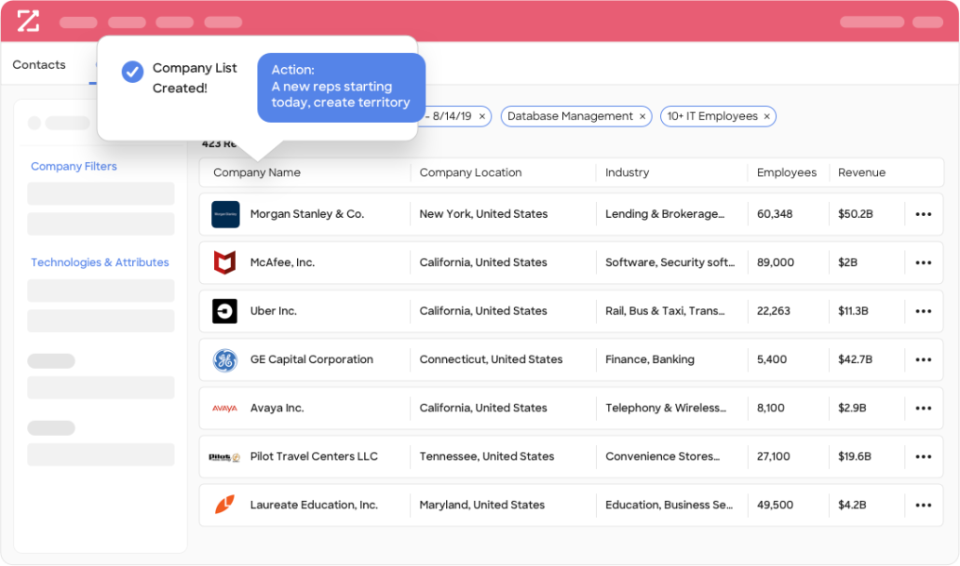
ZoomInfo’s platform. 

Contact enrichment tools

These focus on the people, not the company: job titles, seniority, direct emails, and verified contact details. 

Accuracy matters more here than in almost any other category, since an outdated title or a bounced email actively wastes a rep's time rather than just leaving a gap. Look for providers with strong verification processes (not only large databases). 

ZoomInfo, Apollo, and Cognism are frequently used for this layer.
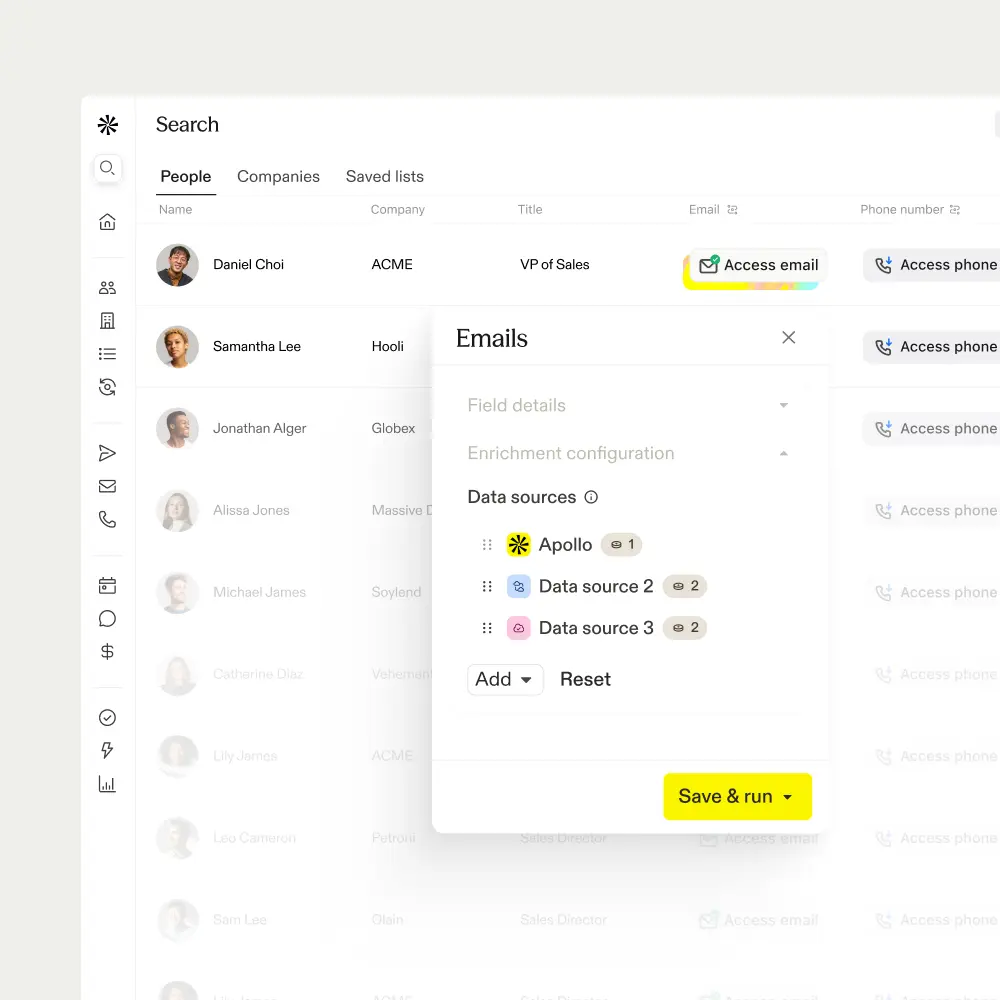
Apollo’s platform. 

Technographic enrichment tools

These identify what tools and platforms a target account already uses, useful for spotting integration opportunities or competitive displacement plays. 

Coverage varies significantly by category and vendor, so it's worth checking whether a given tool has strong visibility into the specific tech stack layer relevant to your product. 

Trace is one example: it detects a company's live tech stack alongside its partner ecosystem and hiring signals, so a technographic read comes with ecosystem context attached rather than as an isolated data point.
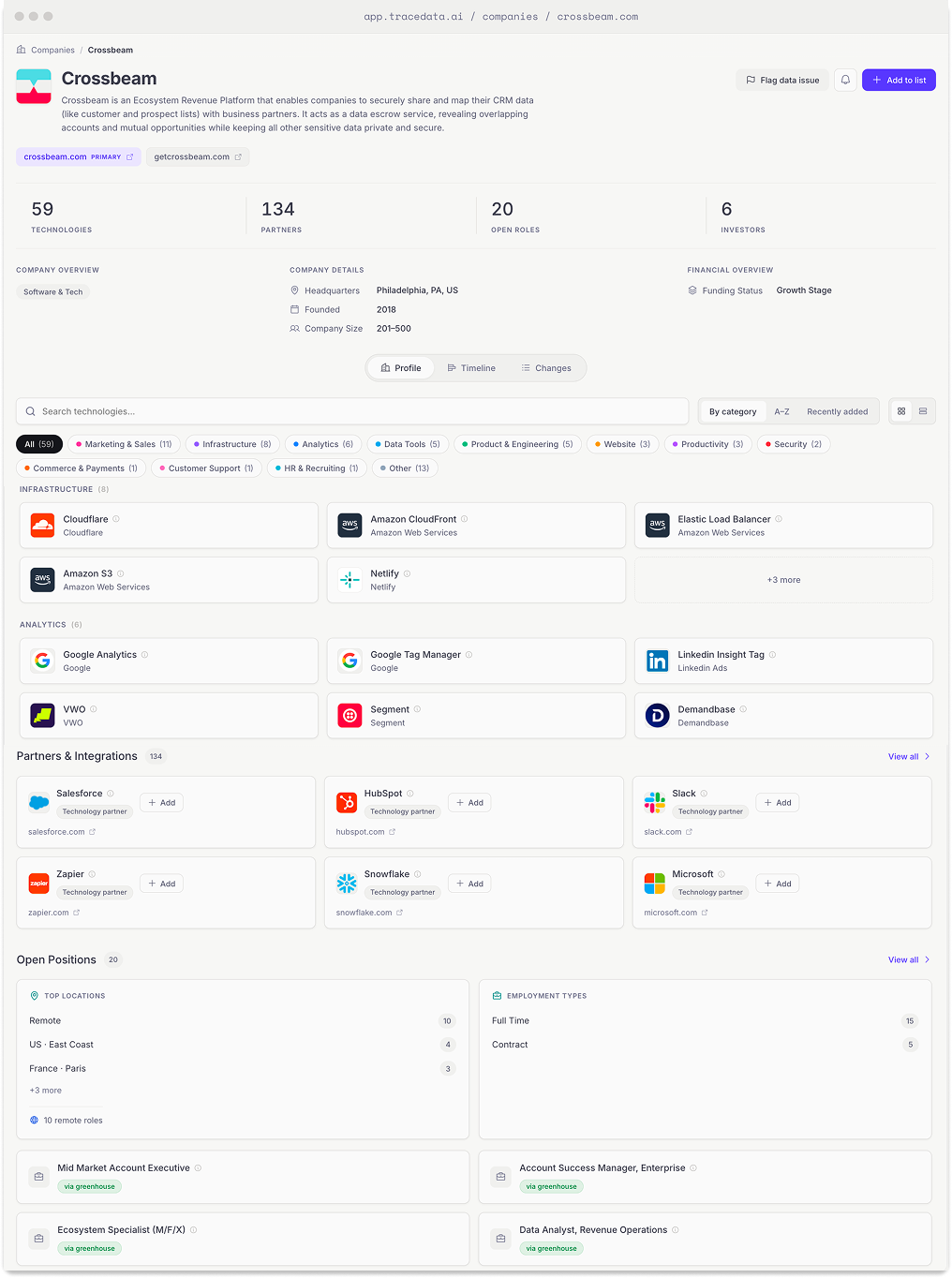
Trace’s platform.

Intent data tools

These surface signals that a company may be actively researching a solution in your category, typically inferred from aggregated behavioral data across many websites. 

Intent data can be a useful directional signal, but it's inferred rather than confirmed, and it's sold to every company that buys the same dataset, so it shouldn't be treated as a differentiated advantage on its own. 

Bombora and 6sense are the two names most teams evaluate, Bombora as a raw topic-surge signal that feeds into other tools, and 6sense as a fuller platform that wraps intent into account scoring and orchestration.
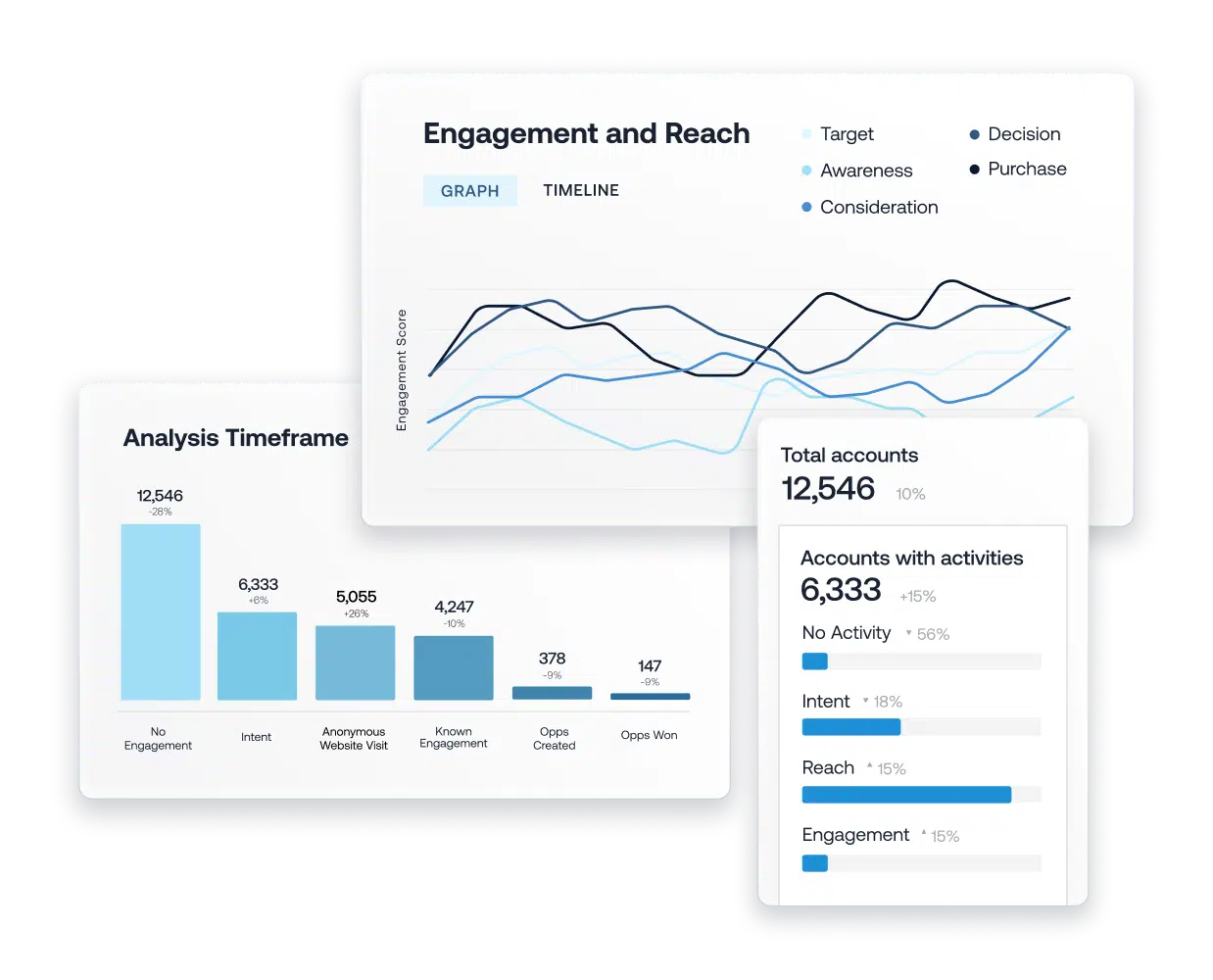
Examples of intent data provided by 6sense.

Ecosystem enrichment tools

This is the category most CRM enrichment strategies overlook entirely: enrichment based on your own partner ecosystem. Instead of only purchasing firmographic or intent data, ecosystem enrichment tells you whether a target account already has a relationship with one of your partners, and what that relationship looks like.

This is fundamentally different from every other category on this list, because it's not inferred or purchased from a broker. It comes from a real, verified relationship, which makes it both more reliable and impossible for a competitor to simply buy the same dataset and match it. That distinction is worth understanding on its own terms. 

Crossbeam sits in this category. It gives your agents second-party data: live data about accounts, contacts, and relationships direct from your partners' CRMs. Instead of your team hunting for overlap manually, Crossbeam surfaces which target accounts already overlap with a trusted partner, and puts that signal wherever you and your agents work, in the CRM and now via MCP.
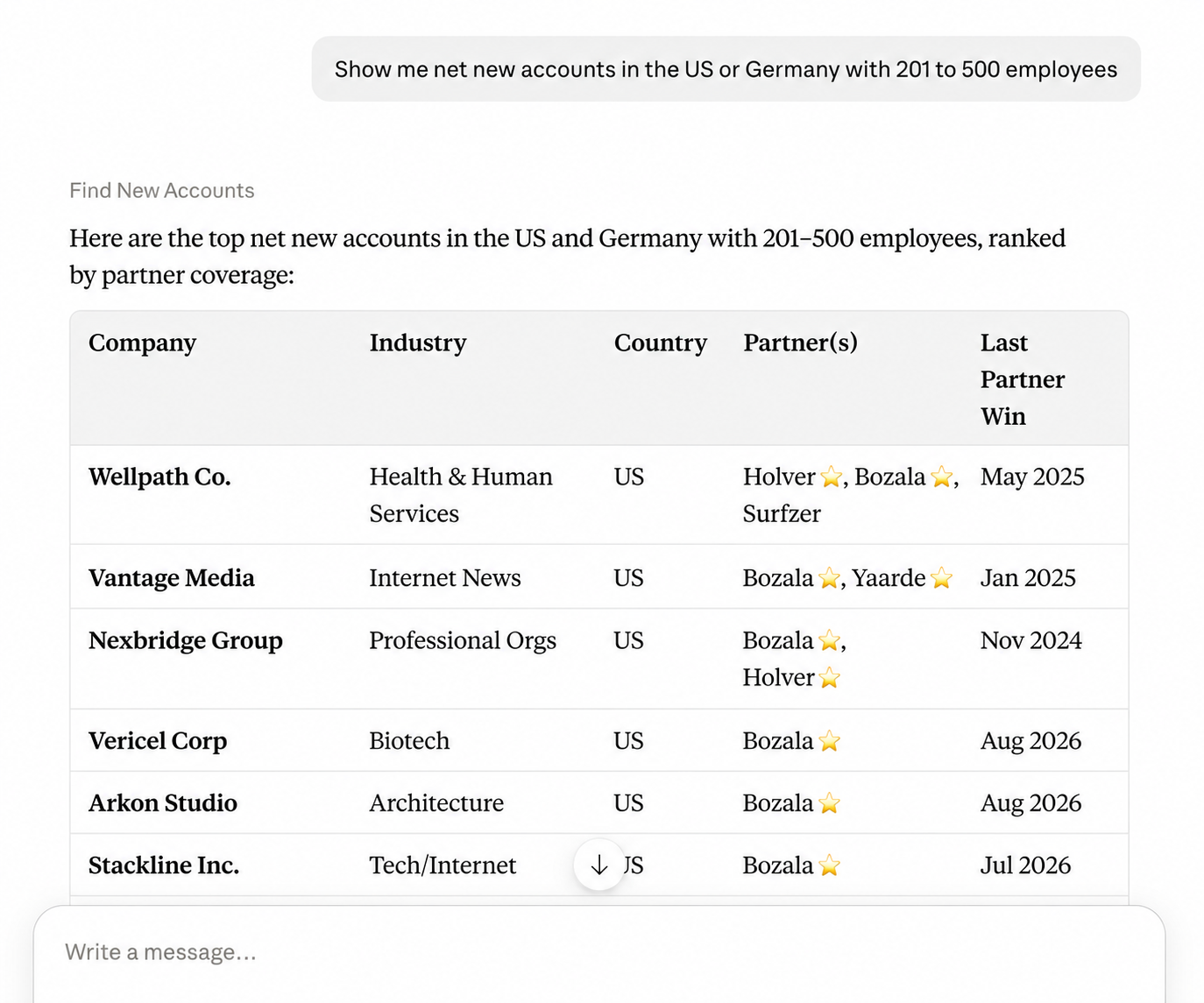
Example of a prompt you can use to surface net new accounts with Crossbeam’s MCP. 

How to combine categories effectively

These categories aren't interchangeable. They each answer a different question, and skipping one leaves a blind spot the others can't cover:

  • Firmographic and technographic: Is this account worth pursuing at all?
  • Contact: Who do I actually reach out to? (This one decays fastest, so it needs the most upkeep.)
  • Intent: Is now a reasonable time? Weak on its own, useful as a tiebreaker.
  • Ecosystem: is there an advantage here no one else has? 

The harder part is usually plumbing, not picking tools. Stacking four or five enrichment categories means either building a native integration for each one or finding a layer that connects them for you.

Clay is the tool most RevOps teams reach for here. It works as a waterfall across 100+ data providers, so instead of maintaining separate integrations for a firmographic tool, a contact tool, and an intent tool, Clay tries each source in sequence until a field is filled, then writes the finished record to the CRM. It already connects to Crossbeam too, which means partner overlap data can flow into the same enrichment workflow as everything else, rather than living in a separate report someone checks manually.

For teams with a data warehouse already in place, routing enrichment through something like Snowflake before it hits the CRM is worth considering, especially once more than a couple of sources are in play. Landing every provider's output in one place first makes it easier to de-duplicate conflicting fields, decide which source wins when two providers disagree, and only push the resolved record downstream, instead of letting each tool write to the CRM independently and fight over the same fields.

For Salesforce users, another path is opening up: Crossbeam is now listed in Salesforce's "AI agents and tools" category on AgentExchange, announced at Dreamforce 2026, giving Salesforce agents a direct line to live partner CRM data for every account.

See what your partner ecosystem could add to your CRM. Register free to enrich your accounts with second-party data your competitors can't access.

Frequently asked questions

How is ecosystem enrichment different from firmographic or intent data?

Ecosystem enrichment comes from a direct, consented relationship with your own partners, rather than being inferred or aggregated from third-party sources, which makes it more reliable and unique to your business.

Should CRM enrichment run automatically or on demand?

Automatically, whenever possible. Manual, on-demand enrichment tends to fall behind as new records enter the CRM faster than anyone remembers to enrich them.

Is it worth paying for multiple enrichment tools across categories?

Often yes, since no single provider covers firmographic, contact, technographic, and ecosystem data equally well. Most mature RevOps stacks combine two or three specialized tools.


You’ll also be interested in these

First-Party vs. Second-Party vs. Third-Party Data: What's the Difference?
What Is Second-Party Data (and Why It Matters for GTM)?
The 2026 Complete Guide to Account Mapping