AI, Channels and Marketplaces: 2025 Recap and the Trends Redefining 2026


AI in channels is moving from pilots to performance. Learn how ecosystems and marketplaces drive productivity and revenue in 2026.
Revenue teams are feeling the pressure. According to Gong’s 2026 State of Revenue AI, after rebounding in 2024, average annual revenue growth slowed to nearly 16% in 2025 (a three-point YoY decline in the U.S.).
Traditional playbooks are struggling to keep up with shifting buyer behavior, rising data complexity, and growing expectations around efficiency.
Across Gong’s research, Omdia’s 2026 forecasts, and Jay McBain’s (Chief Analyst - Channels, Partnerships & Ecosystems at Omdia) market insights, one message is clear: The next decade of growth belongs to companies that unify AI, marketplaces, and partner ecosystems into a single operating system.
Below is how the landscape shifted and what the best teams will do differently in 2026.
Productivity (and partners) took center stage.
Across thousands of revenue teams, Gong found that:
- Sales productivity plateaued in 2025, with reps generating fewer opportunities despite stable win rates.
- Productivity became the #1 growth lever for revenue leaders heading into 2026.
This explains the surge in two strategies:
- Leaning deeper into AI
- Not going to market alone, running toward partners and marketplaces
AI: From experimentation to execution
AI is no longer optional. According to Gong, 87% of revenue teams used AI in 2025, and 96% expect to use it in 2026. But results vary dramatically based on how AI is adopted.
Teams that treated AI as a core strategic capability (vs. a pilot) saw:
- 31% higher revenue growth
- 65% higher likelihood of increasing win rates
- 2.6× higher commercial impact scores
- Sellers who frequently used AI inside deals generated 77% more revenue per rep
Teams using revenue-specific AI (rather than general-purpose tools like ChatGPT) experienced:
- 2× adoption of strategic use cases
- 13% higher growth
- 85% higher commercial impact
As Shane Evans, CRO of Gong, explains: “The rise of artificial intelligence has ushered in what we call the AI Economy, an era where intelligence, not information, powers productivity, innovation, and growth. We’ve uncovered what separates AI deployments that truly drive commercial impact from the 95% that are falling short.”
Ecosystems and channel: The second growth engine
Productivity gains only go so far without more people sharing the load, but adding headcount isn’t always an option.
That’s where ecosystems come in. Jay McBain summarizes the shift succinctly: “89% of sellers now use partners every day. 84% of sellers who hit quota say partners were the reason.”
Omdia’s research reinforces this trend:
- Ecosystems are dissolving traditional vendor–partner–customer boundaries.
- AI requires specialized partner networks for strategy, implementation, and governance.
- Marketplaces are becoming the commercial layer for co-created multi-party solutions.
Even Omdia’s 2026 consumer research shows that retention and wallet share increase when products interoperate within connected ecosystems.
“Leading smart device vendors are creating robust ecosystems that prioritize scalability and interoperability to support ecosystem-driven features, enhancing user retention and attachment rates,” notes Jason Low, Research Director at Connected Life.
In B2B SaaS, this translates to:
- greater partner influence
- more co-owned customer journeys
- increased ecosystem-driven value creation
- deeper reliance on partners for AI, IoT, security, data governance, and compliance
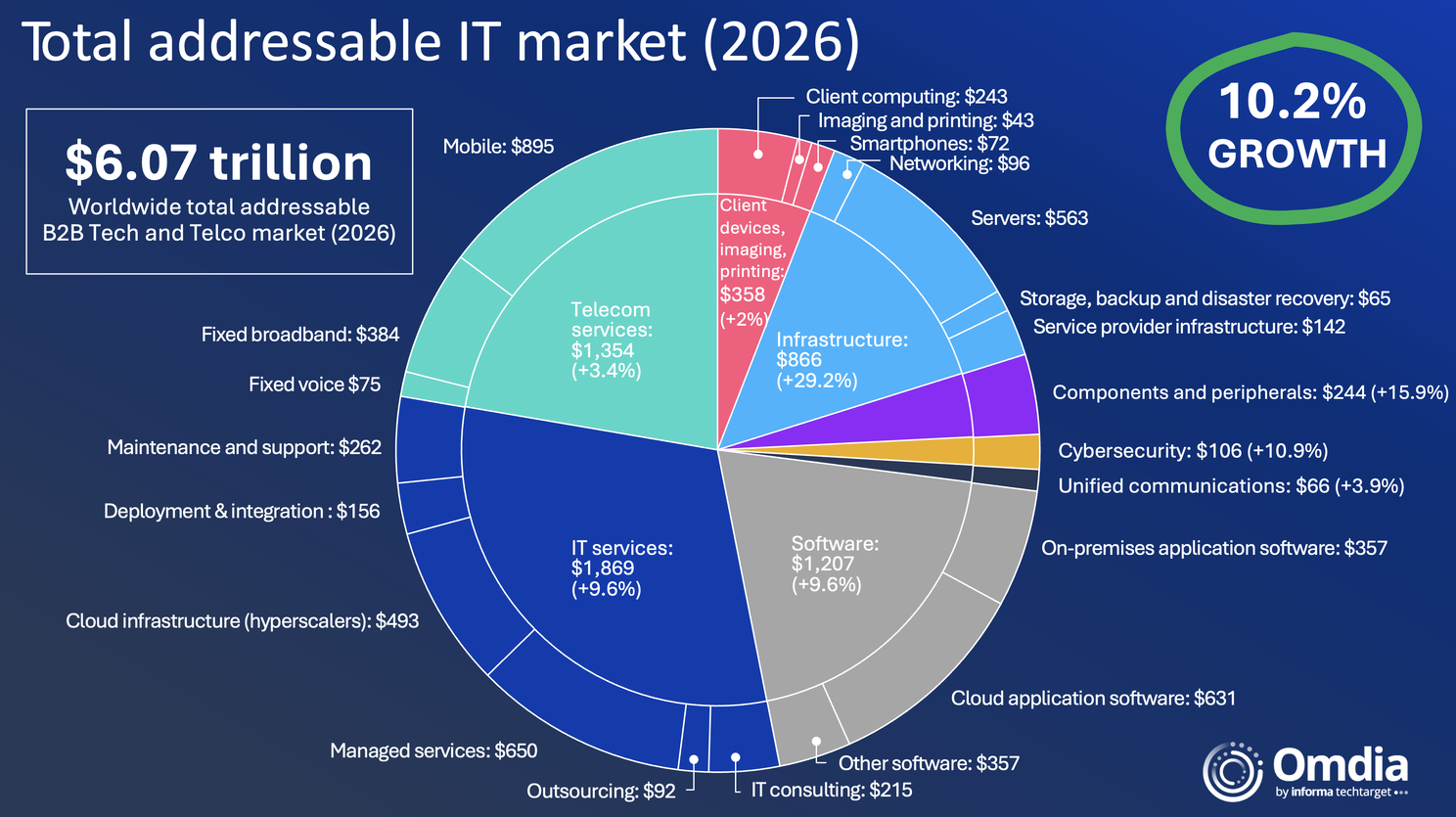
And as Jay notes, despite global economic growth barely clearing 2%, the IT market is projected to grow 10.2% in 2026. 66.7% of that spend is delivered through the channel, and 96% is influenced by it.
Marketplaces: The new route-to-market
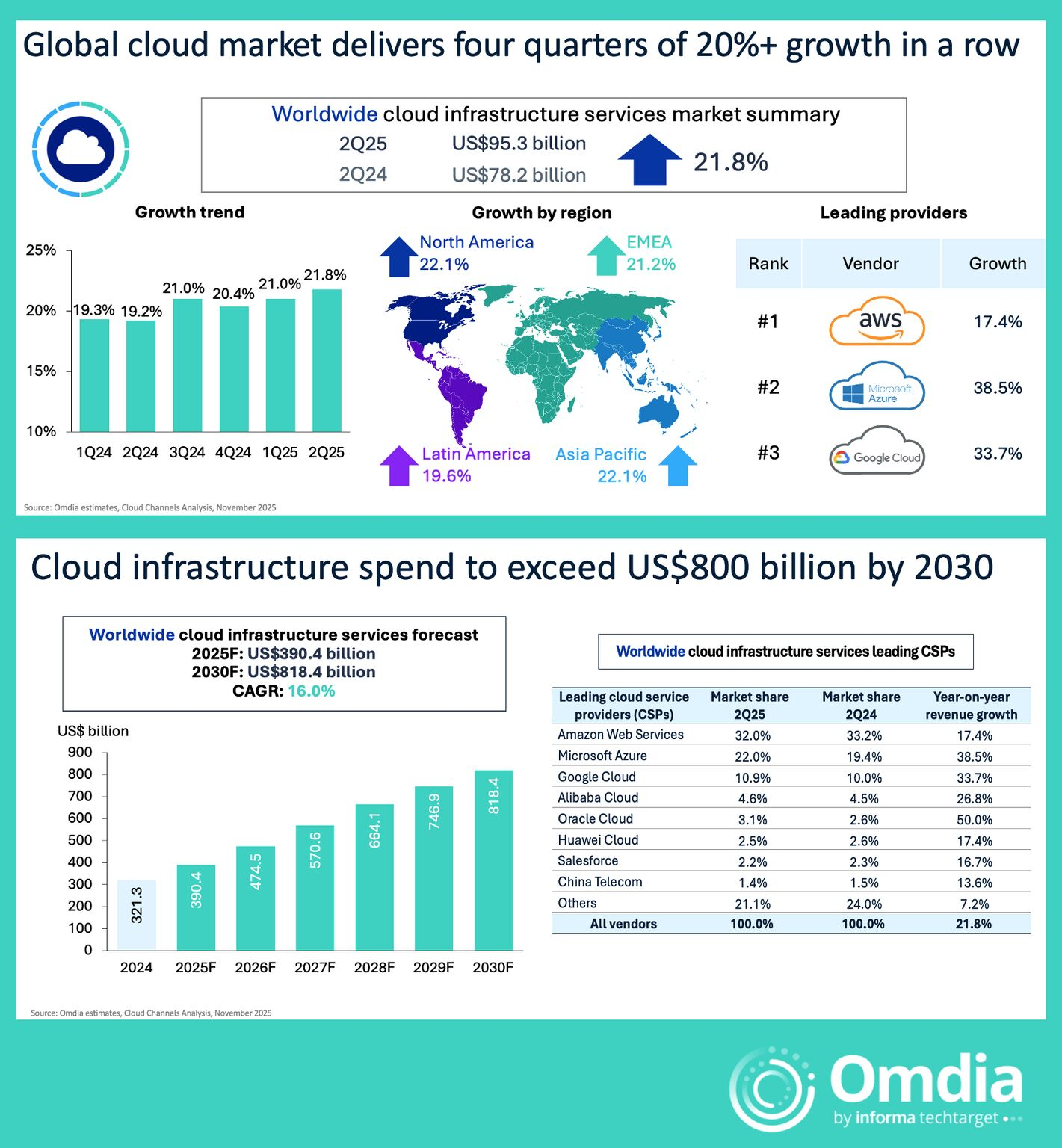
Cloud marketplaces are scaling at historic rates. According to Jay McBain, cloud infrastructure grew 21.8% YoY to $95.3B in Q2 2025, marking the fourth consecutive quarter above 20% growth.
Top cloud providers — AWS, Microsoft, Google, and Alibaba — now capture 69.6% of total spend, with AI demand further concentrating share among hyperscalers.
Marketplace performance data tells the story. AWS reports:
- 80% larger deal sizes
- 27% improvement in deal closing efficiency
- 40% faster close rates
- 40% more net-new customers
- 15% richer renewals
AI-powered Express Private Offers now generate custom pricing in minutes, while multi-product marketplace solutions allow ISVs and services to bundle offerings into unified packages.
Marketplace adoption is accelerating due to:
- Millennial buyer preferences
- Pricing model shifts (subscription, consumption, micro-consumption for agentic AI)
- Fully localized invoicing
- A growing productivity mindset
“To illustrate the level of orchestration, AWS partnered with us at Omdia to update their partner multiplier: now $7.13 for every $1 of AWS products,” explains Jay. “This multiplier comes to life through the marketplace and provides a procurement vehicle for complete customer solutions - including the support for partner economics underneath.”
This marketplace momentum will define the next decade of GTM.
Where AI meets the channel in 2026
As AI becomes foundational to enterprise growth, every major technology domain is being reshaped by both AI and the partners who implement, govern, and optimize it. Omdia’s Enterprise and Channel Trends to Watch 2026 shows that AI now intersects with channels, ecosystems, IoT, cybersecurity, customer engagement, and the digital workplace.
To succeed in 2026, you must understand how AI is transforming each domain and what actions they need to stay competitive.
Here’s how AI meets the channel in 2026, and the concrete steps your organization should take next:
1. AI and intelligent automation: AI is moving from experimentation to smart execution.
Organizations must define clear value statements, map AI to specific use cases, and treat security as a built-in requirement. This demands tighter alignment between AI strategy, GTM goals, and partner-enabled implementation. Businesses investing in enterprise-grade AI agent development solutions are also prioritizing interoperability, governance, and scalable deployment across their ecosystems.
Microsoft’s Device Ecosystem Platform documentation (MDEP) is a clear example of dissolving traditional vendor–partner lines.
MDEP is an Android-based platform from Microsoft that enables device manufacturers and software developers to deliver innovative solutions, backed by Microsoft's reputation for security, trust, and management.
In this case, co-creation and automation become essential as ISVs and service providers collaborate inside hyperscale-controlled environments.
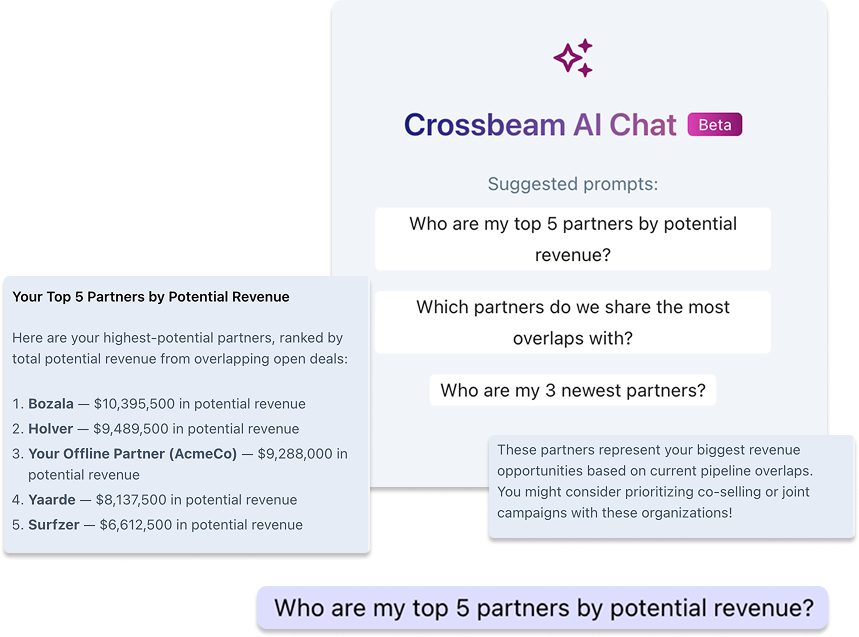
Another example is Crossbeam MCP Server and AI Chat. Crossbeam MCP gives AI tools secure, structured access to your ecosystem data.
It’s designed to work with popular AI tools and assistants — like ChatGPT, Claude, or your own internal agents — to securely tap into ecosystem data and deliver high-impact answers, actions, and automation where it’s needed.
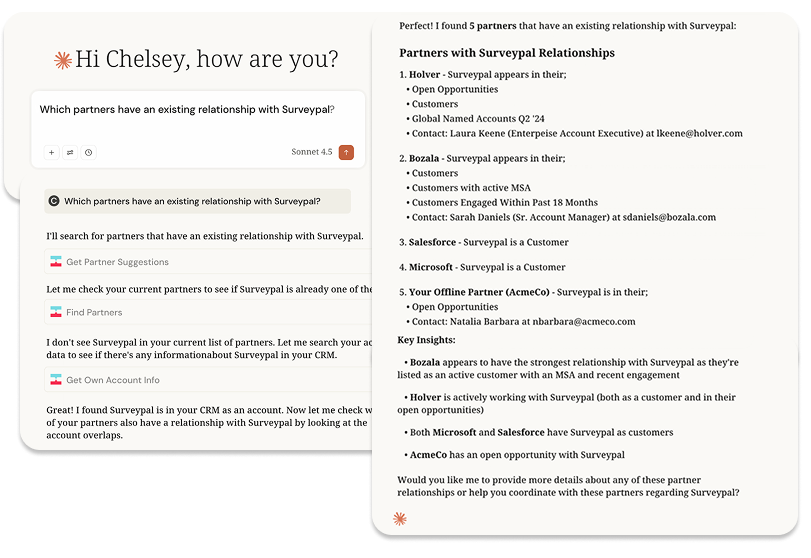
In this case, instead of logging into a dashboard or copying data manually, AI agents can now access Crossbeam data programmatically — enabling smarter prioritization, recommendations, and next-best actions directly inside GTM workflows.
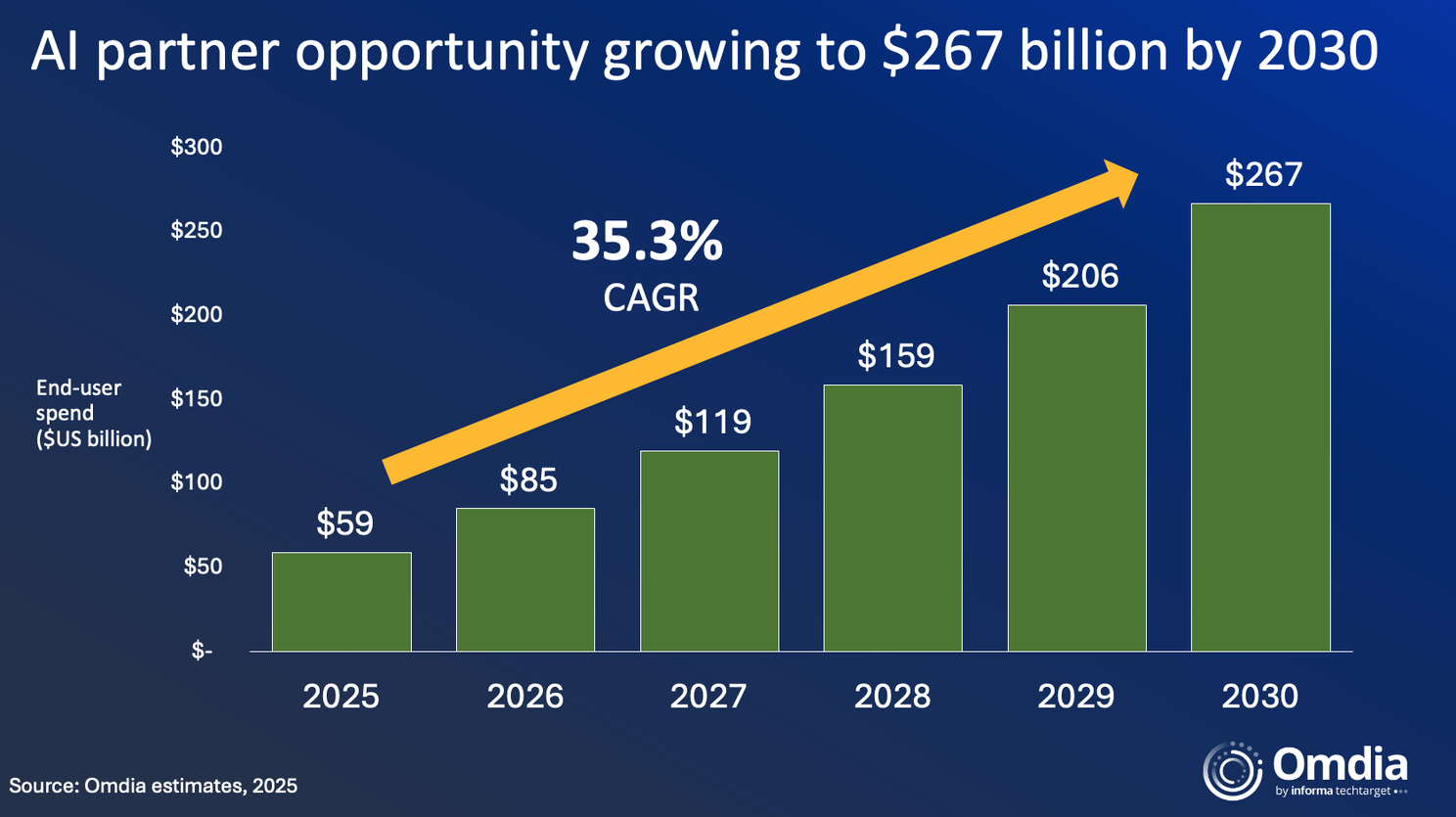
2. Channels: Omdia forecasts a $267B partner opportunity for AI services by 2030, including agentic AI. Partners win by delivering:
- Data preparation
- AI customization
- Governance and security
- Business process redesign
- Outcome-based pricing models
AI isn’t replacing partners; it’s expanding what they can deliver.
3. Cybersecurity: AI is accelerating both threats and defenses. Attackers are adopting AI for adaptive ransomware and phishing campaigns, while enterprises are responding with:
- Platform consolidation
- Curated cyber stacks
- Strategic security partnerships
- Managed and professional services
CrowdStrike is a strong example of how they see massive gains through their close collaboration with AWS, Google, and their Falcon Flex subscription.
“Partners are incredibly important for us,” explains CrowdStrike CEO George Kurtz. “Just about everything we do goes through a partner anyway. But the net-new business from partners, particularly because of Flex, I think will expand in the future.”
Partners with deep regulatory, regional, and architectural expertise will define the next wave of cyber resilience.
“We’ve got an amazing ecosystem of partners. With our CrowdStrike Marketplace, we've got lots of smaller vendors that can take advantage of the data model that we have and can take advantage of things like Falcon Foundry, where they can build their own applications,” said George. “And they know, once they’re in our marketplace, it’s an accelerant to their business. ”
4. Customer engagement: AI is becoming the backbone of orchestration across front-, middle-, and back-office work. According to Omdia, 39% of high-value adopters attribute their success to tight integration with core business systems, not isolated AI tools.
This shift demands partners who can unify data flows, applications, and infrastructure into a single intelligent ecosystem. JustCall illustrates this shift by prioritizing the right tech partners and operationalizing ecosystem data across every team — from Product and Partnerships to Sales and Success.
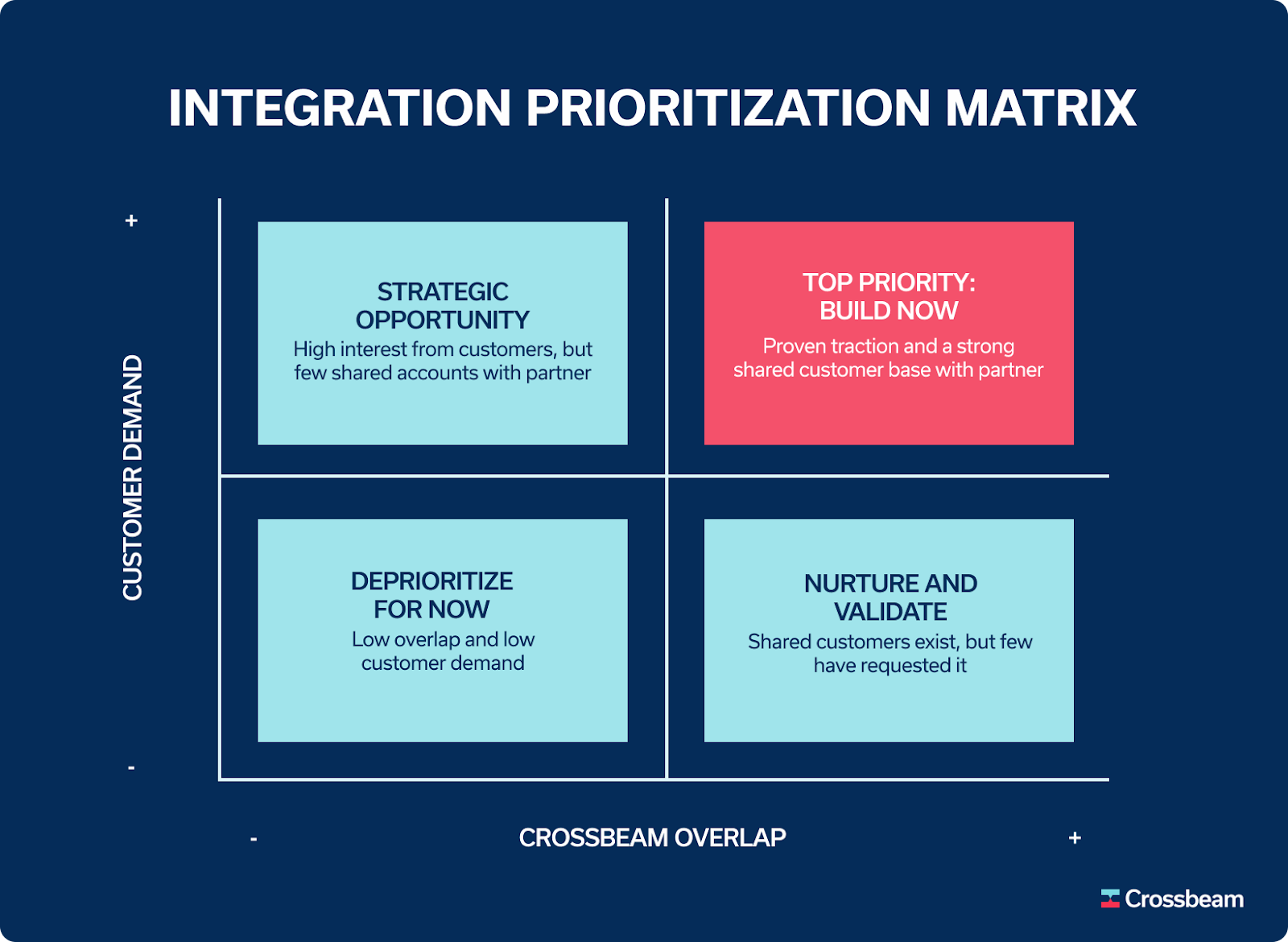
Since implementing Crossbeam (leveraging features like Crossbeam’s AI Chat and JustCall’s Ask AI feature), the Customer Success and Sales team have seen:
- Integration adoption climb from roughly 50% to nearly 60% of JustCall’s 7,000 customers.
- Customers with two or more integrations now retain at rates above 90%, compared to just 20–30% for non-integrated accounts.
- Average time to convert drop from 45–60 days to just 25–35 days on overlap-influenced deals.
- Average contract value (ACV) increase by 66% as AEs expanded deals across both sales and support teams.
A final word
The signal is unmistakable: growth in 2026 won’t come from pushing harder on yesterday’s playbooks. It will come from productivity powered by AI, pipeline created and accelerated by partners, and frictionless purchasing through marketplaces.
The teams pulling ahead are the ones that:
- Treat ecosystem data as core infrastructure, not a sidecar report
- Embed partner signals directly into CRM and AI workflows
- Default to marketplace motions that bundle, co-sell, and transact faster
- Measure success using C-suite KPIs (CAC, ACV, win rate, cycle time, NRR)
If you can see the invisible moments, orchestrate the right partners, and let AI guide next-best actions, you’ll shrink time-to-value, lift win rates, and expand NRR at scale.
Ready to build your Ecosystem AI strategy? Book an ELG Strategy Call and our team will help you map your Ecosystem Intelligence layer, connect it to your AI and CRM, and stand up a marketplace-first GTM motion that drives measurable lift in less than 120 days.