Why we built Pace: from an AI experiment to a deal agent for every rep


Crossbeam co-founder Simon Bouchez shares how a Claude rollout led to Pace, the AI deal agent that gives every opportunity its own assistant.

How a revenue team that went all in on Claude learned that sellers need rails, not toolkits, and what we built instead.
Pace didn't start as a product idea. It started as a question every revenue leader is asking right now: if we give our team the best AI available, will each rep actually generate more new ARR?
We tried to answer that question the obvious way first. It didn't work the way we hoped. What we learned along the journey became Pace, and today it gives every deal its own agent.
2025: we went all in on Claude
In 2025, like a lot of tech companies, we decided to deploy AI more aggressively at Crossbeam. We picked an AI platform and set up an AI task force inside our central Ops team. Its job was not only to roll Claude out, but to rethink how every team worked: which processes, tools, and data sources could change.
In our GTM org that I oversee, the area of focus was sales productivity. Productivity means one of two things. Either you generate more pipeline per rep, with more outreach and more prospecting. Or you execute your deals better; you handle more of them in parallel and you win more of them. Both should show up in one number: new ARR per rep.
So we looked at the tools our reps already lived in. Salesforce, our system of record for accounts, opportunities and pipeline. And the places where sellers still spend most of their day: Zoom calls, Gmail, and Slack.
The plan on paper was simple. Connect all of it to Claude. Build skills, artifacts, and routines on top. Make Claude the cockpit for the whole revenue team, from automated meeting follow-ups to coaching based on every call.
What we learned: sellers need rails, not a toolkit
It worked in some ways. In others, it didn't work at all.
The biggest problem was consistency. The technology moved so fast that we were constantly changing things and rewiring data sources. We never reached something harmonized and pre-built, where the team got the benefits of AI without wondering how to connect the pipes.
That points to a paradox we now see across the market. AI makes it feel like you can build and customize everything yourself. But what you want a salesperson to do is sell, not customize Claude, not build artifacts. Reps need rails: shared processes, checkpoints, and decisions made centrally, so their time goes to prospecting and to moving open deals forward.
There was a second, subtler problem: quality. Take a question like, "What's my probability of winning this deal this month?" That is not the same question as "this quarter" or "at all." When we put everything into a general-purpose model, those nuances got blurred. The answers looked good, because these tools are built to always answer. But they didn't hold up.
So we decided to build a dedicated application. It would use the best available models, Anthropic's and others, and the same data sources. But it would be structured, and structuring, for the people using it.
Phase 1: building the GTM Context Layer
We made a deliberate choice early on. Top of funnel is crowded with prospecting tools. So we focused on deal execution: everything that happens once an opportunity is open, and how to help reps run it as well as possible.
The first step was getting the data right. Our top engineers here in Paris built a real-time pipeline that ingests every activity (emails, Slack messages, calls) and maps it to the right CRM record, especially the opportunity. Sometimes that link is implicit. If one of our partner managers talks to a partner about an account, nobody from that account is on the call. That conversation still belongs on the deal.
This is where Crossbeam's DNA mattered. Our original business is helping companies share CRM data, and tens of thousands of CRMs—Salesforce, HubSpot and others—are connected to our platform. We know CRM data models deeply, and we used all of that knowledge to accurately map activities against CRM objects.
On top of the activity data, Pace builds an assessment for every deal with AI-generated attributes: win probability, momentum, whether the trend is positive, negative, or neutral, and whether communication is intensifying or fading, risks, next steps and more. These come from what actually happened on the deal, not from gut feel or fields reps fill in by hand. And they carry the nuance generic tools miss, like win probability this month versus this quarter versus overall.
Two things make this layer different:
- It rolls up. The same assessments that describe one deal add up to a view of a rep's portfolio, a team's pipeline, and the whole company's business.
- It remembers. Pace historizes every attribute, so you can see what a deal's win probability was at any point in time. A one-off AI session, even with every connector plugged in, won't think to define a clear attribute and keep a version of it every time it changes. That history is what lets Pace get sharper and more tailored to each company over time.
We spent most of the first half of 2026 on this foundation, which we now call the GTM Context Layer. A few companies close to us joined as design partners and helped shape it. Our own sales team adopted it fast, and our managers followed right behind them.
Phase 2: from context to action
Intelligence on its own wasn't enough. Once you have all this context, the real question is how you use it inside your team's key processes. We took two paths.
MCP first. Everything Pace knows is available through MCP. If you want to use it in Claude, or in any tool that consumes MCP, which is now most of them, you can. We didn't want to lock anyone into a single app.
Applications built for real sales processes. We started with forecasting: a suite that runs the process end to end and puts it on semi-autopilot, now that every deal has a reliable win probability. Then pipeline review: an AI-enriched view of each rep's deals that has become the control tower for our own team. It feels as familiar as the SaaS apps reps already know, but the AI underneath changes what it can tell you.
Then came the part we're most excited about.
One agent for every deal
The first wave of AI was models and chat. The wave we're in now is agents, and personal agents in particular. In the consumer world, products like Meta's Muse, Instinct, and many others now live inside WhatsApp and iMessage, booking tables, finding flights, and suggesting purchases. They show where work is heading: agents that read your email, analyze your calls, remind you of things and propose next steps, or simply take them.
We decided to build that for revenue teams. Pace now gives every deal its own agent. It works from the assessments the Context Layer computes in the background, plus the deal's activities, tasks and next steps. You talk to it in a chat interface that feels like Slack or WhatsApp, as if you had an assistant dedicated to that deal. It will:
- Push you the tasks that matter, and congratulate you when you win.
- Update and pull in relevant people across your org when something happens on a deal.
- Draft follow-up emails after your meetings.
- Suggest meetings when you need them, like an internal review of a discount you want to offer, or a pricing walkthrough with the prospect.
- Generate ready-to-use prompts you can drop into Claude to build a proposal or a sales deck.
It also works the other way. Tell the agent something it couldn't have seen, and that becomes a new input to the deal's assessment. It's a dialogue, not a dashboard. That's the shift from a passive context layer, running quietly in the background, to an active system of action that helps reps execute better.
And it isn't only for reps. I'm not in sales and I don't own any deals, but I'm involved in a lot of them. My agents keep me updated across our pipeline and start a conversation when they think I can help. Should I email an exec at a prospect to propose an alignment meeting? Should I sit down with a rep to approve a discount or a deal structure? Most people in a company contribute to winning business in some way, and Pace gives each of them the visibility to contribute well.
Why now
Phase 1 had to come first. Agents are only as good as the context they work from, and a quality system of action needs a trustworthy context layer underneath it. With our latest releases, that second phase is now live. And the timing is right: people are getting used to personal agents in their everyday lives, and they will expect the same at work.
That's why we're bringing Pace to market now: a deal agent for reps, for managers, and for anyone who helps a company win business. Deal execution is where we start. Top of funnel is likely next.
We started with a simple question about AI and rep productivity. Our answer is Pace: the context to understand every deal, and an agent to help you win it.
Hear the full story live
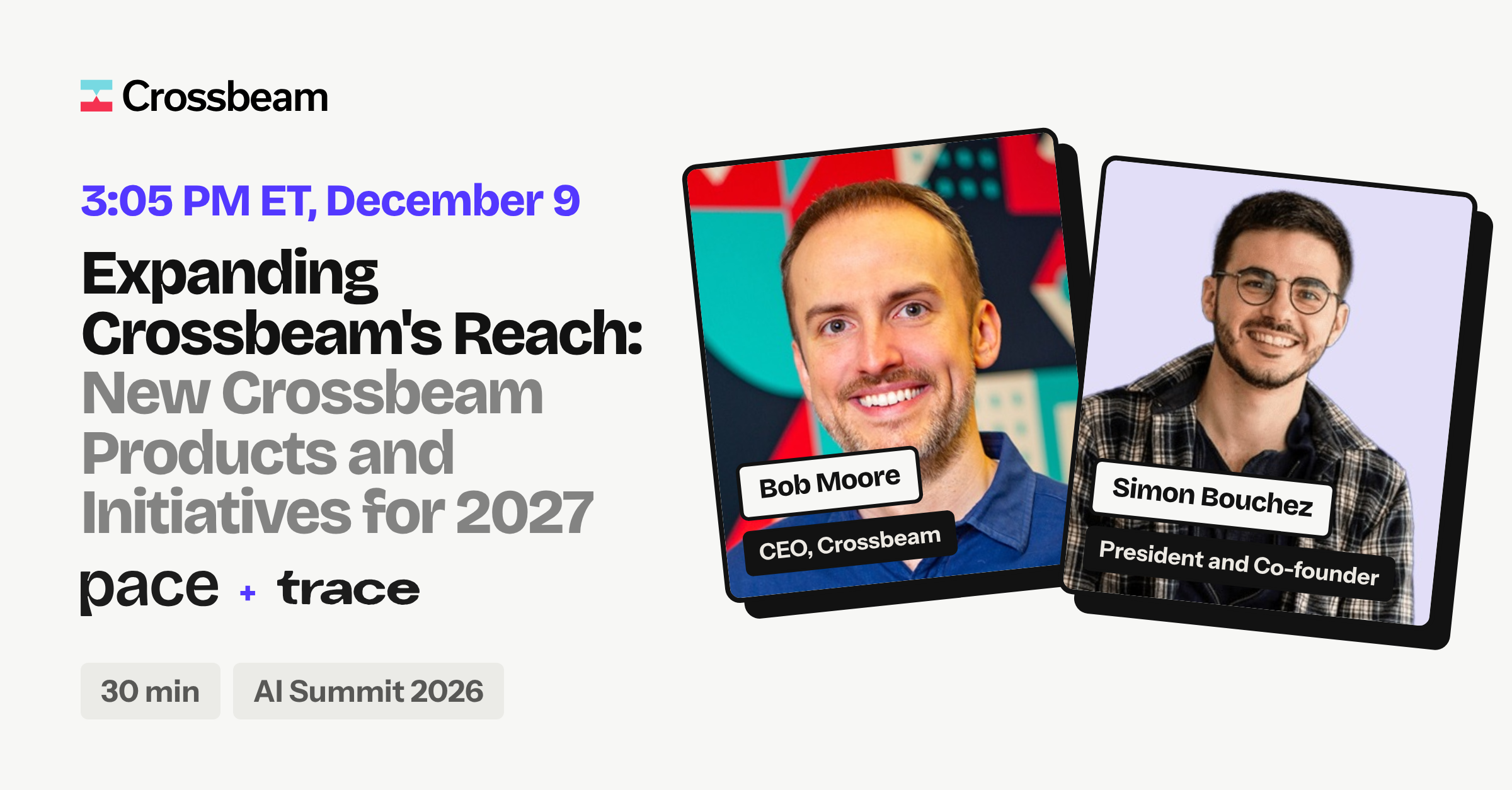
Want to go deeper? Join me and Bob Moore at Crossbeam's AI Summit on December 9 (virtual and free) for the full Pace story: what we tried, what broke, and how we built a deal agent our own team uses every day.
Save your seat at the AI Summit
FAQs
What is Pace?
Pace is an AI deal execution app from Crossbeam that gives every deal its own agent. It brings in a team’s emails, calls, and Slack messages, links them to the right CRM opportunity, and uses that context to help reps move each deal forward.
What is the GTM Context Layer?
The GTM Context Layer is the data foundation underneath Pace. It builds an AI-generated assessment for every deal, covering win probability, momentum, trend, communication activity, risks, and next steps. It also keeps a history of every attribute, and the assessments roll up from a single deal to a rep’s portfolio, a team’s pipeline, and the whole company.
What can the Pace deal agent do?
The agent sends reps the tasks that matter and keeps the right people across the company updated when something happens on a deal. It also drafts follow-up emails after meetings, suggests meetings when a deal needs them, and generates ready-to-use prompts for building proposals or sales decks in Claude. Reps can tell the agent things it couldn’t have seen, and that becomes a new input to the deal’s assessment.
Why not just connect Claude to your sales tools?
Crossbeam tried that first. The setup kept changing as the technology moved, and general-purpose answers blurred important details, like win probability this month versus this quarter. Pace gives reps a structured, pre-built system so they can spend their time selling instead of customizing AI tools.
Does Pace work with Claude and other AI tools?
Yes. Everything Pace knows is available through MCP, so teams can use it in Claude or any other tool that supports MCP.
Who is Pace for?
Pace is built for sales reps, sales managers, and anyone else in a company who helps win business, including executives and partner managers who are involved in deals.