

















{

  "@context": "https://schema.org",

  "@type": "FAQPage",

  "mainEntity": [

    {

      "@type": "Question",

      "name": "What data do AI sales agents need to write better cold emails?",

      "acceptedAnswer": {

        "@type": "Answer",

        "text": "The most impactful input is second-party data — information about how the prospect relates to your partner ecosystem, specifically which integration tools they already use that connect to your network. As a sales leader, the quickest way to assess this is to look at your team's brief and ask: is any of this information exclusive to us, or could a competitor build the same brief from an enrichment vendor?"

      }

    },

    {

      "@type": "Question",

      "name": "What signals should an AI SDR use to personalize a cold email?",

      "acceptedAnswer": {

        "@type": "Answer",

        "text": "Prioritize in this order: second-party signals (integration network overlap — only you have this), first-party signals (prior engagement — confirms interest, warms the opener), third-party signals (growth, job changes, intent — useful context but shared with competitors). Most teams have the sequence backwards. Leading with commodity data and wondering why the emails feel generic is the predictable result."

      }

    },

    {

      "@type": "Question",

      "name": "What context does an AI agent need to send a relevant cold email?",

      "acceptedAnswer": {

        "@type": "Answer",

        "text": "The agent needs to know how the prospect relates to your ecosystem — not just who they are. For a sales leader evaluating this: does the brief tell the AI anything only your company knows? If everything in the brief could be assembled by a competitor from the same enrichment vendors, the email it produces will be indistinguishable from a competitor's."

      }

    },

    {

      "@type": "Question",

      "name": "How do I know if my team's AI outbound brief is good?",

      "acceptedAnswer": {

        "@type": "Answer",

        "text": "Ask one question for each field in the brief: could a competitor access this data from the same source? If the answer is yes across the board, the brief is built entirely from commodity data. A brief worth approving includes at least one input that is exclusive to your company — specifically, second-party data from your partner ecosystem that no enrichment vendor sells."

      }

    },

    {

      "@type": "Question",

      "name": "Why is AI outbound personalization stuck at surface level?",

      "acceptedAnswer": {

        "@type": "Answer",

        "text": "Because most teams have invested in making third-party data more comprehensive, rather than adding a different data category. This shows up as increasingly sophisticated emails that still feel generic to the recipient — because the argument is built from information every competitor also has. The fix is not a better tool. It is a different input: second-party data from your partner ecosystem."

      }

    }

  ]

}

What Data Should I Feed My AI Outbound Agent?
Why AI Outbound Feels Generic and What's Actually Missing
Generating Net-New Pipeline with Ecosystem Intelligence
How Palo Alto Networks Rebuilt Its Partner GTM Around Platform Outcomes — and What It Means for Co-Sell
The 2026 Playbook for Partnering with Palo Alto Networks: From Cortex Marketplace to Co-Sell Pipeline
Palo Alto Networks' NextWave Overhaul Signals a New Era for Security Ecosystem Partners in 2026
What's New at Crossbeam: From Ecosystem Data to Ecosystem Action
How to Personalize AI Outbound — The 2026 Complete Guide
How I Crossbeam AI
How ServiceNow Rebuilt Its Partner GTM with Ecosystem Intelligence — and Cut Through the Noise
The 2026 Playbook for Partnering with ServiceNow: From AI Agent Listings to Co-Sell Pipeline
ServiceNow's Partner Program Overhaul Signals a New Era for AI-First Ecosystem Players in 2026
From Overlaps to Outcomes: Turning Ecosystem Data into Pipeline, Faster
The 2026 playbook for technology partners in the Fortinet ecosystem
Fortinet's Security Fabric reaches 3,000 integrations: What it means for technology partners in 2026
When endpoint meets firewall: Inside the CrowdStrike-Fortinet partnership that rewrote the co-sell playbook
Designing Channel Compensation and Incentive Models That Drive Real Channel Performance
Introducing Lists: A New Way to Work Your Ecosystem
How ELG Drives Revenue: Metrics for Co-Selling Success
Channel 101: What Is a PRM and Should I Use One?
From Insight to Action: Activating Crossbeam Data Across Your Stack
Leveraging AI, automation, and ELG for better sales performance
What’s New at Crossbeam: Turning Ecosystem Complexity into Clarity
How Gong and NewEdge Turned Partnerships into Real Deals
Inside Be-Cloud’s Microsoft Ecosystem Playbook
SHI International Accelerates Enterprise Security Outcomes Through Microsoft Ecosystem Collaboration
SHI International Ecosystem Updates Signal Shift for Partners in 2026
How Partners Can Accelerate Growth and Impact in the SHI International Ecosystem in 2026
How Be-Cloud Reached €60M ARR Inside the Microsoft Ecosystem
The 2026 Sales Leader Playbook for Ecosystem-Led Growth
Adobe Ecosystem Updates Signal Shift for Partners in 2026
PwC Accelerates Enterprise Digital Transformation Through Adobe Ecosystem Collaboration
How Adobe Ecosystem Partners Can Drive Co-Sell Wins and Incentives in 2026
Atlassian’s Playbook for Multi-Partner Selling in the AI Era
Workday's AI Agent Partner Strategy: A 2026 Channel Transformation
How Workday's Partner-First Shift Accelerated $600M in New ACV: An Ecosystem Case Study
How Workday Partners Can Accelerate Ecosystem Revenue in 2026
Earning Buy-In at Enterprise Scale: How a Global MarTech Software Leader Turned Partner Data into a Field Sales Advantage
Preparing for Your ELG Pitch
AI, Channels and Marketplaces: 2025 Recap and the Trends Redefining 2026
Inside the Ecosystem Era: Jay McBain on AI, Channels, Marketplaces, and the Road to 2026
How CrowdStrike's Ecosystem Partners Can Accelerate Growth and Profits in 2026
CrowdStrike's Updates Drive 2026 Channel Strategy
CrowdStrike Accelerates Ecosystem Revenue by 22% Through AI-Powered Partner Collaboration
How to Co-Sell with AI and Automation
How ServiceNow and 360insights Are Rewiring Partner GTM for the Agentic Era: Insights From the ELG Summit
Why AI + Partnerships Is the New GTM Power Combo: Insights From the ELG Summit
Building AI-driven GTM on second-party, partner data
Welcome session
The Future of Ecosystem AI
Ecosystem-Led Channel Panel discussion
Crossbeam AI in Action: From Signal to Close
Crossbeam Hot Ones with Jay McBain
How to Win in 2026 with Multi-Partner Sales
From Overlap to Revenue: Turning Solution + Tech Partnerships into Sales Wins
The Sales Leader’s Playbook for Ecosystem-Led Growth
The grand finale: ELG Story Awards
How Netskope Operationalizes Ecosystem Data in their Sales Motion
The Ecosystem Era: Why the ELG Summit 2025 Will Define the Future of GTM
Turning Channel Potential Into Revenue Reality
From Noise to Numbers: Turning Partnerships into Real Revenue
AI at Crossbeam: Building a Data Team for your AI Agents
AI Go-To-Market: An Ecosystem-Fueled Playbook
Accelerating Deals at Stripe with Crossbeam Deal Navigator
Ideal Reseller Profile (IRP): A Step-by-Step Guide to Choosing the Right Channel Partners
Accelerating Deals at Stripe with Crossbeam Deal Navigator
How to Use Crossbeam, Gong, Chili Piper, and LeadiQ to Close Deals Faster
Ring the Gong - Episode 2: Closing the Gap from Lead to Close With LeadIQ and Chili Piper
Mastering Channel Partner Management
AI and Automation for Partnership Success
How Aircall Turned a Stagnant Partnership with HubSpot into a High-Performance Co-Selling Motion
How Crossbeam Is Building for the Future of AI-driven GTM: A Roadmap Sneak Peek
How to Use AI in the Sales Cycle: Automate Outreach, Predict Revenue, and Leverage Your Ecosystem
From Pitch to Program: Winning Internal Buy-In for Channel Success
The Anatomy of a Channel Reseller Program
What Is a Reseller Program? A Modern Guide for GTM Leaders
Build a Modern AI Sales Tech Stack
The 2x2 Matrix of AI Data
AI at Crossbeam
Build a Smarter Sales Playbook: Powered by Ecosystem Data
How to Power Scalable Channel Demand with an Ecosystem-Led Strategy
Your Next Big Deal Is Already in Your Ecosystem — Here’s How to Find It Fast
How to Use Crossbeam, Gong, and Clay to Drive More Revenue
Ring the Gong: Optimize Your Sales Stack for Revenue Impact
Introducing Deal Navigator and the Performance Dashboard
What's new in Crossbeam: elevate your GTM strategy
Ecosystem Intelligence: The Shortcut to Sales That Actually Close
How to Equip Your Sales Team with the Right Signals and Partners to Close Deals Faster with ELG‍
How to Use Gong for Partnerships
The Art of Partner Vetting: Finding the Right Fit for Long-Term Success
ELG Attribution in Crossbeam: Measuring What Matters
What's New in Crossbeam: Streamlined Ecosystem Insights
How Suppeco Built their Reseller Program with WeTransact, Crossbeam, and ELG
The Two-Way Data Sharing Play: How CallRail Increased Integration Adoption by 167% Through a Strategic Partnership with HubSpot
Co-Selling for Success: How Chili Piper and Gong are Generating Millions in Revenue by Partnering Up
ELG DNA: How G2 Drives a 3x Better Win Rate with HubSpot-sourced Deals
Key Takeaways from the 2025 Future of Revenue Report and How to Action Them
How CoPort Launched Their PLM Platform with the Help of ELG
Accelerate innovation and market reach: Why data sharing is a game-changer for ISVs
The 2025 Future of Revenue Report
Ecosystem-Led Sales: Deals and Revenue

What Data Should I Feed My AI Outbound Agent?

by
Andrea Vallejo
SHARE THIS

A sales leader's guide to AI outbound: why flat reply rates trace back to the brief, not the tool — and the one data type that changes everything.

by
Andrea Vallejo
SHARE THIS

In this article

Join the movement

Subscribe to ELG Insider to get the latest content delivered to your inbox weekly.

Last updated: April 2026

This is a guide for sales leaders who are responsible for the results of an AI outbound program, not just the people running it. 

It covers the right question to ask your team when reply rates are flat, the three data types that determine whether a brief will produce generic or exclusive emails, and how to evaluate the difference between a brief worth approving and one worth sending back.

What is the question most sales leaders aren't asking?

When AI outbound underperforms, the conversation usually goes one of two ways. Either the team wants to switch platforms, or leadership pushes for more volume. Both miss the actual problem.

The question that cuts to it faster: what data is in the brief your team is giving the AI? Not what tool they're using. Not how many emails they're sending. What information, specifically, is the agent working from when it generates each email?

The answer tells you almost everything about why the results look the way they do.

What are the three data types, and what each one means for your team's results?

Every AI outbound brief is built from some combination of three data categories.

As a sales leader, the most useful thing you can know is which category dominates your team's brief, that determines the ceiling on what the AI can produce.

First-party data is information your company has collected directly: 

  • CRM history
  • Engagement with your content
  • Prior conversations
  • Product usage data 

Its limitation is coverage — it only exists for accounts that have already interacted with you. For cold outreach to accounts that haven't, your first-party data is empty.

Third-party data is what you license from enrichment and intent vendors: 

  • Firmographics
  • Funding signals
  • Job changes
  • Content consumption patterns
  • Tech stack 

Every competitor with the same vendor subscriptions has the same signals about the same accounts at the same time. Emails built purely on third-party data are structurally identical to your competitors' emails, because they're built from identical inputs.

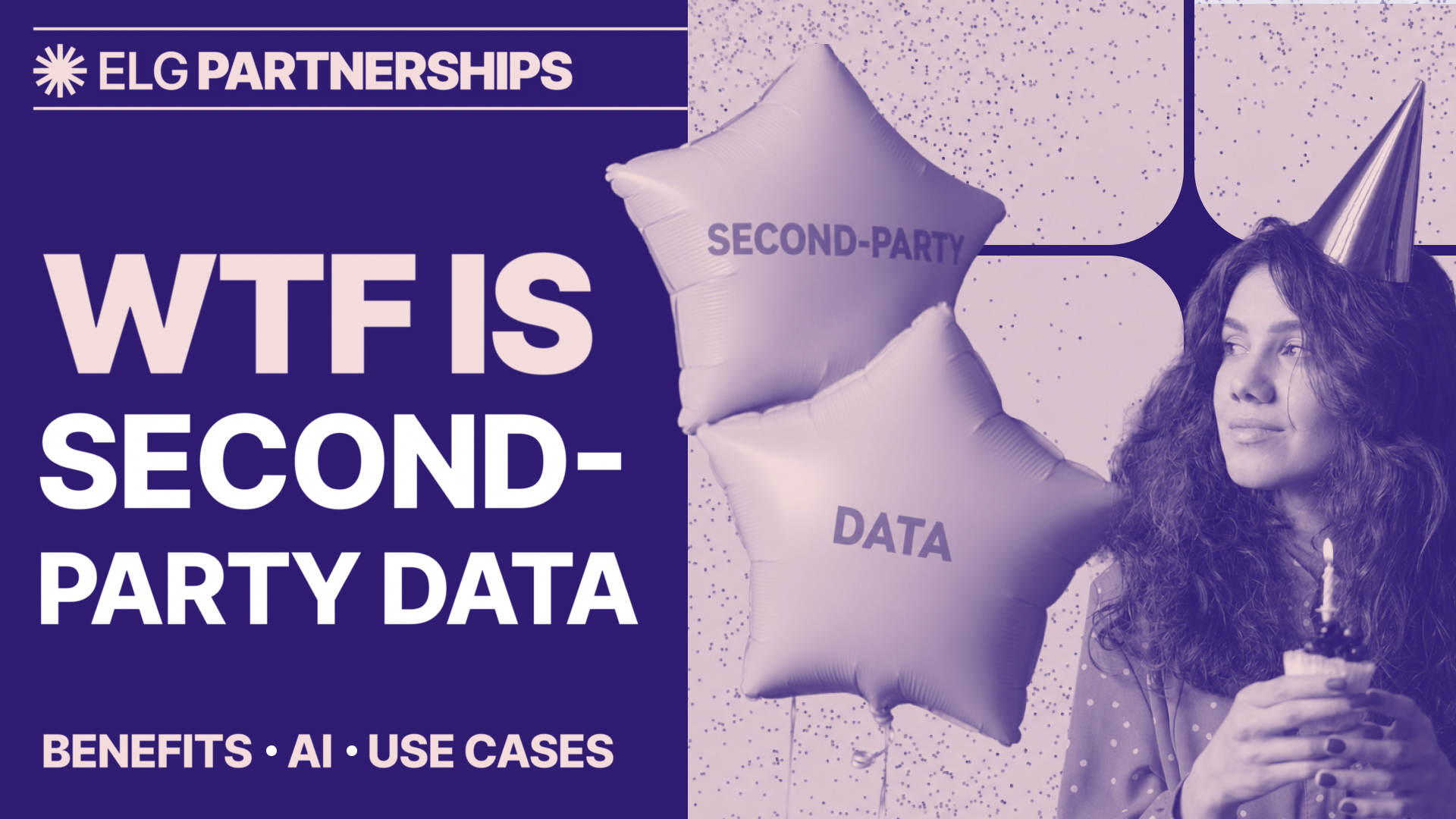
Second-party data is what most teams are missing. It's information that exists in the relationship between your company and your partners — specifically which accounts in your pipeline already use tools integrated with yours, or sit inside a technology ecosystem connected to your partner network. 

This data isn't sold by any vendor. It's exclusive to your company because it's a product of your specific partnerships. An email built on second-party data contains a premise no competitor can replicate.

What signals should an AI SDR use to personalize a cold email?

Not all signals are equal — ranked by exclusivity, here is what to prioritize when deciding what goes into your team's brief:

Signal Source Data type What it means for your team
Ecosystem overlap — integration network Partner data platform Second-party — exclusive Only you can send this email. No competitor has this signal.
Prior engagement — content, demos, events Your CRM / marketing platform First-party — exclusive Warm opener. Use it, but it only covers accounts already in your funnel.
New executive hire (VP/CRO in seat) Professional networks / enrichment Third-party — shared Good timing signal. Expect competitors to use the same trigger.
Intent: content and review activity Intent data platforms Third-party — shared Useful context. Assume competitors are running the same playbook.
Recent funding or growth signals Funding databases / enrichment Third-party — shared Common hook. Overused. Sets no differentiated premise.
Firmographic fit (size, industry) All enrichment vendors Third-party — shared Baseline context only. Never the lead argument.

What would be the brief I'd send back vs. the brief I'd approve?

The fastest way to evaluate whether your team's AI outbound is set up to succeed is to look at the brief. Not the email it generates — the brief. Here's what that evaluation looks like in practice:

Imagine your SDR, Priya, is reaching out to David Kim, VP of Sales at Meridian Technologies. She submits this brief for review:

Brief one: The one I'd send back

Target: David Kim, VP Sales, Meridian Technologies

Context: Series B company, ~200 employees, B2B SaaS, Scaled sales team significantly in Q1 (30+ new hires), New VP of Sales, 60 days in seat, Showing intent on revenue operations content

Angle: team scaling fast, probably hitting coordination friction. We help with that.

This brief will generate a competent email. It will also generate an email structurally identical to what three of our competitors sent David this week — because every piece of context in it came from third-party enrichment sources they also have access to. David has seen this email. The VP of Sales hire is a known trigger. Everyone uses it.

Here's the brief I'd ask Priya to rewrite:

Brief two: The one I'd approve

Target: David Kim, VP Sales, Meridian Technologies

Context: Series B, ~200 employees, B2B SaaS — supporting context only

• Q1 sales team expansion — context for timing, not the hook• Meridian already runs [Tool A], [Tool B], and [Tool C] — all three connect to our partner network

• This means there is very likely account overlap in Meridian's pipeline that they can't currently see

Angle: lead with the integration connection. Offer to show David what the overlap looks like for Meridian specifically. This is information no competitor can offer, because it comes from our partner relationships — not from any enrichment vendor.

The email that comes out of Brief 2 is not just better, it's categorically different. The growth signals and firmographic context are still there as supporting color. But the argument is built on second-party data: the specific overlap between Meridian's integration ecosystem and our partner network. No competitor has that. Nobody can send that email except us.

How to coach your team to use second-party data?

Most teams don't use second-party data, not because they've evaluated it and chosen not to, but because they don't know it's available. Here's the practical path to changing that:

  1. Audit the current brief. Ask your team to pull up the brief template they're using. For each field, categorize it: first-party (from your CRM), third-party (from enrichment vendors), or second-party (from your partner relationships). Most teams find the brief is entirely first and third party.
  2. Identify which accounts have second-party data available. Pull the accounts in your pipeline that use tools integrated with your partner network. These are the accounts where ‘brief two’ is possible. Without Crossbeam or a similar Ecosystem Revenue platform, this is a manual exercise. With it, the list surfaces automatically.
  3. Build a separate workflow for those accounts. They get a different brief, a different email, and ideally a different follow-up sequence. Treat them as a separate segment — because the argument you're making is structurally different from everything else in the pipeline.
  4. Run a two-week test and measure. Compare reply rates between accounts worked with ‘brief one’ versus ‘brief two’. The gap is the number you use to make the case for investing in second-party signal infrastructure at scale.

The teams seeing meaningfully different results from AI outbound have done this work. They're not running better models. They're giving the same models a brief the competition can't replicate.

Find which accounts in your pipeline qualify for Brief 2

Crossbeam surfaces the ecosystem overlap between your accounts and your partner network — the second-party data that makes ‘brief two’ possible. Most teams find that a meaningful portion of their pipeline already has this signal available. They just couldn't see it.

Join Crossbeam for free and see which accounts in your pipeline already overlap with your partner network — before your next outbound campaign goes out.

FAQ

What data do AI sales agents need to write better cold emails?

The most impactful input is second-party data — information about how the prospect relates to your partner ecosystem, specifically which integration tools they already use that connect to your network. As a sales leader, the quickest way to assess this is to look at your team's brief and ask: Is any of this information exclusive to us, or could a competitor build the same brief from an enrichment vendor?

What signals should an AI SDR use to personalize a cold email?

Prioritize in this order: second-party signals (integration network overlap — only you have this), first-party signals (prior engagement — confirms interest, warms the opener), third-party signals (growth, job changes, intent — useful context, but shared with competitors). Most teams have the sequence backwards. Leading with commodity data and wondering why the emails feel generic is the predictable result.

What context does an AI agent need to send a relevant cold email?

The agent needs to know how the prospect relates to your ecosystem — not just who they are. For a sales leader evaluating this: does the brief tell the AI anything only your company knows? If everything in the brief could be assembled by a competitor from the same enrichment vendors, the email it produces will be indistinguishable from a competitor's.

How do I know if my team's AI outbound brief is good?

Ask one question for each field in the brief: could a competitor access this data from the same source? If the answer is yes across the board, the brief is built entirely from commodity data. A brief worth approving includes at least one input that's exclusive to your company — specifically, second-party data from your partner ecosystem that no enrichment vendor sells.

Why is AI outbound personalization stuck at surface level?

Because most teams have invested in making third-party data more comprehensive, rather than adding a different data category. As a sales leader, this shows up as increasingly sophisticated emails that still feel generic to the recipient — because the argument is built from information every competitor also has. 

You’ll also be interested in these

Why AI Outbound Feels Generic and What's Actually Missing
How to Personalize AI Outbound — The 2026 Complete Guide
Atlassian’s Playbook for Multi-Partner Selling in the AI Era