












Article
|
7
 minutes
How ServiceNow and 360insights Are Rewiring Partner GTM for the Agentic Era: Insights From the ELG Summit
Article
|
7
 minutes
Why AI + Partnerships Is the New GTM Power Combo: Insights From the ELG Summit
Video
|
50
 minutes
Building AI-driven GTM on second-party, partner data
Video
|
5
 minutes
Welcome session
Video
|
45
 minutes
The Future of Ecosystem AI
Video
|
48
 minutes
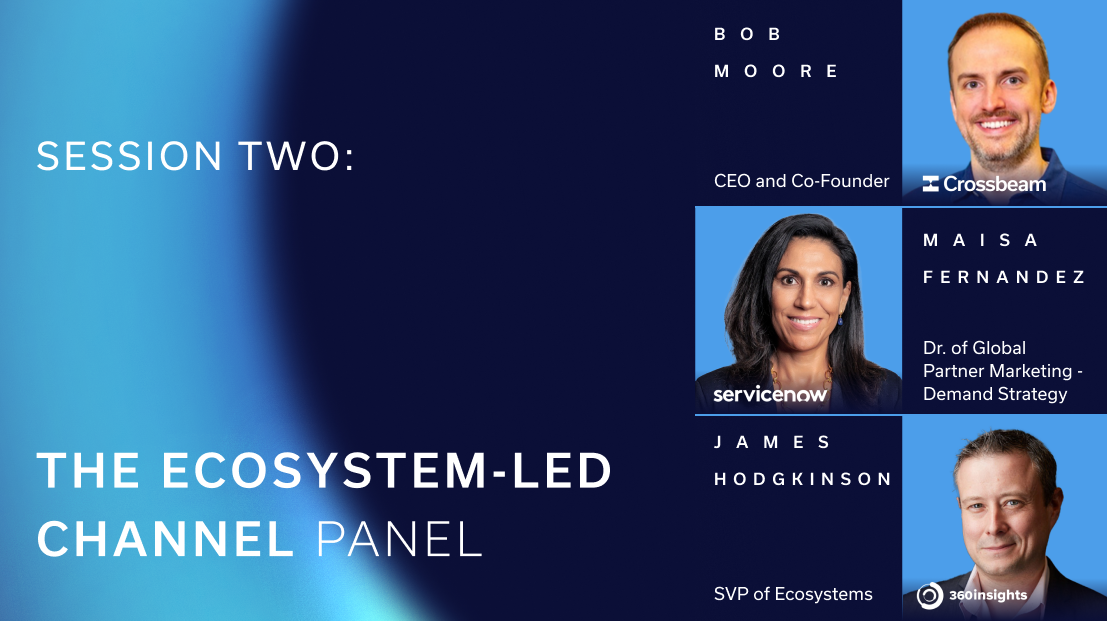
Ecosystem-Led Channel Panel discussion
Video
|
21
 minutes
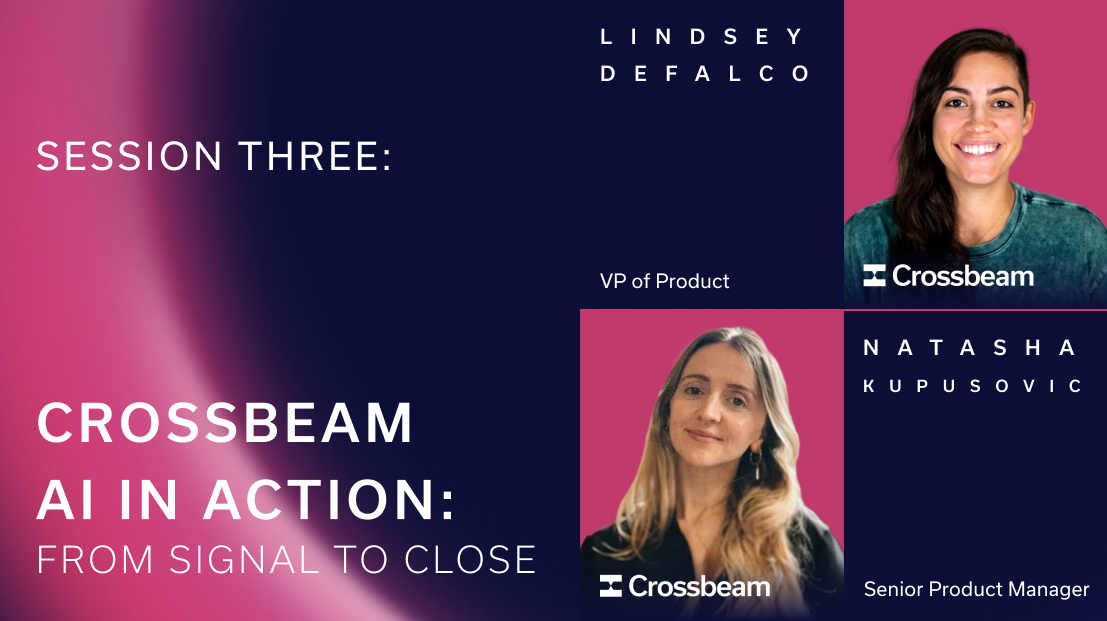
Crossbeam AI in Action: From Signal to Close
Video
|
47
 minutes
Crossbeam Hot Ones with Jay McBain
Video
|
46
 minutes
How to Win in 2026 with Multi-Partner Sales
Video
|
35
 minutes
From Overlap to Revenue: Turning Solution + Tech Partnerships into Sales Wins
Video
|
18
 minutes
The Sales Leader’s Playbook for Ecosystem-Led Growth
Video
|
16
 minutes
The grand finale: ELG Story Awards
Article
|
7
 minutes
How Netskope Operationalizes Ecosystem Data in their Sales Motion
Article
|
 minutes
The Ecosystem Era: Why the ELG Summit 2025 Will Define the Future of GTM
Video
|
46
 minutes
Turning Channel Potential Into Revenue Reality
Article
|
7
 minutes
From Noise to Numbers: Turning Partnerships into Real Revenue
Article
|
5
 minutes
AI at Crossbeam: Building a Data Team for your AI Agents
Article
|
7
 minutes
AI Go-To-Market: An Ecosystem-Fueled Playbook
Article
|
 minutes
Accelerating Deals at Stripe with Crossbeam Deal Navigator
Article
|
6
 minutes
Ideal Reseller Profile (IRP): A Step-by-Step Guide to Choosing the Right Channel Partners
Video
|
 minutes
Accelerating Deals at Stripe with Crossbeam Deal Navigator
Article
|
7
 minutes
How to Use Crossbeam, Gong, Chili Piper, and LeadiQ to Close Deals Faster
Video
|
 minutes
Ring the Gong - Episode 2: Closing the Gap from Lead to Close With LeadIQ and Chili Piper
Article
|
5
 minutes
Mastering Channel Partner Management
Article
|
7
 minutes
AI and Automation for Partnership Success
Article
|
6
 minutes
How Aircall Turned a Stagnant Partnership with HubSpot into a High-Performance Co-Selling Motion
Video
|
52
 minutes
How Crossbeam Is Building for the Future of AI-driven GTM: A Roadmap Sneak Peek
Article
|
6
 minutes
How to Use AI in the Sales Cycle: Automate Outreach, Predict Revenue, and Leverage Your Ecosystem
Article
|
7
 minutes
From Pitch to Program: Winning Internal Buy-In for Channel Success
Article
|
10
 minutes
The Anatomy of a Channel Reseller Program
Article
|
5
 minutes
What Is a Reseller Program? A Modern Guide for GTM Leaders
Article
|
6
 minutes
Build a Modern AI Sales Tech Stack
Article
|
4
 minutes
The 2x2 Matrix of AI Data
Article
|
6
 minutes
AI at Crossbeam
Video
|
45
 minutes
Build a Smarter Sales Playbook: Powered by Ecosystem Data
Article
|
6
 minutes
How to Power Scalable Channel Demand with an Ecosystem-Led Strategy
Article
|
7
 minutes
Your Next Big Deal Is Already in Your Ecosystem — Here’s How to Find It Fast
Article
|
7
 minutes
How to Use Crossbeam, Gong, and Clay to Drive More Revenue
Video
|
29
 minutes
Ring the Gong: Optimize Your Sales Stack for Revenue Impact
Video
|
28
 minutes
Introducing Deal Navigator and the Performance Dashboard
Video
|
30
 minutes
What's new in Crossbeam: elevate your GTM strategy
Article
|
6
 minutes
Ecosystem Intelligence: The Shortcut to Sales That Actually Close
Article
|
7
 minutes
How to Equip Your Sales Team with the Right Signals and Partners to Close Deals Faster with ELG‍
Article
|
6
 minutes
How to Use Gong for Partnerships
Article
|
5
 minutes
The Art of Partner Vetting: Finding the Right Fit for Long-Term Success
Video
|
18
 minutes
ELG Attribution in Crossbeam: Measuring What Matters
Video
|
20
 minutes
What's New in Crossbeam: Streamlined Ecosystem Insights
Article
|
6
 minutes
How Suppeco Built their Reseller Program with WeTransact, Crossbeam, and ELG
Article
|
5
 minutes
The Two-Way Data Sharing Play: How CallRail Increased Integration Adoption by 167% Through a Strategic Partnership with HubSpot
Article
|
5
 minutes
Co-Selling for Success: How Chili Piper and Gong are Generating Millions in Revenue by Partnering Up
Article
|
5
 minutes
ELG DNA: How G2 Drives a 3x Better Win Rate with HubSpot-sourced Deals
Article
|
6
 minutes
Key Takeaways from the 2025 Future of Revenue Report and How to Action Them
Article
|
7
 minutes
How CoPort Launched Their PLM Platform with the Help of ELG
Article
|
6
 minutes
Accelerate innovation and market reach: Why data sharing is a game-changer for ISVs
eBook
The 2025 Future of Revenue Report
Article
|
4
 minutes
Your GTM Motion Isn’t Dead — It’s Just Not Partner-Led
Article
|
6
 minutes
Let's save your deal, one intro at a time
Article
|
6
 minutes
How Document Crunch Used ELG and Crossbeam to Achieve 85% of Their Pipeline Goal — And Stay on Track for 100%
Video
|
28
 minutes
Maximizing Crossbeam: Master Salesforce Reports & Dashboards
Article
|
5
 minutes
How BEMO Boosted Meetings by 900% Using Clay, Crossbeam, HubSpot, and Ecosystem-Led Growth
Video
|
20
 minutes
The Inside Track: Get to Know Crossbeam's Salesforce App
Article
|
7
 minutes
Turning Clojure Code into Temporal Gold: Crossbeam’s Data Pipeline Transformation
Article
|
4
 minutes
5 Ways to Leverage Your Partner’s Influence and Trust
Article
|
3
 minutes
ELG Insider Daily #694: Ditch drag for drive
Article
|
3
 minutes
ELG Insider Daily #693: Turn data into dollars
Article
|
3
 minutes
ELG Insider Daily #692: ELG isn’t just B2B
Article
|
3
 minutes
ELG Insider Daily #691: Stop chasing revenue alone
Article
|
4
 minutes
New Data: Involving Partners in Deals Increases Win Rate for Nearly Every Ecosystem Size and Type
Article
|
3
 minutes
ELG Insider Daily #689: Lean into your winning niche
Article
|
3
 minutes
ELG Insider Daily #687: The email inbox that ate my productivity 🎃
eBook
Template: Impact of integration tracker
eBook
Template: Tracking your tech ecosystem's impact on churn
eBook
Template: Warm intro emails
eBook
Template: Tech integrations by partner
eBook
Template: Partner tiering checklist
eBook
Template: Partner onboarding workbook template
eBook
Template: Integration questionnaire
eBook
Template: Integration announcement
eBook
Template: Co-marketing checklist
Article
|
3
 minutes
ELG Insider Daily #686: AI is a partner’s partner
Video
|
50
 minutes
Uncovering the Crossbeam Ecosystem Revenue Platform
Article
|
3
 minutes
ELG Insider Daily #685: 43% of buyers don’t want a rep…
Article
|
3
 minutes
ELG Insider Daily #683: How to put your buyer in the driver’s seat
Article
|
4
 minutes
Follow the network: Your path to market expansion
Article
|
4
 minutes
Following to Lead: How to Win Buyer-Driven Deals
Video
|
 minutes
ARReasons to pay for Crossbeam
Article
|
3
 minutes
ELG Insider Daily #681: The 5S framework is not just for marketing
Article
|
3
 minutes
Incentives: The Key to Activating Your Partner Ecosystem
Article
|
3
 minutes
ELG Insider Daily #680: A lush forest of opportunity
Article
|
4
 minutes
ELG Insider Daily #676: What it really means to scale
Article
|
4
 minutes
ELG Insider #678: The 4 +1 pillars that hold up your partner ecosystem
Article
|
6
 minutes
5 Ways to Leverage Ecosystem Data
Article
|
3
 minutes
ELG Insider #677: In business, context is everything
Article
|
1
 minutes
What's Better Than an Open Opportunity? 1.6 Million of Them
Article
|
5
 minutes
ELG Insider #661: Step aside, spreadsheets
Article
|
3
 minutes
ELG Insider Daily #674: Help write the new GTM playbook
Article
|
3
 minutes
ELG Insider Daily #673: I just want to sell, sell, sell
Article
|
3
 minutes
ELG Insider Daily #671: 7 tactics to turn partnerships into pipeline
Article
|
4
 minutes
How to Scale Your Reselling Program
Article
|
4
 minutes
ELG Insider Daily #670: Trust the process

Subscribe for Access

Partnerships and Ecosystems Hub

Is ELG Right For Me? Find Out With the ELG Readiness Matrix
by
Bob Moore
SHARE THIS

Are you ready for it? Ecosystem-Led Growth is a powerful GTM motion, but it works best under certain business conditions. Here’s how to decide if and when to go all in on ELG.

by
Bob Moore
SHARE THIS

In this article

Join the movement

Subscribe to ELG Insider to get the latest content delivered to your inbox weekly.

Ecosystem-Led Growth is here, but is this the right moment for your company to adopt it? Let’s take a look at a simple framework for assessing your readiness for ELG. 

In working with over 20,000 companies at Crossbeam, we’ve been able to observe businesses at every stage of maturity and nature of business model. As it turns out, there are two key dimensions that dictate a company’s readiness for an ELG strategy: value proposition and company scale. 

Value proposition

Generally speaking, a value proposition is the way in which your company delivers value to its customers. As it turns out, the nature of your value proposition is a major input into how well ELG will fit into your business model as a whole.

We’re going to think about your value proposition on a spectrum from “standalone” to “ecosystem.”

What is Ecosystem-Led Growth? Learn more here.

Companies with standalone value propositions are extremely independent and deliver value in and of themselves. Some examples would be:

  • Your local dine-in pizza place. Go in, eat pizza, head out. There are very few ways that other businesses could be incorporated into the product experience in order to alter or enhance the value proposition to its customers.
  • A software development agency that builds new software products for their customers from scratch. They work directly with their customers and build a full deliverable from a blank page with nothing but their own labor. 
  • My first company RJMetrics was a company that chose to build features and hire staff over partnering with outsiders. For the most part, that product had a standalone value proposition that didn’t require any more than a spreadsheet upload to start delivering value.

On the other extreme of the spectrum are “ecosystem” companies who would be literally incapable of delivering value if not for other companies that exist in their partner ecosystem. Some examples would be:

  • DoorDash, where we find partners galore. From restaurant partners to mobile app store marketplaces to embedded mapping and driver software, it takes a village (rather, an ecosystem) to bring the value proposition of this incredible business to life.
  • System Integrators, whose entire value proposition is predicated on the sale, implementation, and maintenance of another company’s products. No partners, no business. 
  • My second company Stitch Data, which was effectively a middleware vendor whose value proposition involved moving data from one partner platform of ours to another. There was no “single player mode” for Stitch: 100% of our customers were in the customer base of at least two of our partners. 

The majority of modern tech companies fall on the “ecosystem” side of the spectrum, but there is a big difference between being fully ecosystem dependent and sitting somewhere closer to the middle.

Take Salesforce, the leading provider of CRM software. While their product may seem somewhat standalone, few of their customers realize a complete value proposition without implementation help from system integrator partners and installing multiple tech partner integrations from Salesforce’s AppExchange marketplace. So which are they? Well, that’s why this is a spectrum. I’d put Salesforce on the “ecosystem” side, but not all the way to the right. Most other SaaS tools are the same.

 In some pockets of the tech world, this distinction is made between “best of breed” vendors and “suite” vendors. The “best of breed” prioritize assembling the most valuable individual components to create a joint value proposition, while “suite” vendors index on the simplicity of a standalone solution in how they deliver value through a suite of their own features and services.

Company scale

When companies get big, partner ecosystems become inevitable. Even for companies with strong standalone product value propositions, there comes a point where different categories of partners start to become no-brainers.  

Channel partners in particular become commonplace for companies that are pursuing an international expansion strategy or trying to break into new verticals or user personas. Similarly, working with service partners and marketplaces can be a powerful way to scale your go-to-market efforts when hiring directly presents a scalability or expertise issue.  

Scale can also attract technology partner ecosystems even when they’ve been avoided by design. Like moths to a flame, when you build a large user base there will always be a potential tech partner ecosystem lying in wait, ready to build analytics, workflows, plugins, and other enhancements that augment the value story for your customers — whether you think they need it or not. If you have decent scale and build an API, they will come. 

The ELG readiness matrix

I love a good 2x2 matrix, and I find that they can be a useful way to break down situations like this one where two seemingly independent dimensions come together to answer a hard question.

In this case, “Is ELG right for me?” can be answered by looking at the combination of your scale and the extent to which your value proposition is dependent on your partner ecosystem. 

Placing yourself on this spectrum will likely drop you into one of four distinct quadrants:

  • Small scale, standalone value proposition: WAIT. ELG is probably not for you. The nature of your value proposition means that trying to build an ecosystem just for the sake of running ELG plays with adding partners may be “forcing it.” The juice may not be worth the squeeze unless you expand your value proposition or achieve meaningful scale.
  • Small scale, ecosystem value proposition: INVEST. Companies like these are well suited to invest heavily in ELG, and it may prove to be the most powerful lever they can use to move up the scale dimension of this graph. Their natural connectivity to a partner ecosystem as part of their value proposition means that they are well suited to make ELG plays.
  • Enterprise scale, standalone value proposition: EXPLORE. These ones are tricky because they are typically impressive but slower-moving companies who have earned their success by operating in an insular and independent way. However, by not pushing forward with ELG strategies they are almost certainly leaving some amazing growth opportunities on the table. While it may require a crawl, walk, run approach, companies like these should be doing work to explore ELG and what it could mean for them.
  • Enterprise scale, ecosystem value proposition: EXPAND. These are the most fun companies to work with because they most likely have embraced and invested in their ecosystem already, even if the ELG playbooks aren’t fully in use within their walls. This means there is opportunity to see outsized returns by taking the inherent value built into their ecosystem and rolling out ELG playbooks at scale. In doing so, they will massively expand both the value created by their ecosystem and likely the ecosystem itself.  

If you feel like you’re in an awkward middle zone in the graph, you can also consider the rate at which you are moving along these two dimensions to make a call. Do you have a fledgling ecosystem that shows some promise or are you failing to get one off the ground? Are you satisfied at a small scale or working to achieve hypergrowth? Use your directional velocity within this matrix to see where the puck is going and make the right call on how to proceed.

This post was adapted from an excerpt of Bob Moore’s book Ecosystem-Led Growth: A Blueprint for Sales and Marketing Success Using the Power of Partnerships. Order the book here and subscribe to ELG Insider for expert ELG insights and advice.

You’ll also be interested in these

Article
|
1
 minutes
The 2024 ELG Index: Charting the Global Progress of Ecosystem-Led Growth in Tech
Article
|
1
 minutes
Follow the network: Your path to market expansion
Article
|
1
 minutes
How Document Crunch Used ELG and Crossbeam to Achieve 85% of Their Pipeline Goal — And Stay on Track for 100%