Atlassian’s Playbook for Multi-Partner Selling in the AI Era



Learn how Atlassian is modernizing multi-partner selling with better data, AI-ready processes, and ecosystem intelligence to orchestrate complex enterprise deals.
As Atlassian — a collaboration platform for software, IT, and business teams — scaled into the enterprise, one challenge became clear: the traditional partner model no longer reflected how deals were actually getting done.
Customers weren’t engaging through a simple one-partner, one-vendor co-sell motion. Instead, they were surrounded by multiple partners at once — ISVs, solution providers, hyperscalers, marketplaces, and procurement intermediaries — each influencing outcomes at different stages of the journey.
The problem wasn’t ecosystem sprawl. It was the lack of visibility, orchestration, and usable signal across that complexity.
As Komal Shah, Head of Global Channel Operations at Atlassian, explains:
“Over time, as you realize the maturity of it, there are other partners that are involved. As we’ve moved into the enterprise space, we’re seeing five, six, seven, eight partners oftentimes involved with helping a customer solve the solution.”
That reality framed a candid conversation at ELG Summit 2025, where Bob Moore (CEO of Crossbeam) sat down with Komal and Bharat Suryakanthan, Principal Technical Program Manager in Atlassian’s partner organization, to unpack how Atlassian is modernizing multi-partner selling and where AI actually fits.
What follows is a practical look at how Atlassian is evolving partner operations for a world where multiple partners influence the same customer outcome, and why AI only becomes valuable once the underlying data and processes are ready.
Atlassian’s ecosystem DNA
Atlassian’s GTM strategy didn’t begin with a massive direct sales motion followed by partners added later. From early on, partners played a central role in helping customers adopt, implement, and extend the product.
“Way back when… we realized, hey, we just need help with certain things for partners to get involved with,” Komal explains. “Partners were where we went first. This wasn’t something we bolted on later.”
That origin story matters because it changes what “partner success” looks like. In many SaaS models, partner success is measured narrowly: deal registration, co-sell attribution, or resale revenue. Atlassian’s ecosystem has always been broader, spanning far beyond a simple “your rep + my rep” motion.
As Atlassian moved further into enterprise, its partner mix expanded to include:
- ISVs that extend the product experience
- Solution providers / SIs / GSIs that handle implementation and migration
- Marketplaces and hyperscalers, especially when customers want to use credits
- Public sector aggregators where procurement rules dictate buying routes
The result: partner value shows up across the customer lifecycle — not just in licensing revenue.
Why multi-partner selling changes everything
Modern B2B deals are shaped by multiple partners across multiple touchpoints, often without perfect coordination.
Atlassian sees the same thing. “It’s not about stepping over each other,” Komal notes. “It’s about partners filling specific customer niches, migration, consultation, procurement paths, expertise.”
That reality forces a shift in how ecosystem motions are measured and enabled.
The “single-touchpoint” model breaks down
Atlassian is moving away from the idea that one partner “owns” a deal based on a single registration moment. Instead, they’re recognizing partner contributions across the full lifecycle. This approach is aligned with Jay McBain’s 28 touchpoints framework, proving that the customer outcome often depends on multiple parties.
“That old model of just one touchpoint — the deal registration — is almost out the door,” Komal says. “You have to recognize partners at different touchpoints in the deal.”
How deal registration is evolving
To reflect that reality, Atlassian has expanded beyond traditional deal registration to include:
- Service registration, capturing who delivered implementation value
- Value registration, recognizing contributions such as design, planning, roadmaps, and specialized expertise.
This shift turns partner involvement from anecdote into structured data that teams can act on.
Making partner data usable
“When we looked at our data, over 80% of our engagements involve a partner in some format,” Komal says. “That surprises people, but it shouldn’t.”
Bharat shared a simple framework Atlassian uses when designing GTM motions: data, insights, action, and impact.
This is especially important in partner ecosystems, because the audience is complex:
- Internal teams (partner org, sales, operations, leadership, etc.)
- External partners
- In some cases, even customers navigating directories or marketplaces
“You have to think about your data architecture so it works for internal and external users and doesn’t expose data they’re not supposed to see,” Bharat explains.
Atlassian’s approach to AI and partner ecosystems is grounded in a simple principle: data only creates value when it leads to better decisions and outcomes. As Bharat puts it, “the goal isn’t more information, it’s momentum”.
Data: capture real partner signals
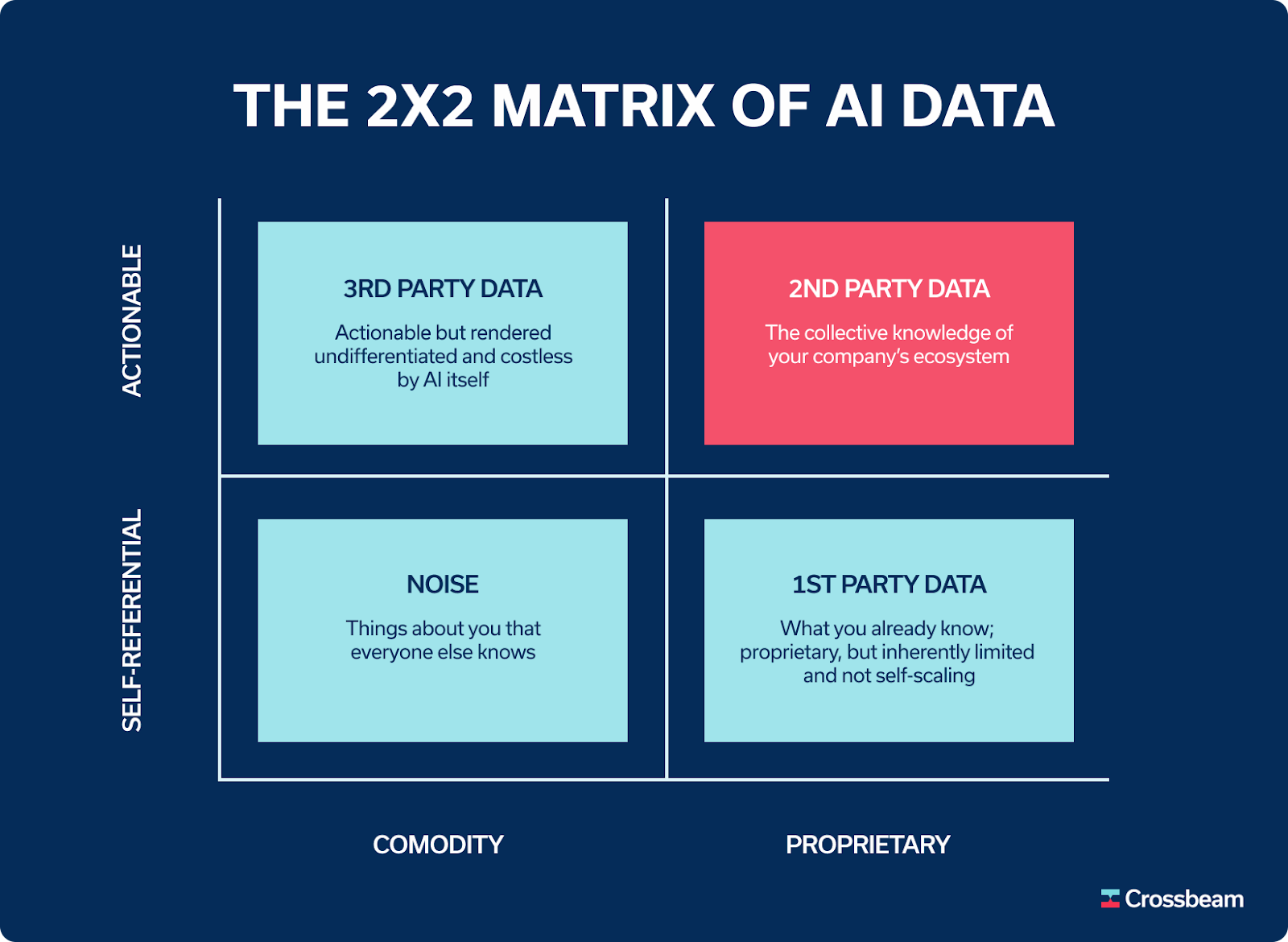
Data is the foundation, but not the outcome. Atlassian brings together deal, service, and value registrations; customer feedback; vertical expertise; marketplace activity; internal insights; Ecosystem Intelligence.
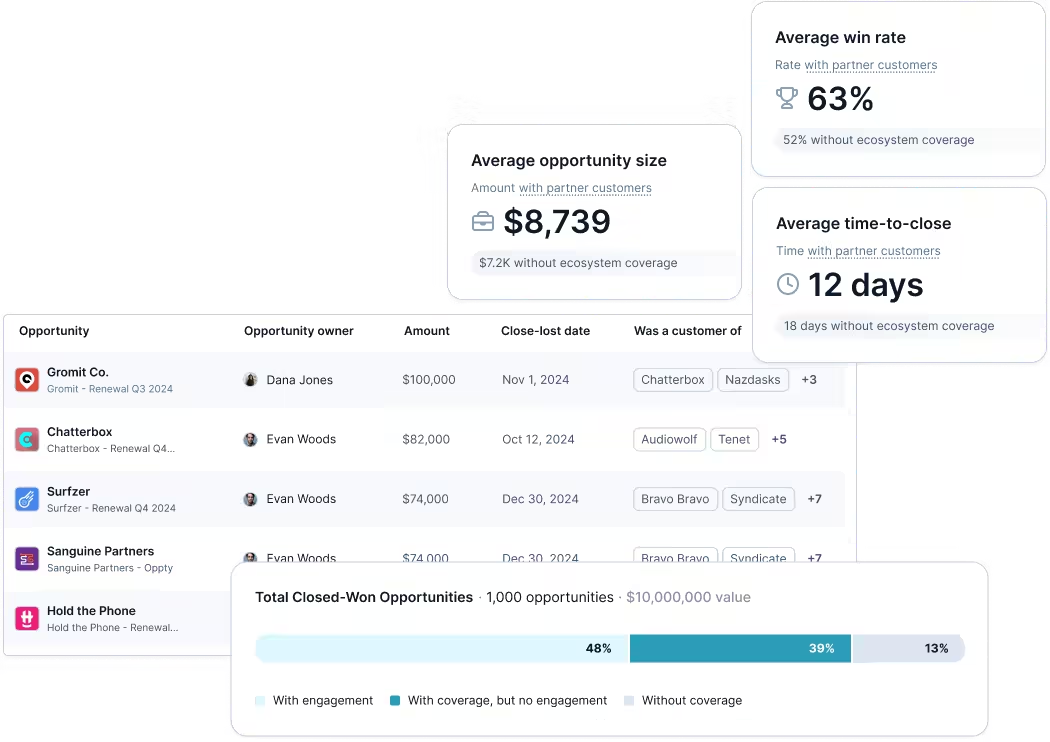
As Komal noted before, because enterprise deals often involve “five, six, seven, eight partners,” value can’t be captured at a single moment.
Insights: filter noise into clarity
Raw data without context is useless. Atlassian focuses on filtering noise and surfacing patterns people can trust — such as which partners perform best in a given vertical, deal size, or customer scenario.
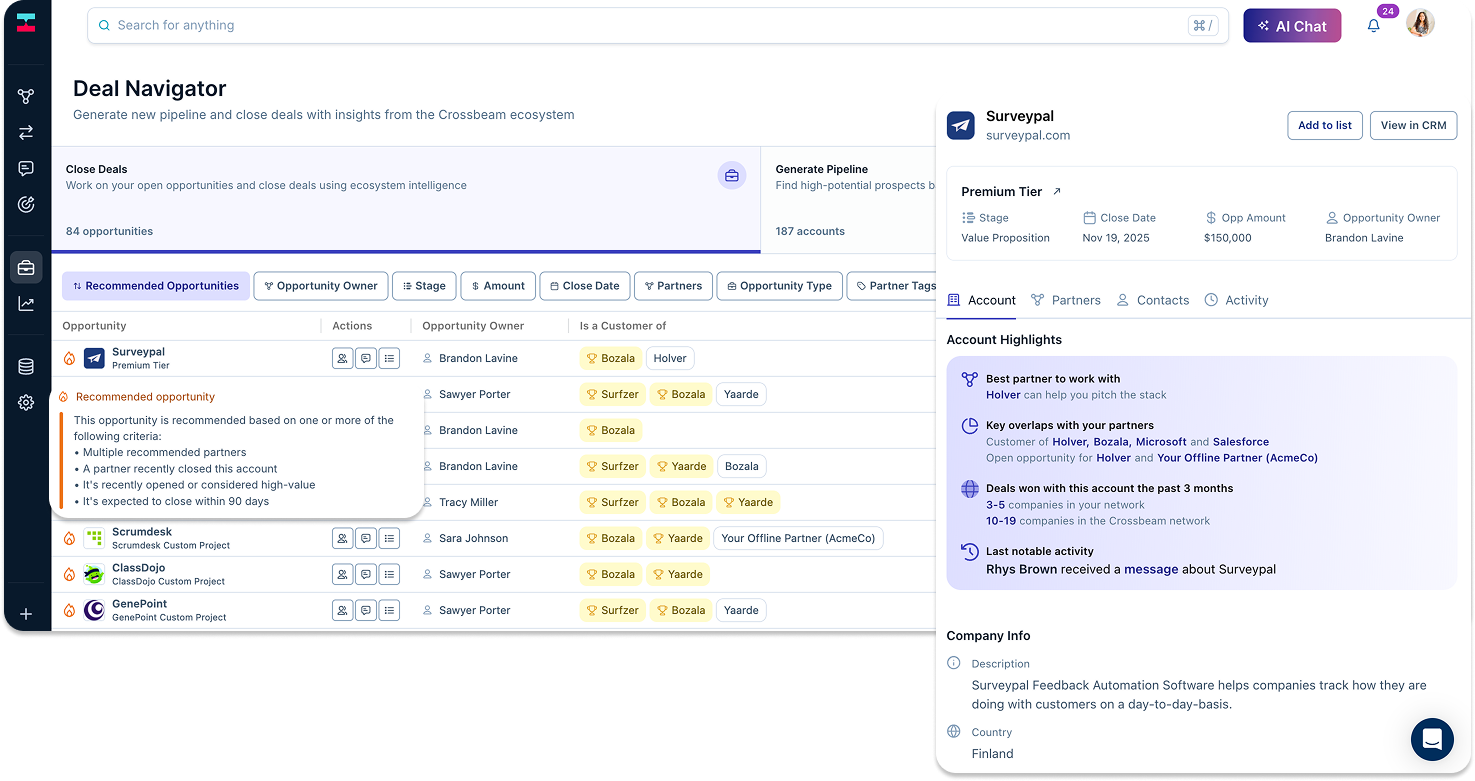
“If you throw data at people, it’s basically useless,” Bharat says.
Action: guide the next best move
Insights only matter if they reduce guesswork. Instead of spreadsheets and dashboards, Atlassian uses AI-driven prompts and recommendations to help teams and partners understand what to do next, before deals stall.
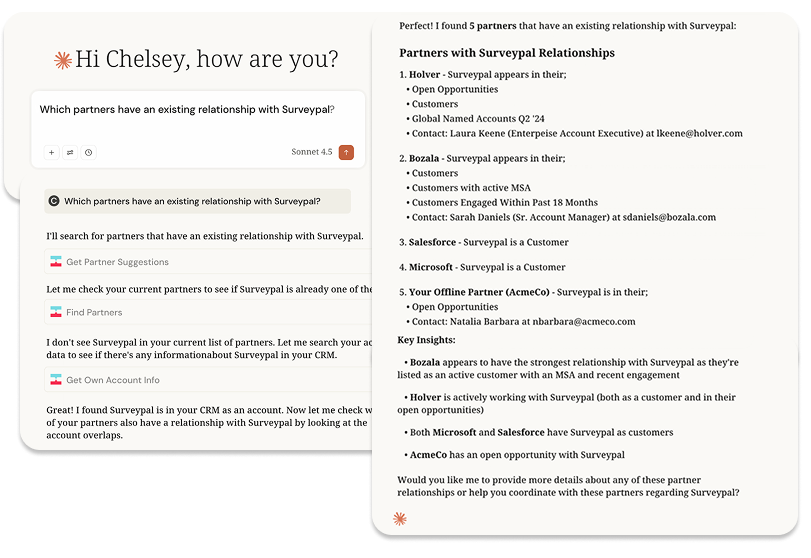
Impact: prove what worked
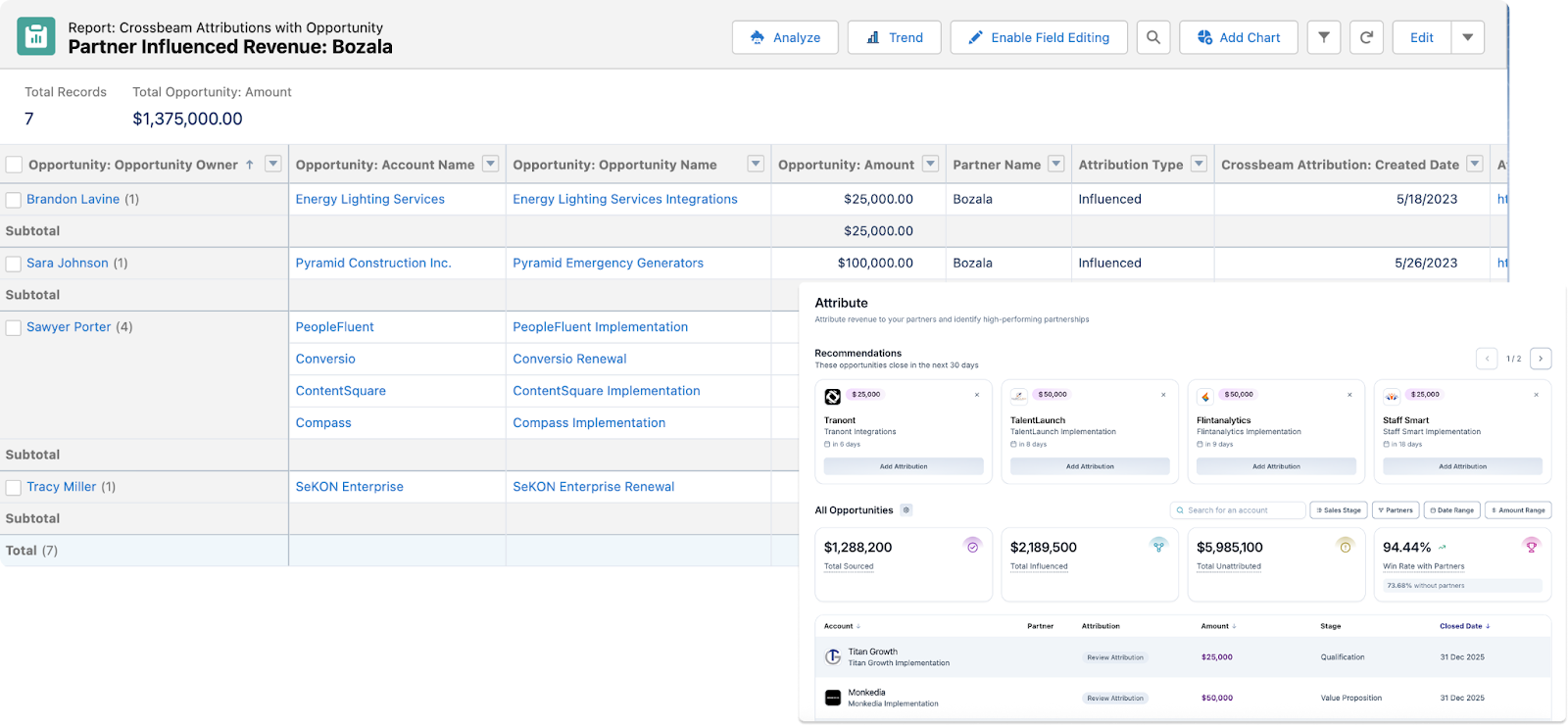
The final step is measurement: faster deal cycles, higher win rates, better customer results, and clearer justification for ecosystem investment.
“AI is a force multiplier,” Bharat emphasizes. “And ‘impact’ depends entirely on the quality of what you feed it”.
A practical example: improving partner discovery
Atlassian is also applying these principles to help customers choose the right partner from a large directory. Rather than forcing customers to guess, Atlassian is building stronger “match signals,” including:
- Customer feedback/NPS-style surveys after engagements
- A shareable “rating” concept, without exposing sensitive comments
- Vertical expertise based on demonstrated history
- Engagement size, for example, recognizing that a 25-seat rollout differs from a 10,000-seat program
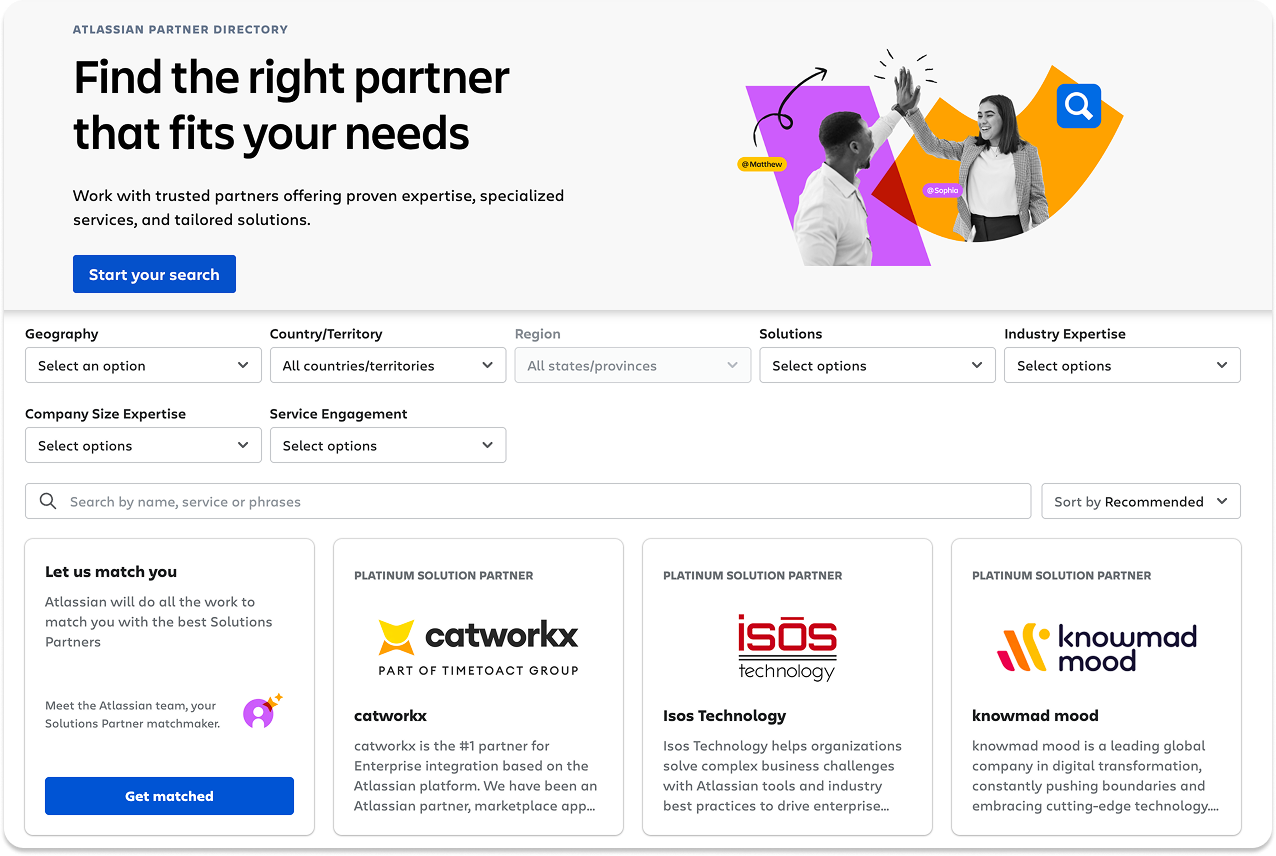
This is what “data to insight” looks like in practice: from static lists to helping customers find the right partner for their context.
Atlassian’s “connective brain” for work
Atlassian’s AI experience is called Rovo, which Bharat describes as being powered by a layer that connects data across Atlassian tools (like Jira, Confluence, Trello, Bitbucket), that can also connect outward through integrations, APIs, and custom connectors.
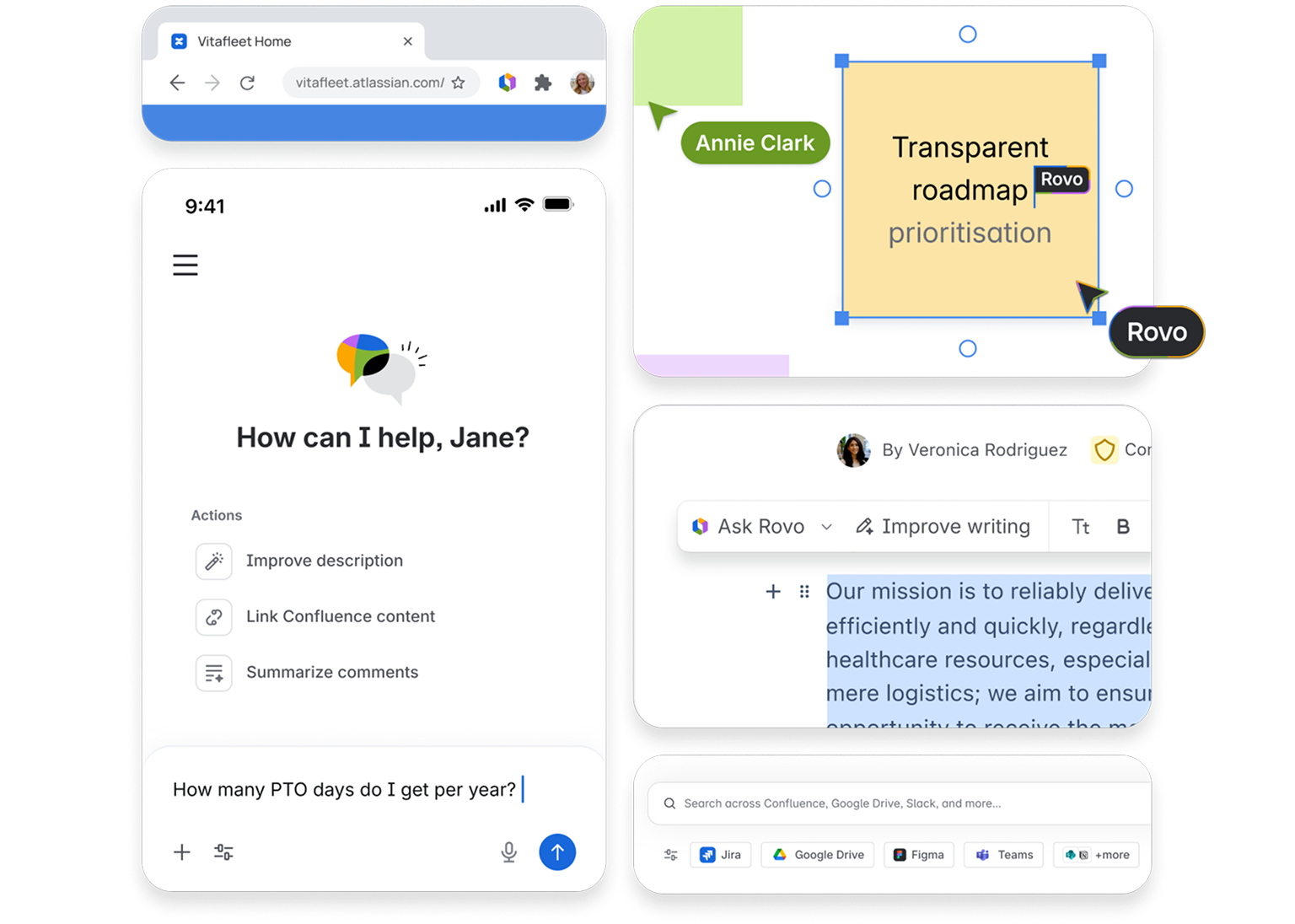
Rovo’s point isn’t “AI is magic,” but rather, AI is helpful when it solves the real tax in modern companies, information discovery.
“Think about this as your centralized brain,” Bharat explains. “It’s working when the rest of your team is sleeping.”
Bharat’s view was direct:
- The future battle is finding the right information fast
- Once you can discover and connect knowledge, you can move from guessing to prioritizing and then to acting
“AI essentially solves the problem of discovery,” says Bharat. “If you’re spending time looking for content, you’ve already lost that time where you could have been productive.”
This is where Ecosystems Intelligence gets interesting: if your “brain” can connect into the systems where partner signals live (CRMs, partner platforms, data lakes, integrations), then AI can help orchestrate the next best action without burying people in dashboards.
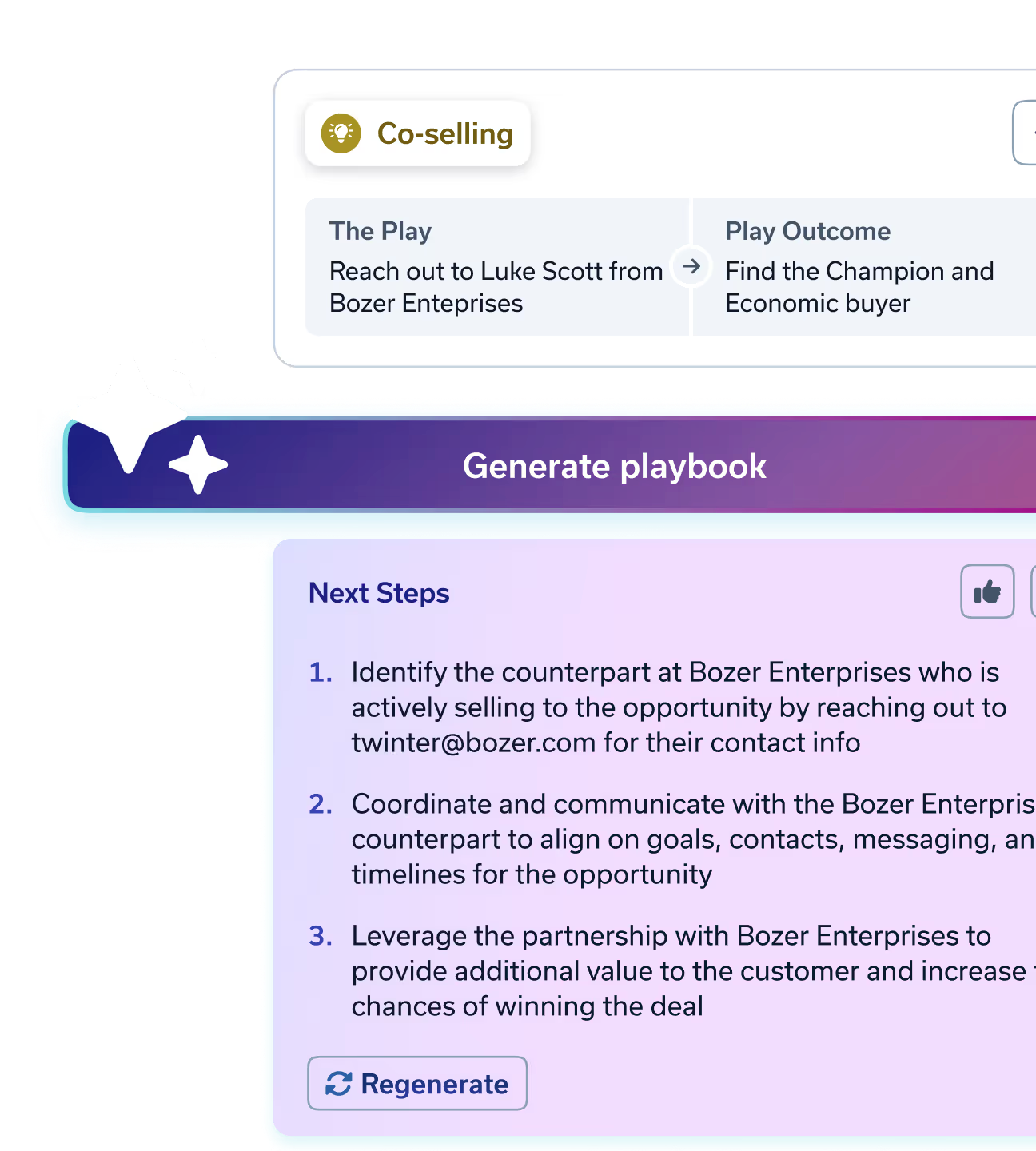
Signal over noise: what AI changes in partner execution
Komal brought it back to the day-to-day reality that partners and sellers face. “Sharing signals” often looks like a spreadsheet with 40 columns. Technically informative, practically unusable.
The AI-driven alternative Atlassian is moving toward:
- detect signals across systems and ecosystems
- understand what’s stuck, what’s expiring, and what’s missing
- surface bite-sized prompts and guidance
- personalize what a partner should do next
This is the real value: not automation for automation’s sake, but reducing analysis paralysis so humans can focus on relationships, planning, and customer outcomes.
“Instead of a data dump, we can say: you’re blocked here, this partner might help, this content could move things forward,” explains Komal.
Field engagement: where ecosystems succeed or fail
One of the strongest motions of Atlassian’s GTM motion is field engagement. For Atlassian, ecosystem strategy lives or dies in the field.
“I look at pipeline management first,” Komal says. “But I can’t manage partner pipeline the same way as direct pipeline, we have to build on the same systems and rhythms.”
Describing field engagement through a pipeline lens, that means:
- Avoiding a separate partner pipeline universe
- Building on existing rhythms and systems
- Proving impact with data, for example, how often partner touch is present in deals
- Continuously iterating when friction appears
Bharat added an important principle: process should be treated like software.
“A good process disappears in the background,” Bharat adds. “But you have to constantly iterate, otherwise it becomes a blocker instead of an accelerator.”
The rise of multi-partner orchestration specialists
“It’s less about titles and more about capabilities,” Komal says. “We need people who can bring seven partners together with one message and one vision.”
Atlassian has something very clear: organizations need more specialization, especially for complex deals that involve multiple partners and a direct seller motion.
Call the role whatever you want, but the capability is clear:
- Orchestrate multi-partner deals
- Create transparency across stakeholders
- Align messaging into “one team, one vision”
- Drive joint planning that feels seamless to the customer
This is where ecosystems mature — not just more partners, but better orchestration.
Let AI multiply the right ELG motion
Atlassian’s message across AI, marketplaces, and multi-partner selling is consistent:
- AI won’t fix a messy ecosystem
- Untrusted data creates risk, not leverage
- And “partner success” must reflect services, value, procurement paths, and customer outcomes, not just who registered the deal first
“AI is only going to be as strong as the data behind it,” Bharat says. “If you feed it garbage, you’ll get garbage.”
To make AI work for co-sell and multi-partner execution, the unlock is the same everywhere: clean signals, clear processes, and orchestration that serves the customer.
Want help turning your ecosystem into a measurable, ELG AI-ready growth motion? Book an ELG strategy call with our team to map your partner signal strategy, identify quick wins, and build the operating system for multi-partner revenue.
FAQ
1) Why is multi-partner selling becoming the default?
Enterprise outcomes often require multiple capabilities — implementation, vertical expertise, integrations, procurement pathways, and cloud credits — therefore, multiple partners naturally show up around the same customer.
2) What’s wrong with traditional deal registration as the core partner metric?
It assumes a single “moment” defines value. In reality, partners contribute across many touchpoints — services, design, migration, marketplace procurement, and more — so attribution needs to reflect the full lifecycle.
3) How does Atlassian make partner directories more useful for customers?
By collecting structured signals like post-engagement feedback, demonstrated vertical experience, and engagement size, they use those signals to guide customers toward better-fit partners.
4) What makes AI useful in partner ecosystems (and what makes it fail)?
AI works when it can access trustworthy, well-structured data and convert it into insights and next actions. It fails when the underlying data is messy, the goal is unclear, or teams treat AI like a hammer looking for a nail.
5) What does “field engagement” mean in an ecosystem-led motion?
This means aligning partner execution with the core sales rhythms, shared pipeline accountability, shared processes, continuous iteration, and proof points that partners improve outcomes rather than a separate partner “side program”.