How Fullstory Builds Their Tech Partnerships Program with Crossbeam’s Help to Increase Their Renewal Rate by 14%


Discover Fullstory's winning strategy to boost customer success through seamless integrations, Ecosystem Intelligence, and a customer-first mindset.

Nigel Liaw joined Fullstory in September 2023 as their Director of Technology Partnerships to craft seamless integrations and innovative solutions that directly address and alleviate Fullstory’s customer pain points.
Nigel’s mindset of putting the customer first has helped him build a tech partnership program that helped increase Fullstory’s customers’ renewal rate by 14%.
This is the story of how he and his team succeeded by having a customer-first mentality, leveraging Crossbeam, and making the most out of Ecosystem Intelligence.
How Fullstory builds their integrations
If you want to make sure your partner program is successful, you have to go back to the basics.
This means that you have to identify how you can better work with partners and how your customers can better benefit from them.
To get this right, Kevin Crow, Global Head of Partner Management at Fullstory helped build a partner program by classifying their partners and focusing on their customers’ needs.
“When I first started at Fullstory two years ago, I helped build our partner programs, and part of the partner operational components. It was all about systematically identifying how we better work with partners, how we aligned in accounts to work together, and how we tracked our success in Salesforce.”
Their partners are allocated in three buckets:
1. Solution partners: Agencies and consultancies that help implement and enable customers on Fullstory by building service models.
”We have around 130 solution partners around the globe. When I started we only had 20 solution partners."
2. Technology partners: All of the companies that form part of their growing ecosystem of out-of-the-box integrations (and an open AP).
“We are close to 100 technology partners.”
3. Google: Partners are listed in the Google marketplace, they have multiple integrations with them, and they do several GTM strategies together.
To learn how Fullstory is building a successful tech partner program that helped them achieved an increase in renewal rates by 14% in five steps, I spoke with Fullstory’s Nigel Liaw, Global Director of Technology, and Kevin Crow, Global Head of Solution Partners.
Let’s dive in!
Identifying potential partners
There are many ways to identify partners. Still, Nigel’s favorite one is combining qualitative and quantitative data. The first step involves actively listening to Fullstory’s customers’ needs.
“Our first point of entry is our customers. We are listening to our customers first, and leveraging signals and intel that we’re getting from our customers, Product team, and customer-facing teams
We also pay attention to where are heading in an industry and market perspective.”
Once he gets the intel from his customers, it’s time to action step two: leveraging data to support those customer insights.
“When we want to engage with a potential tech partner, we always look at where the overlap is in mutual customers to then evaluate whether or not we have the interest to go further down with the integration.”
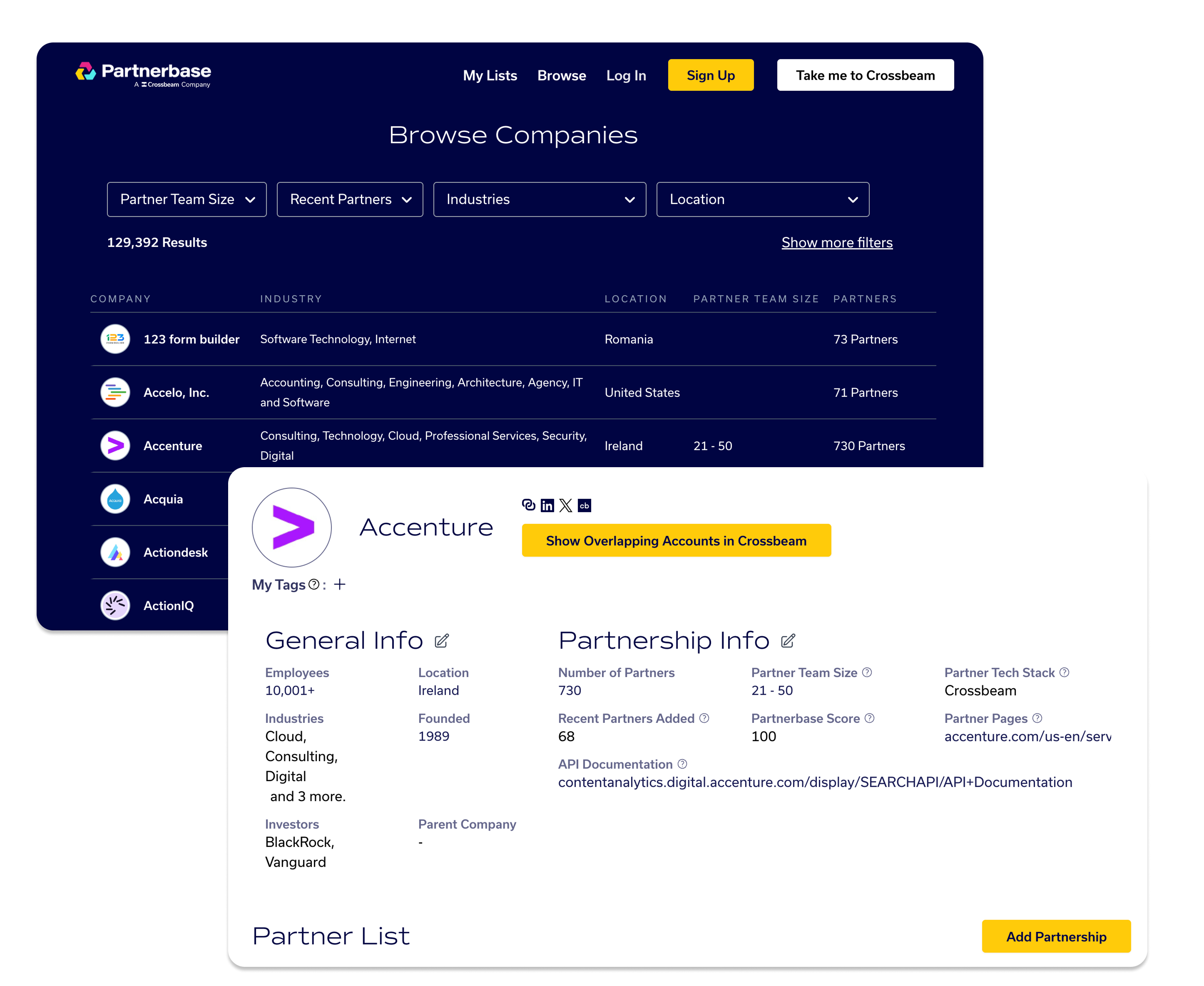
Nigel leverages the data he can find in Partnerbase like market presence, account, and contact overlap, and then matches it with his ICP and its needs to better identify potential partners. Kevin Crow shares, “Crossbeam is a tool that helps us evaluate the partnership, but also helps us identify where should we focus on when it comes to mutual customers with our partners.”
Connect with partners
There’s no better way to connect with partners than by running an Ecosystem-Led Growth (ELG) play. In this case, Nigel and his team tapped into the existing trust and relationships their customers, team members, and partners have with their potential partners.
This not only helps them expand their ecosystem but tap into their customers’ resources and audiences to build better and more purposeful integrations.
“Our customers can help us with an integration to the contacts he has at the partner organization.”
Once Nigel reaches out to their potential partner, he starts thinking about how to better share data.
“Depending on the partner and their comfort around sharing data with us, we signed an NDA, a partnership agreement, and then we start to explore how the customer overlap will look like.”
To make sure a tech partnership is worth pursuing, here are some elements Nigel always looks for before even trying to pitch it to their Product team:
- Who are our common customers and prospects?
- Who is their ICP?
- What are the similarities in use cases?
- What will the joint value proposition look like?
- What is the extra value added to the customer journey?
“It’s all about evaluating how our existing product and solution that our customers are buying can be enhanced with a partner.”
And as always, you need to back up your integration with data. Now is the time to leverage Crossbeam.
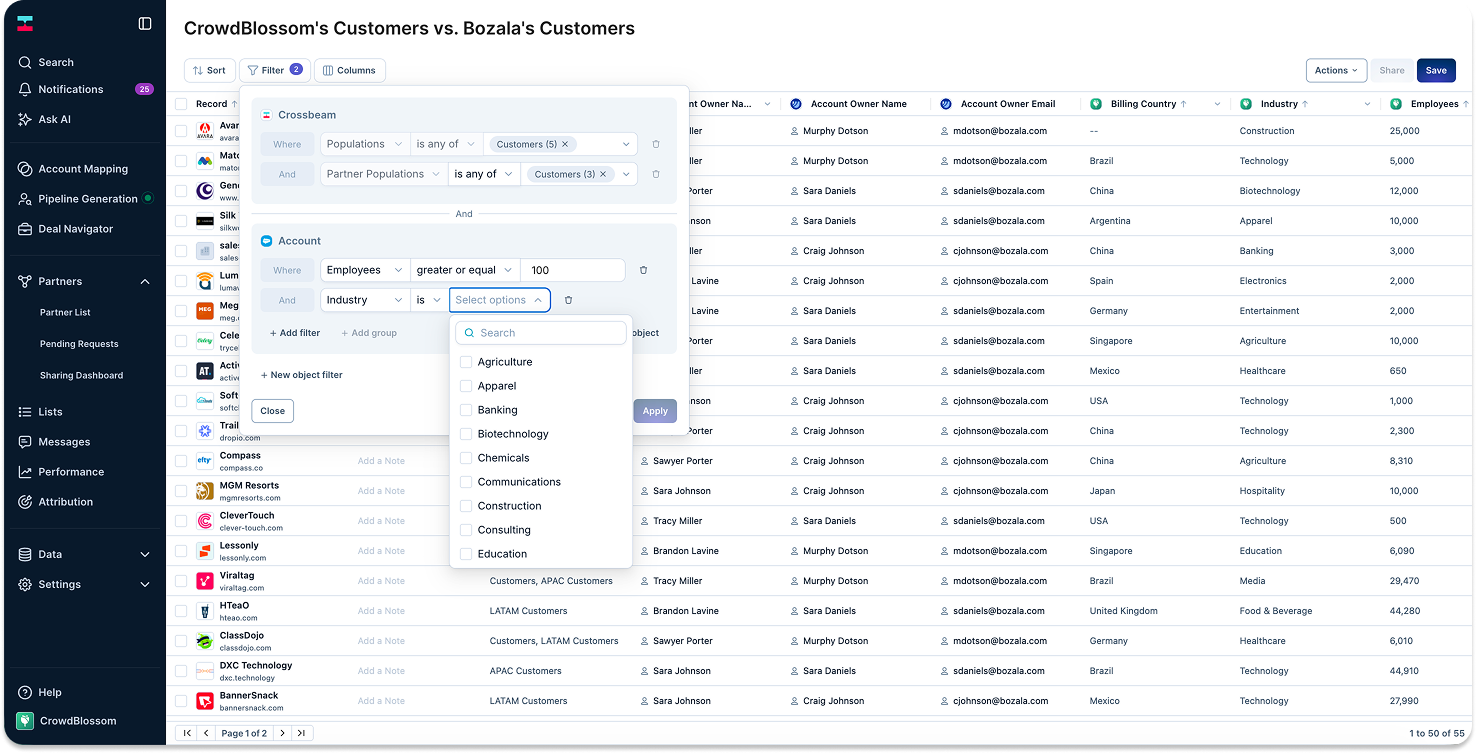
“We use Crossbeam to set up the program and the partnerships once we identify those partners that bring more value to our customers.
We’re primarily looking at account overlap filtering that down to our ICP and identifying mutual customers and joint opportunities.”
Build your pitch
Now that Nigel has the data and the joint value proposition, it’s time to build the business case to ensure their Product team doesn’t say, ’Thank you, next’.
“When it comes to using Crossbeam, it’s a great data source to help build the story and the business case around building the integration.”
Whenever Nigel has to pitch an integration to his Product team he focuses on sharing customer and Ecosystem Intelligence like:
- Customer’s pain points
- Customers insights
- The number of mutual customers and a couple of examples
- The TAM of the integration
- The tech partner that closes their product gap and the specific joint use cases
- Identify candidates for beta-testing and new product integrations
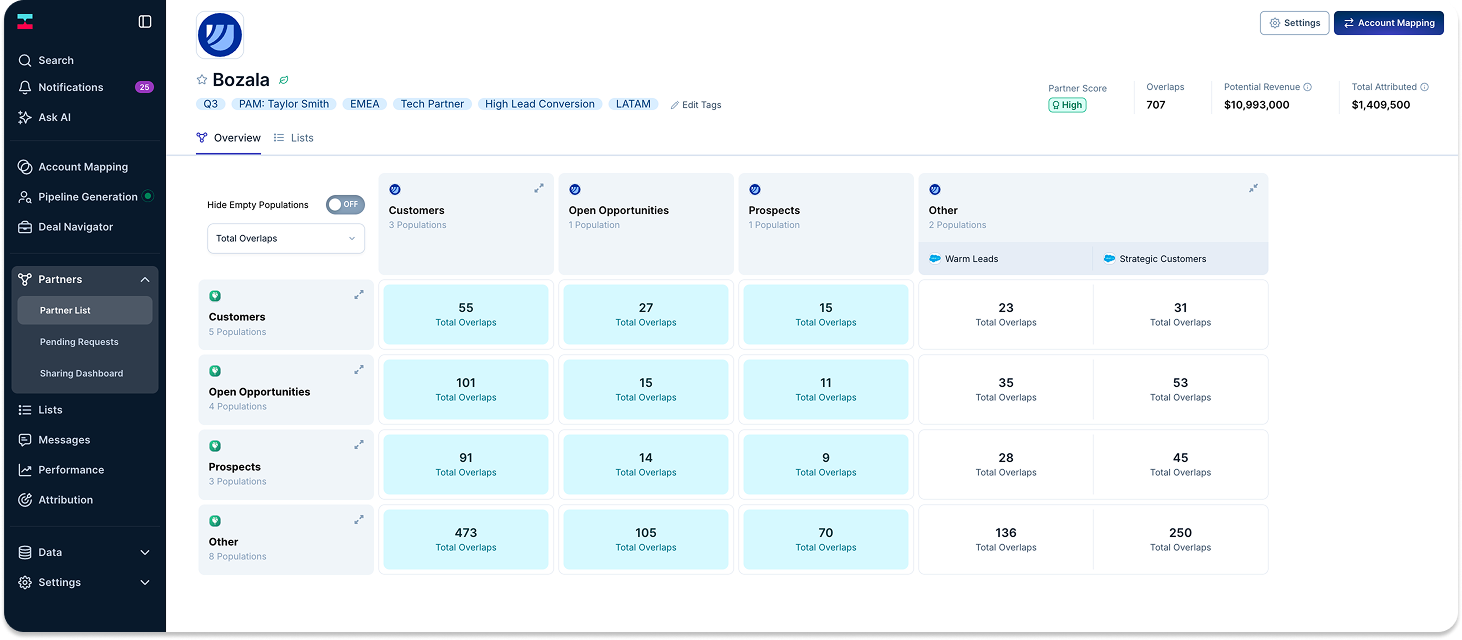
“There are two parts you need to consider when building your pitch. The first part consists of identifying what is the data telling you and the second part is how can you action the data or even leverage it to help you inform part of that integration process. The data around the mutual customers help us inform and prioritize our partners.”
Team enablement
When Nigel is rolling out an integration and wants to enable his internal teams, he emphasizes how the integration will help them reach their goals—speaking the language of each team.
“We use Crossbeam to go and look at how many integrations are currently active on our side versus the total number of customers we have overlap with. We enable our Customer Success team on the value of the integration so they can later reach out to their customers and share the JVP of the better together story.”
In addition to telling the Customer Service team how the new integration is going to help them reduce churn, increase retention, or expand their account list, you have to show them how.
“A lot of CSMs focus a lot on their customers and how are they using their product. But a paradigm shift that Crossbeam is activating, is that this is not only about your product, but your product plus the product stack your customers are using," says Kevin Crow.
Nigel and his team build a series of workshops and enablement sessions that help them understand how to leverage partners for each use case or goal their CSMs have.
“Consider the role of your CSMs. Are they thinking about retention or expansion? Then consider their goal and their type of customer or account list. Based on that, create specific programs or playbooks for them focused on how they can leverage the new integration based on their goals.”
What Nigel, Kevin, and the Partnership team do is share the following data points in Crossbeam with his Customer Success team to help them better leverage the tech partner:
- The partner that can help them reach their goal
- The common customers with the partner
- The number of common customers with an active integration
- The number of common customers with no active integration
- Which of their customers’ tech stacks do they have a great use case with
- Which of their customers’ tech stacks do they have an actual integration with
“This data can help your CSMs connect with your partner’s CSMs. In this way they will leverage your partner relationship to understand better the customer and deliver more value.”
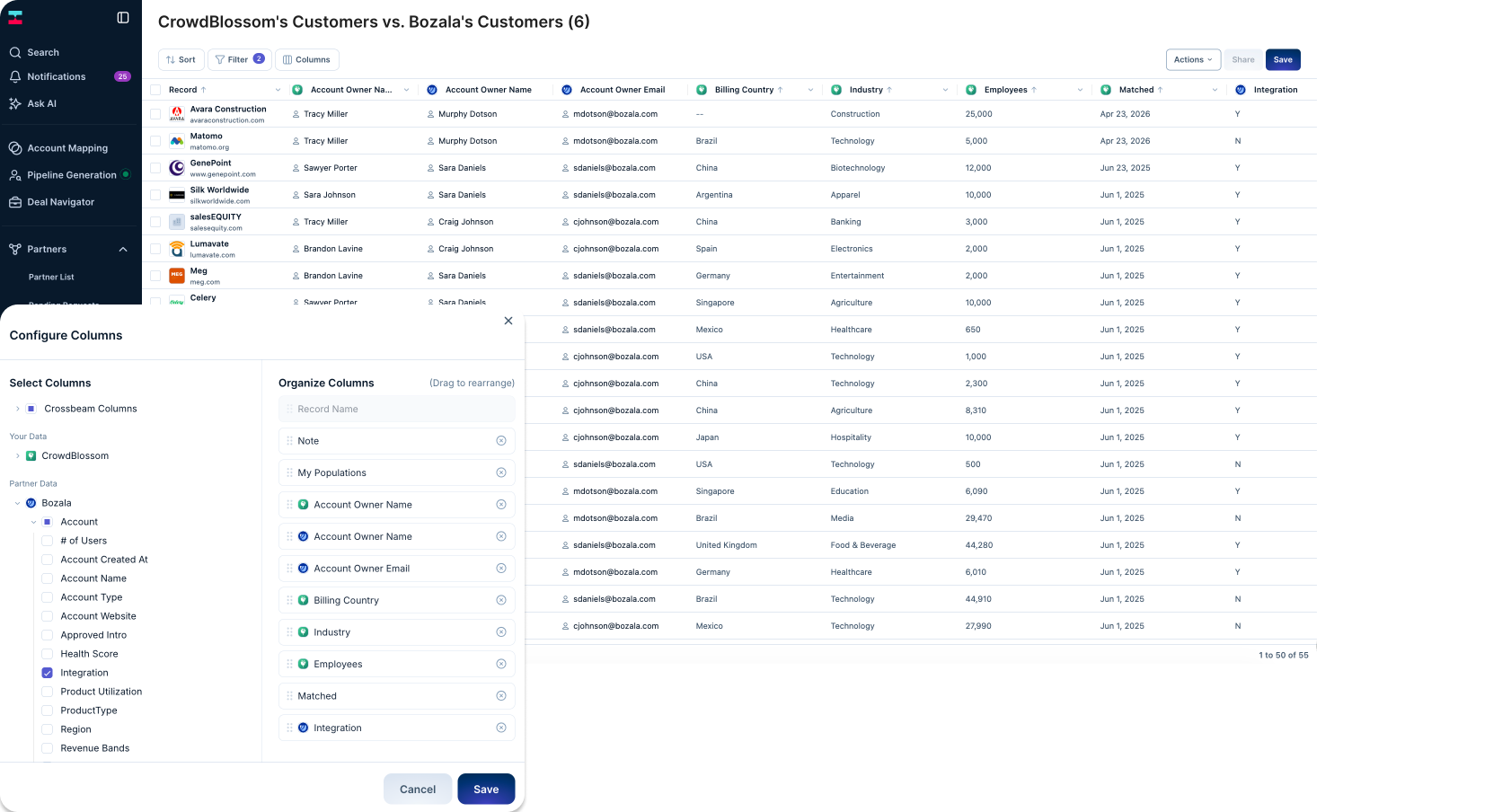
“We take all the Crossbeam data, and push it into Salesforce, so CSMs should look in Salesforce before they have a quarterly review with their customers. They should be able to look at and identify the integration opportunities. CSMs are a critical component in closing the integration loop.”— Kevin Crow

Track
To measure the integration adoption, retention, and expansion, Nigel and his team, built some dashboards in Looker Studio and all the data related to how many customers are using their integration goes to that dashboard.
“We validate and verify the data in Looker Studio based on the number of customers we see in the overlap in Crossbeam. This data helps us identify those customers that aren’t using the integration. With this, we can meet with our partner and discuss some strategies to push the integration to all of our common customers.”

“Crossbeam has helped us a lot in terms of preparation, from partner reviewing to helping Customer Success teams. If we’re looking at a QBR for a specific customer, we can help the Customer Success team set up their plan and the conversation with the customer.
Crossbeam has helped us quickly identify those low-hanging fruits regarding integrations. So every time we talk to the customer, we’re more informed and have more knowledge regarding their current tech stack.”
The power of integrations
Buyers want to be surrounded with value at every step of their journey. But single companies can’t do this alone.
Fullstory leaned on the trust and expertise of their partners to build a better customer experience leading to:
- An increase of 14% in renewal rate for customers with 2 active integrations or more.
A final word: Nigel’s and Kevin’s advice to those starting on Crossbeam
There are so many use cases for Crossbeam, but if you’re focusing on driving customer success and building integrations, Nigel and Kevin have some tips for you:
- Leverage data to facilitate discussions not only with your customers or partners but with your internal teams too.
“Crossbeam data can help you recruit partners and build internal business cases on why building a strategic partnership or an integration is important.”—Nigel Liaw
- Use overlap data to identify which integrations are worth pursuing.
“There’s an infinite list of other SaaS technology companies that want to integrate with you. Crossbeam helps you be smart and thoughtful around that. As soon as you pass the use cases of the integration, the real key to understanding what the potential of the integration is through the overlap data. Reveal helps you build the integration and do something commercially thanks to the data around your total addressable market and your overlap opportunity.”—Kevin Crow
Want to learn more about how to drive ELG customer success by leveraging integrations in Crossbeam? Book a call with our team.