From Overlaps to Outcomes: Turning Ecosystem Data into Pipeline, Faster



Learn how teams are using Crossbeam Lists to turn partner data into pipeline, drive warm introductions, and align sales and partnerships — backed by real results and actionable steps.

Most teams don’t struggle with a lack of partner data. They struggle with what to do with it.
As ecosystems scale, the gap between insight and action becomes the real bottleneck. Data lives in dashboards, partnerships live in meetings, and pipeline generation becomes inconsistent at best.
We sat down with leaders from Revnome and Triumph Intelligence, who shared how they’re closing that gap using Crossbeam Lists — a new way to surface insights, prioritize opportunities, and operationalize ecosystem data in real time.
The takeaway is clear: ecosystem success doesn’t come from having more data. It comes from making that data usable.
How to start with visibility and not guesswork?
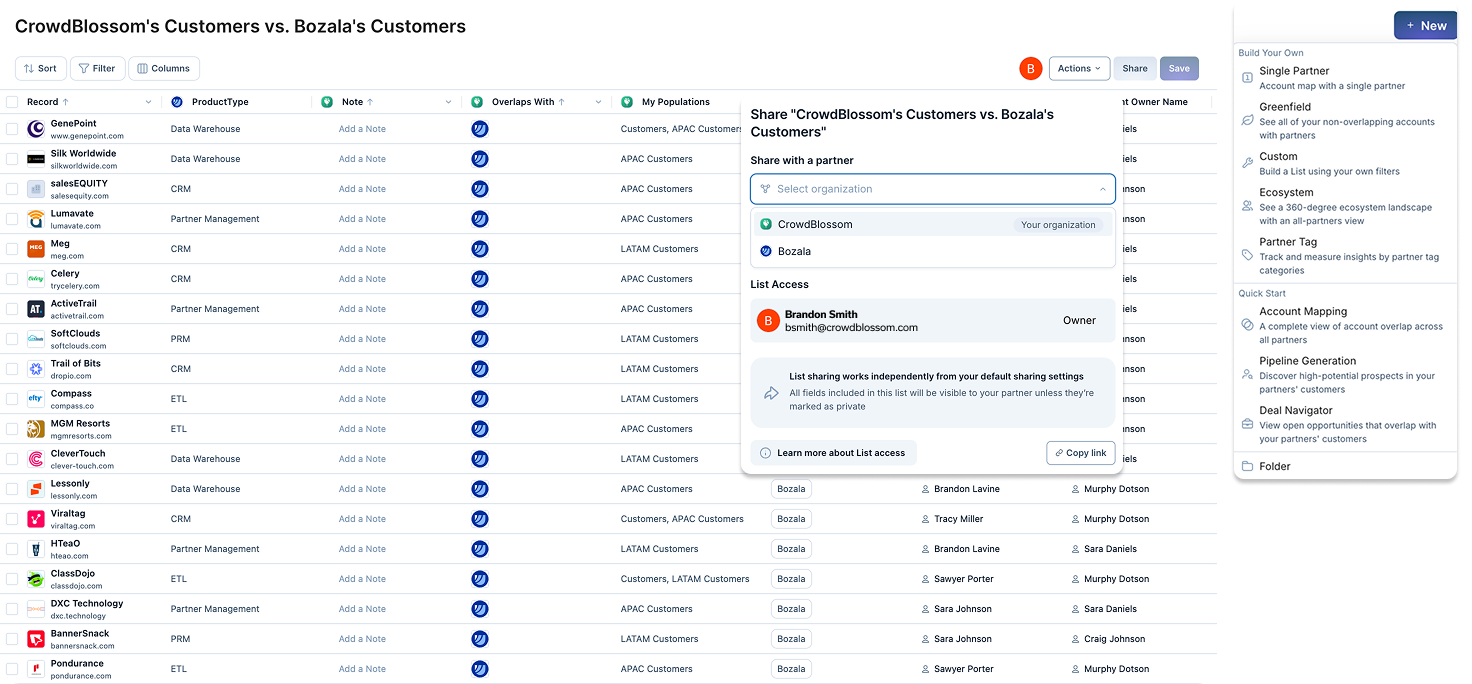
At its core, Lists flips how teams approach account mapping. Instead of building reports from scratch, teams can start with a full view of partner overlaps and filter down to what matters.
This shift is subtle but important. It moves teams from reactive analysis to proactive pipeline generation.
As Thomas Edwards, Customer Education Specialist at Crossbeam, explains:
“With this new account mapping view, we’re showing you all of your existing overlaps with all of your partners. So instead of starting small and trying to build something up, you’re starting big and then using filters to get exactly what you need.”
With Lists, teams can filter by:
- Prospect vs. customer overlaps
- Sales stage or account status
- Partner-specific data (including custom CRM fields)
This creates a shared, dynamic view of where real opportunities exist across your ecosystem.
How to turn partner data into outbound advantage?
For Enrique Gutierrez, GTM Engineer and ELG advisor, Lists isn’t just a reporting tool, it’s an outbound engine.
By combining partner data with workflow automation, his team builds highly targeted prospecting motions rooted in real-time ecosystem signals.
“The way I see Crossbeam is as an outbound data tool. Getting the best data and the best context is what really makes you relevant and what makes your outbound successful. It’s not just about having the data — it’s about how you use it to have better conversations.”
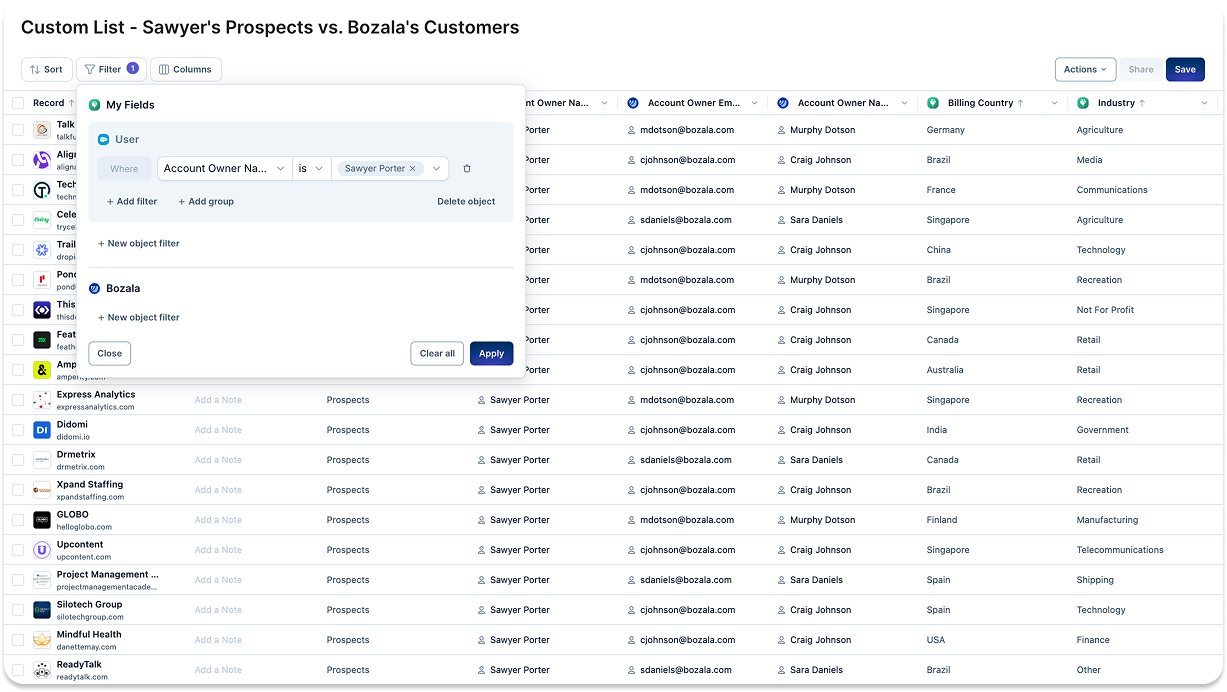
Using Lists, Enrique identifies high-value segments like:
- His prospects who are already customers of a partner
- Accounts actively using specific partner product features
- Opportunities with recent partner activity
From there, the workflow becomes operational.
His actionable workflow:
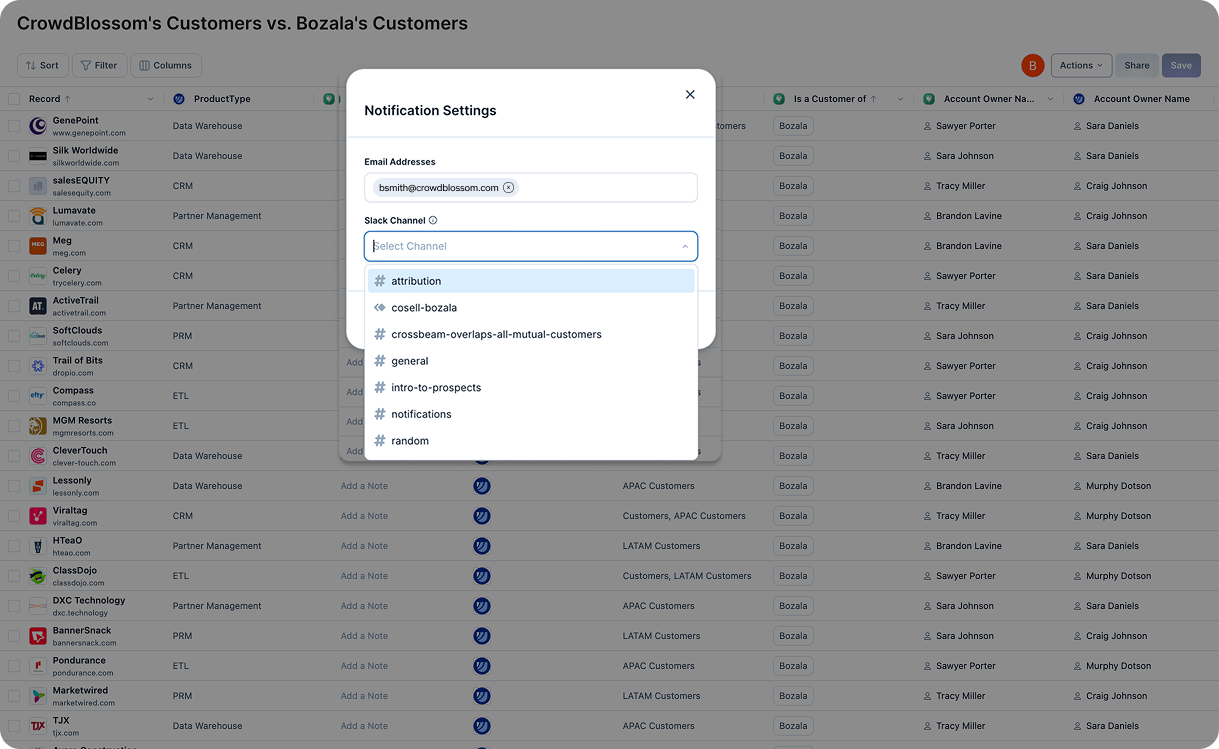
- Build a List based on overlap criteria (e.g., “my prospects + partner customers”)
- Enrich the data (via tools like Clay or CRM syncs)
- Trigger alerts (Slack or email) for new matches
- Route enriched accounts to sales engagement platforms
- Deliver pre-written, highly contextual messaging to BDRs
Enrique shared that one security and compliance MSP generated $25 million in pipeline in 12 months with just one BDR using this approach. In another case, a GTM-focused MSP drove 30 meetings worth $4 million in pipeline in just three months. And after launching the same motion with a new customer, the team generated two meetings in just four days.
“It’s no longer about spray and pray at a certain time of day. It’s about how you have smart conversations, how you get to the point quickly, and how you build relevance in a sea where everyone sounds the same.”
How to bring partnerships directly into sales workflows?
While Enrique focuses on outbound, Kelly Gindelsberger, Senior Manager, Strategic Partnerships at Triumph Intelligence, applies Lists to one of the most common gaps in ELG: alignment with sales.
Her approach is simple and highly repeatable.
Kelly built dedicated Lists for each of her six Account Executives, showing their accounts in Salesforce alongside overlapping partner customers. These Lists are reviewed weekly, creating a consistent rhythm between partnerships and sales.
“This has been extremely valuable because I’m sitting down with our AEs every week and we’re looking at what’s new — where are the new overlaps, and how can our partners help us move these deals forward.”
When first introduced, these Lists often surface 10 to 30 partner overlaps per AE, which can feel overwhelming. So Kelly narrows the focus.
She asks each AE to identify their top five priority accounts, then works to convert those into two to three warm introductions through partners.
Her process is precise and operational:
Her playbook:
- Meet weekly with AEs to review overlap Lists
- Identify 3–5 high-priority accounts
- Request specific partner introductions (not general asks)
- Provide partners with ready-to-send email templates
“I don’t just go to a partner and say, ‘Can you introduce us to some of your customers?’ That’s too broad. I’m very specific. I give them the exact accounts, the AE working them, and even an email template so it’s as easy as possible for them to make that introduction.”
This turns partnerships from a passive function into a measurable revenue driver.
Prevent channel conflict before it happens
One of the most overlooked (and costly) risks in ecosystems is channel conflict — when direct sales unknowingly targets a partner’s customer.
Lists provide a simple way to catch this early.
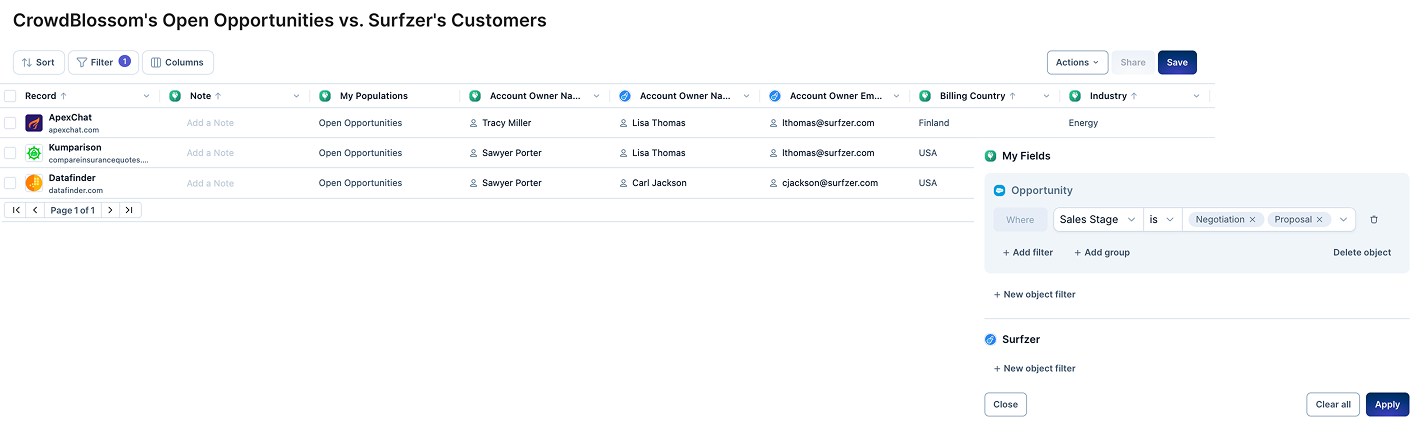
For example, you can filter for late-stage opportunities immediately surfaced three accounts requiring urgent attention: deals that could have damaged partner trust if left unchecked.
As Alina Loux, Sr. Manager of Customer Education at Crossbeam, explains:
“There’s nothing malicious happening in these situations. It’s just that you don’t know what you don’t know. And that’s exactly where Crossbeam gives you visibility so you can take action before it becomes a problem.”
How to operationalize it:
- Build a List: “My open opportunities + partner customers”
- Filter by late-stage deals (e.g., proposal or negotiation)
- Review overlaps in real time
- Decide on next steps:
- Convert to co-sell
- Hand off to partner
- Align on ownership before close
This ensures trust isn’t broken at the most critical moment in the deal cycle.
“Having those partners share the extra data with us, we were actually able to get our enterprise reps targeted account lists, which was super helpful.” — Kylie McCready, Senior Partner Operations Manager, A-LIGN
The bigger shift: from data access to data activation
The teams featured in this session aren’t just using Crossbeam to see overlaps, they’re building systems that act on them.
Across the examples shared, these approaches have already generated tens of millions in pipeline, accelerated warm introductions, and improved alignment between partnerships and sales.
They remove friction for sales.
They eliminate guesswork in partnerships.
They operationalize Ecosystem Intelligence across the GTM motion.
Because the real advantage isn’t knowing where you overlap. It’s knowing exactly what to do next, and doing it faster than everyone else.
The teams in this session have already generated tens of millions in pipeline by making their ecosystem data work harder. If you want to see how Lists can do the same for your team, book a demo with Crossbeam. Want to see the playbooks in action first? Watch the full conversation here.
FAQ
1. How is Crossbeam different from traditional account mapping or CRM reporting tools?
Traditional tools show you your data in isolation. Crossbeam connects your data with your partners’ data in a secure, privacy-safe way, so you can see where you overlap, where opportunities exist, and how to act on them. Instead of static reports, you get dynamic, real-time insights you can actually use to drive pipeline.
2. What kind of results can teams realistically expect from using Lists?
Results vary based on your ecosystem maturity, but teams are already using Lists to generate millions in pipeline, increase warm introductions, and improve conversion rates. As shared in the session, one team generated $25M in pipeline with a single BDR, while others are accelerating meetings and deal velocity by focusing on high-intent partner overlaps.
3. How quickly can my team start using Lists to drive results?
Teams can start building and using Lists immediately once their data is connected. Many see value within the first few weeks by identifying overlap opportunities, aligning with sales, and operationalizing outreach workflows. The biggest impact comes when Lists are integrated into your existing GTM processes—like sales cadences, partner reviews, and pipeline prioritization.
4. How does Crossbeam ensure data privacy and security when sharing information with partners?
Crossbeam is built with a “data never leaves your control” approach. You decide exactly what data fields are shared with each partner, and nothing is exposed without explicit permission. Sensitive information (like deal size or contacts) can remain private while still enabling meaningful overlap insights. This allows teams to collaborate confidently with partners while maintaining strict control over their data.