










.jpg)


.png)




.jpg)


.jpg)

.webp)


.webp)


First-Party vs. Second-Party vs. Third-Party Data: What's the Difference?


First-party, second-party, and third-party data each solve a different RevOps problem. Here's what to build with each one, the tools that connect them, and how to turn all three into signals your revenue team can act on.

For most RevOps teams, the difference between first-party, second-party, and third-party data comes down to what you can actually build with each one.
Every scoring model, routing rule, and alert you build runs on one of these three data types, and most RevOps stacks are quietly overweighted toward the two that don't actually differentiate you.
The gap is worth closing: RevOps teams have shortened sales cycles by 46% and doubled average contract values, and neither number came from only first-party or third-party data.
Here's what each type is good for, what to actually build with it, and how they connect.
First-party data: what you build with it
First-party data is what you collect directly: CRM records, website behavior, product usage, support tickets. It's yours because you own the relationship.
What you can build with it: lifecycle stage definitions, lead and account scoring baselines, territory and ownership assignment, attribution models, and churn-risk models based on product usage. This is the data behind almost every dashboard RevOps ships, because it's the ground truth for what's actually happening with an account you already have.
The limit: it only covers accounts you've already touched. A perfect first-party model tells you everything about your current book and nothing about the much larger pool of prospects in your TAM who haven't shown up yet. If you stop here, you might end up with excellent reporting on existing pipeline, but no real signal for where new pipeline should come from.
Second-party data: what you build with it
Second-party data is another company's first-party data, shared directly with you, with their consent. In B2B, this comes from a partner: they share which of their customers overlap with your target accounts, or flag that a shared account just expanded.
What RevOps builds with it: account routing rules that prioritize partner-warm accounts over cold ones, lead scoring models that add points for verified partner overlap instead of inferred intent, renewal and expansion alerts triggered by a partner's Customer Success data, and territory assignment that accounts for existing partner relationships instead of ignoring them.
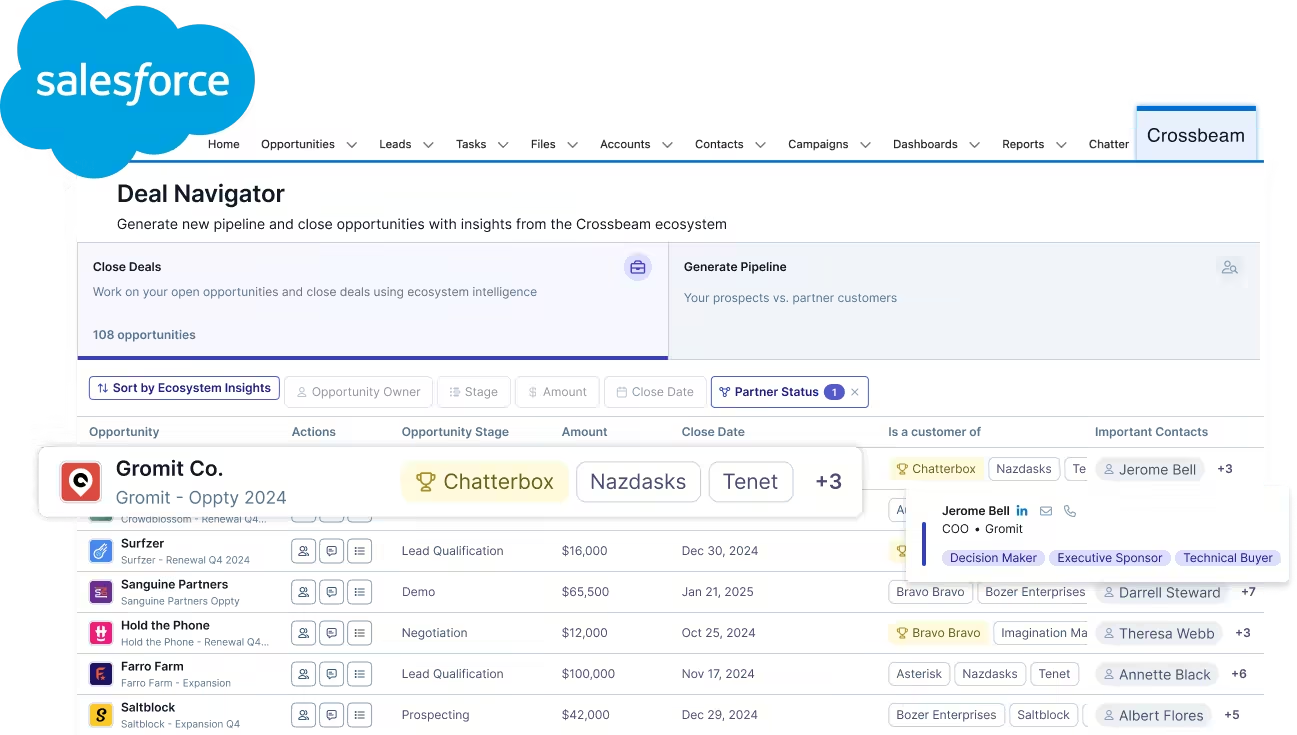
In practice, this starts with building targeted account segments: pipeline stage, ICP fit, or churn risk, overlaid with partner data to find opportunities already sitting in your CRM that you didn't know were partner-influenced. From there, it extends into automated co-selling and expansion workflows that trigger the moment a high-value overlap appears, and into forecasting and territory planning that factor in partner influence instead of treating every account as equally cold.
Why it's worth the setup cost: it's proprietary (your competitors don't have your specific partner relationships) and verified (it came from a real relationship, not an inference). This is also the layer most RevOps stacks skip entirely, not because it isn't valuable, but because it requires a live connection to a partner's data instead of a subscription you can just buy.
The limit: it depends on having the right partnerships in place, a system to share the data securely, and good CRM hygiene. You can't buy your way into it the way you can with third-party data.
Third-party data: what you build with it
Third-party data is aggregated by a provider with no direct relationship to the people or companies it describes, then sold to whoever pays.
What RevOps builds with it: firmographic enrichment for records you're missing (industry, size, revenue), technographic scoring for integration or displacement plays, and intent-based segmentation for top-of-funnel targeting when you have zero first-party or second-party signal to go on.
The limit: inferred rather than confirmed, so accuracy varies by provider and drifts over time. Available to every competitor buying the same dataset, which means it stops being a differentiator the moment you turn it on. Increasingly caught by privacy regulation that limits what providers can legally collect and how.
Side by side
Combining all three: what a real signal stack looks like
None of these three data types is meant to run alone, and treating any one of them as the whole strategy is where most RevOps stacks fall short.
A combined model looks something like this:
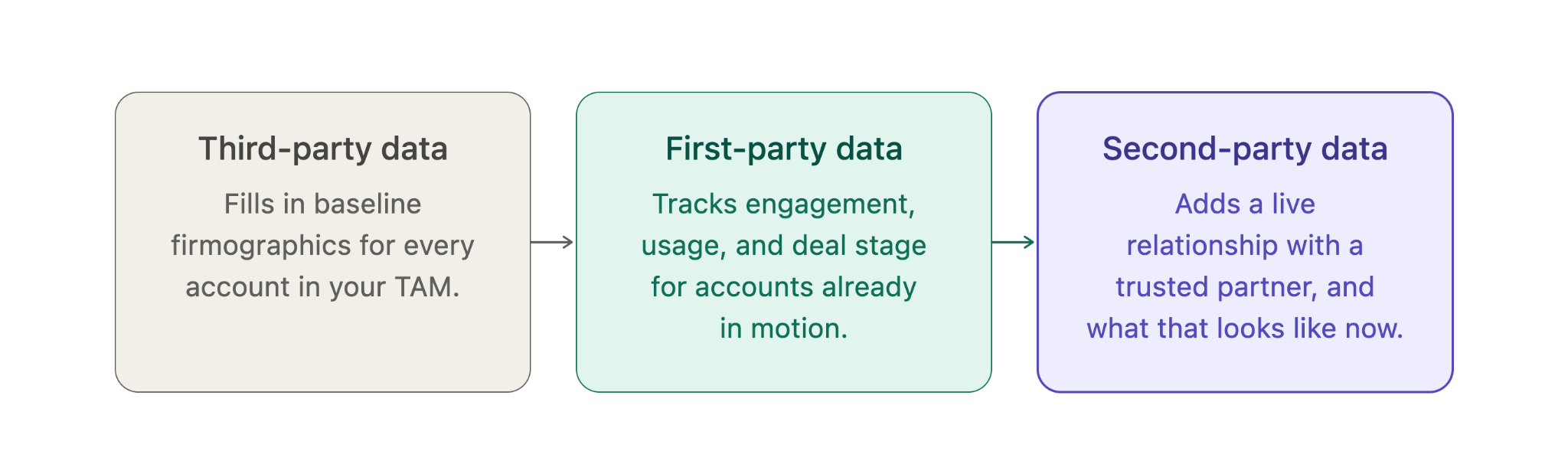
Stacked together, that's an account-scoring model that can tell the difference between "large company, no signal" (third-party only), "existing customer showing usage decline" (first-party only), and "cold account that happens to be a partner's best customer, worth a warm intro before an SDR ever calls" (second-party in play).
The tools that connect them
This is usually where RevOps teams get stuck, not because the concept is unclear, but because each data type tends to live in a different tool with no native connection between them.
- System of record: Salesforce or HubSpot. This is where all three data types need to land eventually, since it's where reps and automation actually act.
- First-party data: already flowing into the CRM from forms, product analytics (Amplitude, Mixpanel, or your own event pipeline), and support tools. The gap here is usually making sure product usage reaches the CRM instead of sitting in a separate analytics tool nobody in sales opens.
- Third-party enrichment: tools like ZoomInfo, Clearbit, or similar providers, typically synced into the CRM through a native integration or a reverse-ETL tool like Census or Hightouch.
- Second-party data: Crossbeam connects directly to your CRM and your partners' CRMs, matches the overlap, and pushes it back as fields, alerts, or a routing trigger, without anyone exporting a spreadsheet.
- Orchestration: something has to decide what happens when a signal fires, an alert in Slack, a field update in Salesforce, or a task assigned to a rep. Tools like Workato, Zapier, Clay, or native CRM automation typically handle this layer, and it only works if the data feeding it (first-, second-, and third-party) is already landing in one place.
How revenue teams turn this into action
Once the data is connected, the actual RevOps output looks like a handful of concrete workflows:
- Lead and account scoring that weighs verified partner overlap alongside firmographic fit, so a smaller account with a live partner relationship can outrank a larger account with none.
- Routing rules that flag partner-warm accounts for a specific rep or motion instead of dropping them into the general queue.
- Renewal and expansion alerts triggered the moment a partner's data shows risk or opportunity on a shared account, and shared with your team in Slack or by email.
- Territory and account assignment that factors in existing partner relationships, so a rep isn't cold-calling into an account your partner already has a foothold in.
- Deal acceleration, unsticking stalled deals with partner intel, warm introductions, and influence from the right ecosystem connections. Crossbeam's own BD team used this exact motion to close deals 350% bigger than their average.
- Attribution, tracking partner-sourced versus partner-influenced pipeline, attach rates, and win rates automatically through a Performance Dashboard instead of trying to reconstruct partner impact after the fact.
- AI-ready scoring and planning, since a model is only as good as what it can see. Feeding real-time, proprietary partner signals into pipeline health scoring gives an AI system, or a planning process, a genuine read on deal potential instead of a firmographic guess.
How Crossbeam fits in
Crossbeam is your single source of truth that unifies fragmented partner data with your CRM and sales tools, so overlap doesn't depend on someone remembering to run a manual export.
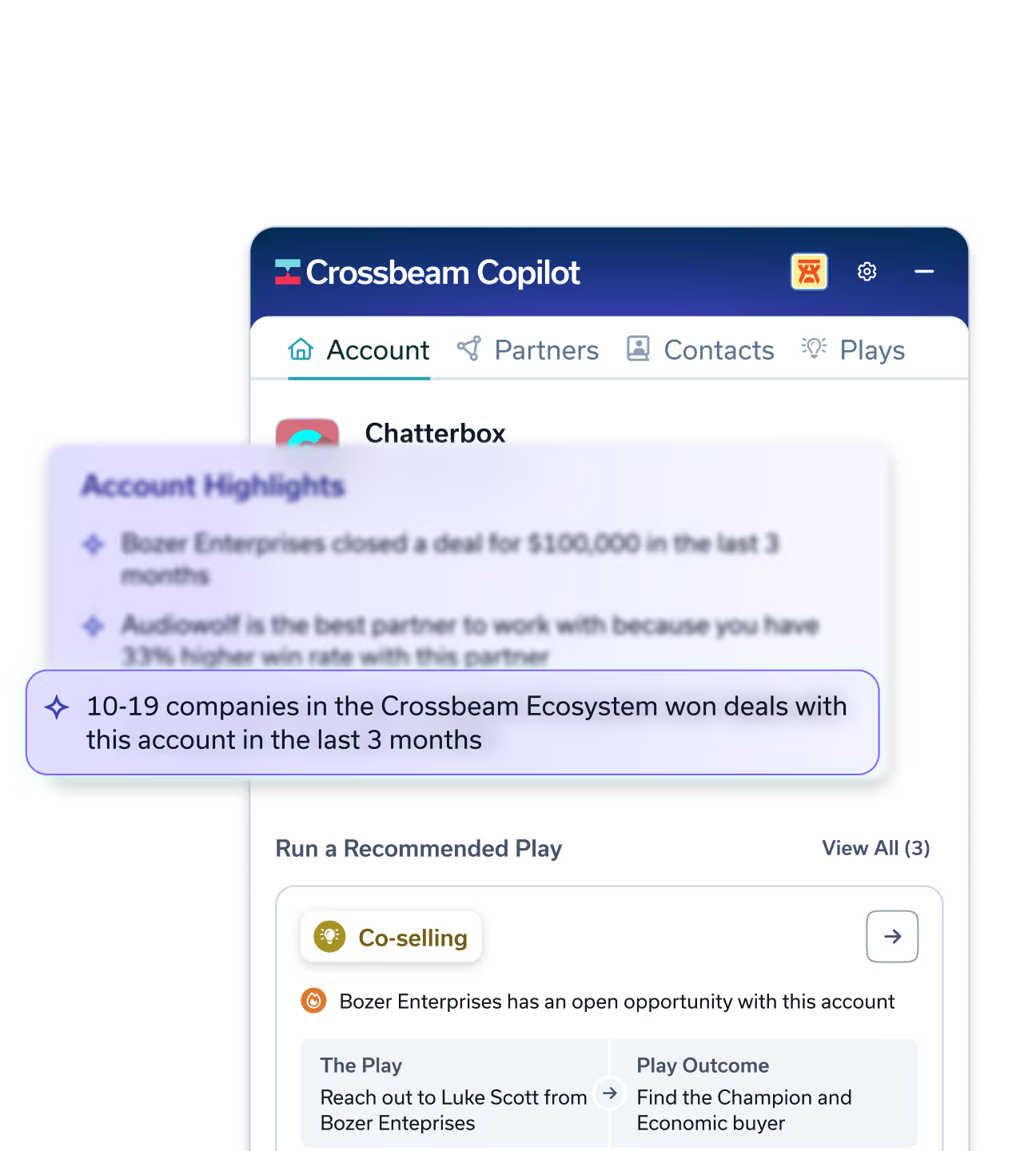
Once that connection exists, Crossbeam Copilot pushes Ecosystem Intelligence directly into the tools your teams already use, merging partner data with your CRM and tools like Clay and Gong for clear visibility into account overlap, influence, and impact opportunities.
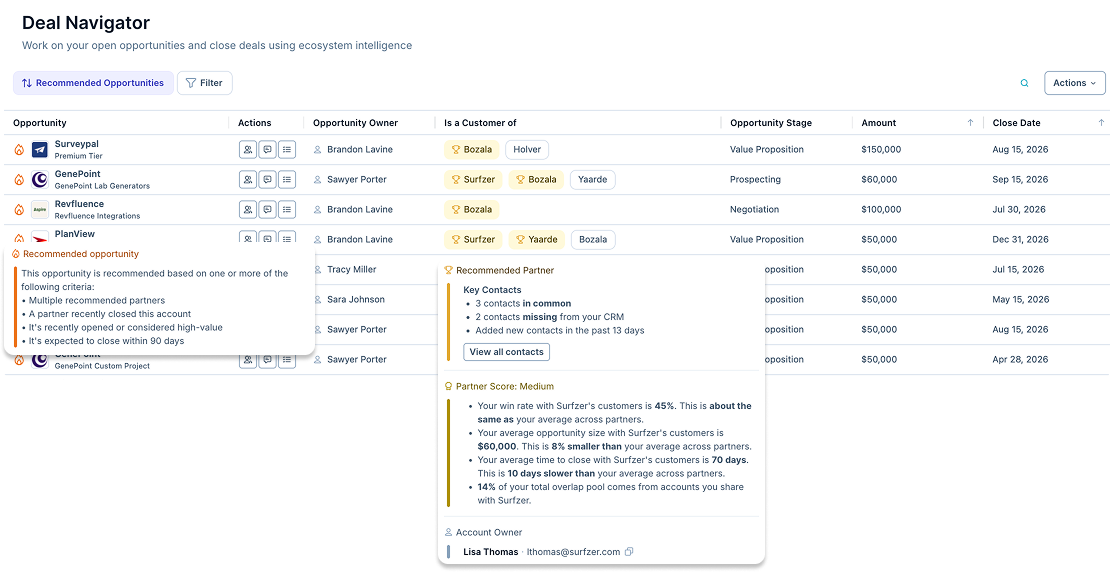
On the segmentation side, Deal Navigator lets you build ultra-specific target account lists by pipeline stage, ICP fit, or churn risk, then overlay partner data to trigger automated co-selling and expansion workflows the moment a high-value overlap shows up.
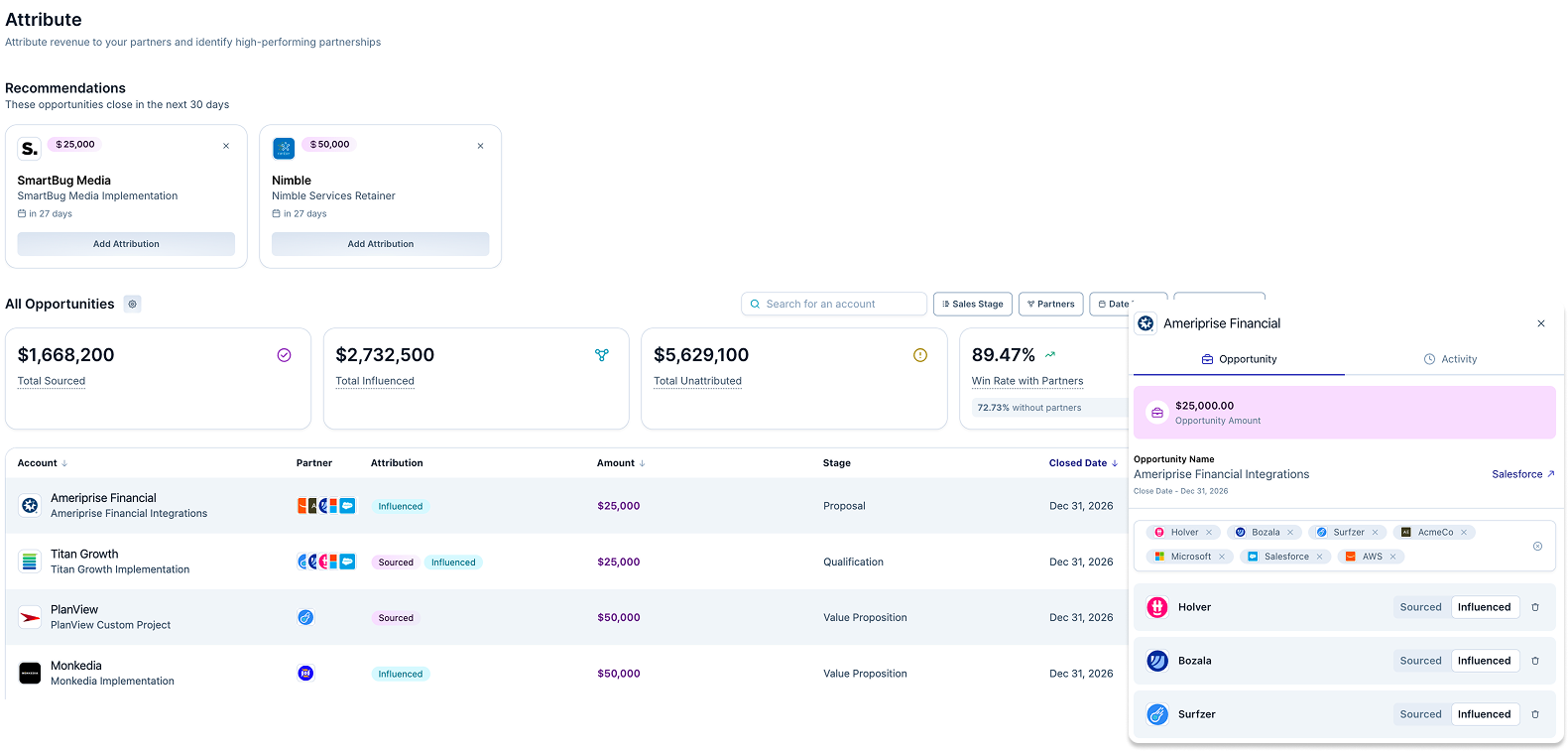
For proving it out, Crossbeam's Attribution engine tracks partner-sourced versus partner-influenced pipeline, attach rates, and win rates automatically, so the ROI conversation doesn't depend on someone manually reconstructing which deals a partner actually touched.
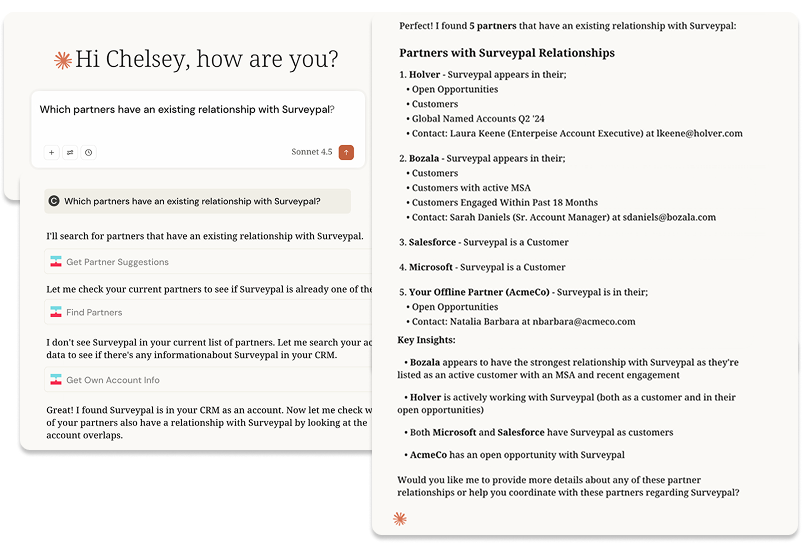
And for teams building their own scoring models or agent workflows, the Crossbeam MCP server exposes the same overlap data directly to Claude, ChatGPT, Glean, or a custom-built agent, so a model can query live partner context as part of a decision instead of a person checking a dashboard first, which is the same AI-readiness principle behind feeding real-time partner signals into pipeline health scoring more broadly.
None of this replaces your enrichment or analytics stack. It's the connective layer underneath it, since no third-party provider can sell you data about your own specific partnerships, and it's the layer RevOps teams point to when they explain how they shortened sales cycles by 46% and doubled ACVs: not a better firmographic model, but a data source competitors simply don't have.
Curious what second-party data could reveal about your accounts? Register free to see what your partner ecosystem already knows, or book a demo if you'd rather talk it through first.
Frequently asked questions
Which type of data is most reliable?
First-party and second-party data are both generally more reliable than third-party, since both come from a direct, verified source instead of an inference.
Can second-party data replace third-party data entirely?
Not entirely. Third-party still covers accounts where you have no first-party or second-party signal at all. It just shouldn't be the layer your strategy depends on.
Where does intent data fit into this framework?
Usually as third-party data, since it's typically inferred from aggregated behavioral signals across many sources rather than shared directly by a partner.
What should a RevOps team build first if they have none of this connected yet?
Start with first-party data hygiene, since second- and third-party signals are only useful once your own CRM data is clean enough to match against. From there, third-party enrichment is the fastest to stand up, and second-party data, starting with account mapping, delivers the most differentiated signal once a partnership or two is connected.